• unilogou. Powered by Blogger.

    Showing posts with label asia. Show all posts
    Showing posts with label asia. Show all posts

    Thursday, 4 August 2016

    Xiaomi announces its first VR headset — but you can’t buy it yet

    Posted By: Uni logo - 05:42:00

    Xiaomi is broadening its already expansive range of products by venturing into virtual reality for the first time.
    The company today announced the ‘Mi VR Play’, an “entry-level” virtual reality headset that it hopes can open this new exciting medium up to new audiences because not everyone has thousands of dollars needed to set up an Oculus Rift or HTC Vive. Democratizing technology is the thesis behind most of Xiaomi’s competitively-priced products, including the $550/750 notebook announced last week that will rival Apple’s Macbook in China.
    This new device recalls Google’s super cheap and super simple Cardboard VR headset. It is fairly basic in nature, you pop a smartphone into the lycra-built body and then open Xiaomi’s Mi VR app, which contains VR content from selected partners that include Conde Nast Traveler and YouKu, ‘China’s YouTube’. Xiaomi pledged to invest $1 billion in video content, including VR, last year so that library is sure to get bigger over time.
    Here’s how Xiaomi describes the headset:
    Mi VR Play has significantly improved upon the design typically used in similar VR products — it is wrapped in lightweight, durable Lycra for long-lasting comfort. In the future, Mi VR Play will also be available in a selection of bold prints and colours for even more stylish options. The unique two-way zipper helps to ensure compatibility, providing a secure grip on a wide range of 4.7- to 5.7-inch smartphones. At the same time, the dual openings on the front allow for slight positioning adjustments and ventilation.
    Sounds good so far?
    Here’s the catch — you can’t go and buy one, even if you’re in China.
    Xiaomi is making it available to a limited number of beta test users, who signed up on August 1 when Xiaomi put out a call for volunteers. One million users signed up in just eight hours, the company said, but Xiaomi has selected just a fraction of those — likely “tens of thousands”, a representative told TechCrunch.
    For those lucky ones accepted into the test program, the Mi VR Play will cost just RMB 1 ($0.15).
    Xiaomi told us that it has plans to make the headset more widely available in the future, but there’s no schedule for that right now. Along those lines, it isn’t clear how much the headset will cost once it is on sale to all. We suspect it won’t be RMB 1, sadly.

    Uber rival Grab is raising at $2.3B valuation, reportedly burning $35M a month

    Posted By: Uni logo - 05:40:00

    Grab, the company that rivals Uber in Southeast Asia, is in negotiations to close a new round of funding that could value it as high as $2.3 billion, multiple sources close to talks told TechCrunch. Grab was valued around $1.5 billion-$1.6 billion last August when it raised $350 million.
    The Wall Street Journal and Bloomberg this week reported that existing investors Didi Chuxing and SoftBank may lead a $600 million round of new financing. The sum could reach $1 billion after a second close.
    Grab has been in discussions with potential investors to raise money for a number of months, but the round is not yet closed, sources told TechCrunch. That target valuation of $2.3 billion, however, is subject to some secondary share sales from existing backers, we understand, which, once blended, could lower the figure.
    In the world of ride-hailing apps and fast-funding, Singapore-based Grab — which offers licensed taxis, private cars and motorbike taxis in six countries — hasn’t raised at the frequency of others. Its last financing came one year ago in August 2015 when it closed a $350 million Series E round. That included money from Didi and sovereign wealth fund China Investment Corporation (CIC) among others.
    Unlike Uber, which has seen numerous investors decks and financial presentations leaked over the years, precious little is known about the internals of Grab’s business.
    According to documents from Grab investors dated last year — circulated for potential secondary share sales — which were viewed by TechCrunch, the company was forecasted to burn $111 million in Q3 2015, that’s more than $35 million per month. The same data revealed that Grab had $606 million in cash on its books after it closed its Series E round.
    A Grab spokesperson told TechCrunch that the company has not yet touched its Series E money.
    The projections we viewed estimated that Grab would make $31 million in annual net revenue for 2015 — that’s the total amount of money it keeps from the transactions on its platform. That figure was forecast to grow to $193 million in 2016 and $526 million in 2017.
    Grab has never revealed the number of trips it completes each day across Southeast Asia. The same documents forecast that the company would reach 400,000 daily trips by December with a target of 3.5 million rides per day by the end of 2017.
    Grab declined to comment on the content of the documents.

    An uncertain alliance

    It’s notable that news is now leaking out that both Didi and Softbank are reportedly investing in this round, considering the wider state of play in Asia at the moment with both companies.
    SoftBank has pulled back on its overseas deals since Masayoshi Son decide to remain head of the company longer than planned, a move that saw his once heir apparent Nikesh Arora depart. In addition to cutting back on investments in India-based startups, SoftBank sold off a portion of its stake in Alibaba and its holdings in games firms GungHo and SuperCellA big move to buy ARM was viewed by analysts as a shift in strategy to invest in proven companies.
    For Didi, a further investment in Grab comes as doubts have been cast over its alliance with Grab, Lyft and Ola — the so-called Anti-Uber Alliance — following a deal to buy Uber China announced this week.
    As part of that acquisition, Didi is investing a reported $1 billion into Uber’s global business, while Uber CEO Travis Kalanick and Didi Chairman Cheng Wei will join each other’s boards. That deal appears to conflict with the alliance, since their opposition to Uber is the common factor that underpins their union.
    Lyft — which took a $100 million investment from Didi last year — told the Wall Street Journal this week it will “evaluate” its partnership with Didi “over the next few weeks.”
    Grab took news of the Didi-Uber deal more positively, with CEO Anthony Tan telling staff it is proof that a local rival can beat the U.S. ride-hailing giant.
    “They’ve lost once, and we will make them lose again,” he wrote in a company-wide memo obtained by TechCrunch.
    Tan and Grab’s competition is about to get stiffer, though. We reported last week that Uber is pushing new services aggressively in Southeast Asia, a region that has been a distant priority to its businesses in China and India, and Tan himself told staff that he expects Uber to increase its focus on Grab’s home turf.
    Uber is just one of the problems when it comes to Indonesia, the country Grab recently said is its largest based on rides. Motorbike taxi on-demand startup Go-Jek, which claims a fleet of 200,000 drivers, today closed $550 million in fresh investment at $1.2 billion valuation. Internal documents show the company completed 256,000 rides per day, as of April 2016.
    Grab faces its own challenges, too. Tan has spoken about the difficulty of hiring talent in Southeast Asia, and retaining hires is likewise a test. Numerous former Grab staff told TechCrunch that the company is struggling to motivate and retain its workforce, particularly those in technical positions.
    Specifically, the introduction of a bell curve assessment system — a model in which companies discard their least effective staff — has had a detrimental impact on morale, we were told. While popular in Silicon Valley, that style of management hasn’t been embraced by many startups in Southeast Asia.
    Other sources called Grab’s management ineffective and their policies haphazard, and claimed that the office it opened in Seattle in January is symptomatic of its struggle to attract and retain talent in Southeast Asia.
    Another challenge for the company is that it started out offering rides with licensed which are significantly less lucrative than Uber’s rides for example. For its ‘GrabTaxi’ licensed taxi ride service, Grab charges only a booking fee of $1-2 with the driver keeping the fare in full. Uber takes a variable cut of each ride it facilities, typically as much as 30 percent.
    Grab addressed this gap when it started a private car business — Grab Car — three years ago which uses Uber-style pricing, however it is somewhat cannibalized by the GrabTaxi service. According to data shared by Grab investors, GrabTaxi service accounted for 70 percent of all Grab trips taken in July 2015. The figures will have changed since then although the lower-profit taxi business is likely still dominant.
    Grab said last month that its GrabCar and GrabBike services account for “the vast majority” of trips it processes in Indonesia. The company did not provide a raw figure to support that statement, and it said that it does not break down out its ride per day or revenue figures across the region.

    Tuesday, 2 August 2016

    Yet another red quarter for HTC as revenue drops 44% year-on-year

    Posted By: Uni logo - 14:07:00

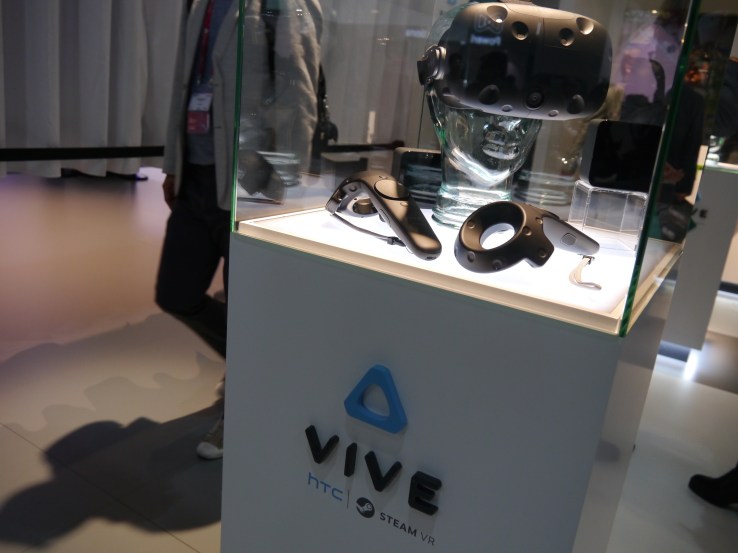
    The latest HTC results, for its Q2, confirm another loss-making quarter for the smartphone and VR headset maker, with the Taiwanese company reporting revenue of NT$18.9 billion ($598 million) for the quarter versus the NT$33.0 billion ($1.07 billion) it made in the year ago quarter. That’s a drop of around 44 percent.
    HTC reported a loss of NT$4.2 billion ($133 million) in its second quarter, which ended June 30. The only bright spot here is that it’s less of a revenue plunge than the company made in its Q1 when it was 64 percent down, year on year.
    The company started shipping its Vive headset during the quarter, although it started taking pre-orders earlier in the year. While pre-orders of its new flagship smartphone, the HTC 10, only began at the start of the quarter, with a $699 price-tag for the device in the U.S. — but it evidently failed to deliver enough uplift to pull it out of the red entirely in Q2.
    HTC reported its first loss-making quarter back in October 2013, and ever since the company has been struggling to turn its smartphone fortunes around in the face of increasingly fierce competition and a squeeze on hardware profit margins.
    Since then it has diversified its business via a wearable and fitness tech partnership with Under Armor, and a side-step into VR, in collaboration with games publisher Valve — the latter a space where there are far fewer competitions but also far fewer consumers, given how early and unproven the tech yet is and the paucity of compelling content.
    It’s certainly still early days for VR, but HTC is crediting the Vive VR rig with giving a boost to its brand and contributing to a 27 percent rise in revenues over Q1 this year.
    The company is also touting “worldwide interest” and “sales momentum” for its HTC 10 smartphone, but isn’t breaking out any actual sales figures.
    Nor is it breaking out Vive sales figures — saying only that sales were “strong” during the pre-order period in the latter half of its Q1.
    That would tally with the notion of a pre-order spike from early adopters, while offering no evidence to suggest signs of any more sustained consumer demand for VR, at this nascent stage.
    For that, the VR industry will need time to mature to convince consumers with compelling content. And, ultimately, prove it’s more than just a flash-in-the-pan nerd’s recurring fantasy.
    Commenting on its Q2 in a statement, HTC CEO and chairwoman Cher Wang said: “In the space of one year, we have reimagined the company, reclaimed our top spot for innovation, and demonstrated solid execution across our major product lines. I believe that HTC has regained its innovative zeal and is looking ahead with confidence and ingenuity.”

    Saturday, 30 July 2016

    Ticwatch 2 is a slick smartwatch that raised $500K on Kickstarter in just 3 days

    Posted By: Uni logo - 04:33:00
    mobvoi ticwatch 1
    If you haven’t been tempted to buy a smartwatch yet, or have been disappointed by your purchase of an Apple Watch, one of Samsung’s (many) Gear wearables or others, there may be another option to consider.
    Last year we shot a video story about Tic watch, a Chinese smartwatch that really stood out from the competition. Impressive though it was, the watch was frustratingly only available in Mandarin. Until now: Mobvoi, the Beijing-based company behind the gadget,has released an English version of its watch via Kickstarter.
    Already it has attracted plenty of attention.
    After just three days on Kickstarter, more than 3,000 people have backed the project, propelling the Ticwatch 2 past $500,000 from its backers. The project smashed its modest $50,000 funding goal just 10 minutes after going live.
    That rush of interest means that the initial $100 “early bird” deal sold out, but the company is replenishing its other offers — which are priced upwards of $139 — to give latecomers the chance to grab a slice of the action.
    You may have never heard of Mobvoi, but it has plenty of links to Google — it was founded by ex-Googlers and even landed investment from the U.S. search giant last year. It made its name designing AI software and services, so the voice-control and commands on the Ticwatch are pretty impressive. Beyond functionality, the watch is well-thought-out, too. It uses a unique navigational setup wherein you essentially roll your finger along the side of the face to move between apps and screens, in addition to screen swipes and wrist movements.

    Building a community of users

    Yuanyuan Li, one of Mobvoi’s co-founders, told TechCrunch that the team is delighted by the initial reception the watch has received.
    “We’re working around the clock and watching new backers come in from across the world,” she said.
    The company sold the original Mandarin version of its watch via standard e-commerce channels in China, but, with the international model, it opted for crowdfunding to build a community of international users to help refine its software and services.
    “We love the community,” Li told TechCrunch in an interview. “This is the key reason we want to launch on Kickstarter. To have more early adopter tech users who have the vision to believe in true innovation.”
    An even earlier version of the international watch was actually seeded with a select group of users, who provided feedback via a closed Facebook Group. Li said that process enabled the team to refine and iterate the software — and in particular support for local services like Uber and Yelp — five times before its Kickstarter debut this week.
    “We have a big vision to ‘make AI empowered products with innovation,’ but also understand we must take every step very carefully and iterate with the community,” she added.
    Unlike some Kickstarter projects, the Ticwatch 2 hardware is proven, which makes the chances of receiving the product pretty high. Software and connected services are where the key development lies.
    Li said that Mobvoi is working to refine the English language software, stamp out bugs (we noticed a few during our demo with the watch) and lure developers to create apps for the home-forked version of Android that powers the watch. Getting the same level of support for apps and services that Ticwatch enjoys in China — where you can order a pizza, book a taxi or browse restaurants using voice commands — will define how useful its international version can be.
    Software is the area in which Mobvoi specializes, but operations is not. Li admitted that the steepest challenge right now is logistics, and ensuring that backers across the world get the product, particularly due to regulations around transporting products with lithium batteries.
    But, hey, those are far better odds than 95 percent of Kickstarter or Indiegogo campaigns, many of which are pre-manufacturing or fraught with risk when investing your cash.
    Mobvoi’s eventual goal is to sell the watch, and other products like a smart car mirror unveiled this summer, to customers overseas. Li said the company hasn’t gotten around to even working on partnerships yet since it is fully focused on developing the Ticwatch 2 for international audiences. Nonetheless, she hopes that it can become a major player in the global smartwatch market in the future.
    mobvoi ticwatch 2

    Indonesia will be Asia’s next biggest e-commerce market

    Posted By: Uni logo - 04:02:00

    Indonesia presents much opportunity for e-commerce among other emerging Asian economies, with current projections putting this archipelago nation’s e-market at $130 billion by 2020 (coming third behind China and India). With an estimated annual growth rate of 50 percent and strong mobile-first initiatives, retailers have a unique opportunity in Indonesia to focus on developing truly mobile platforms to help facilitate e-market growth, particularly in the consumer packaged goods (CPGs) sector.
    Indonesia’s current e-commerce market is similar to China’s online marketplace beginnings, with a large pool of entrepreneurial sellers providing goods purchased based largely on social media recommendations. Similarly, e-commerce in Indonesia also mimics the early U.S. e-market, which was flooded with customers wary to trust online payments and retailers. Indonesia is truly unique in that it has the potential to create a hybrid of the widest opportunities from America and China’s e-commerce economies, propelling the Indonesian online marketplace onto the global stage.

    Mobile-first Indonesia

    Indonesia has established itself as one of Asia’s foremost mobile-first nations, with aStatCounter report estimating that in 2015, more than 70 percent of Indonesia’s internet traffic originated from mobile devices.
    Further evidence that Indonesians have embraced mobile-first initiatives comes from social media, with Indonesians having the highest mobile Facebook usage rate worldwide, with 63 million users in 2015. Further projections put Indonesians’ future Facebook access via mobile being almost 99 percent by 2018, showing a true dominance over desktop platforms. The mobile-first path that Indonesia has taken also allows retailers to focus on creating truly mobile functionality, presenting unique opportunities to dominate in the retail space.

    Indonesian e-commerce startups and funding

    E-commerce startups founded in Indonesia or targeting it as an untapped market are growing exponentially, something reflected in increased interest in startup fundraising within the archipelago nation.
    aCommerce, an end-to-end e-commerce service provider, closed a Series A venture capital round of $10.7 million, while raising another $10 million in funding ahead of a planned Series B raise later in 2016; this action is being led by MDI Ventures, a VC-initiative launched by Indonesian telecom giant Telkom Indonesia.
    Jakarta-based grocery delivery appHappyFresh raised an impressive $12 million Series A round in 2015, with investors led by Vertex Ventures andSinar Mas Digital VenturesHijUp, another Indonesian e-commerce startup, closed a second seven-figure seed funding round from investors, including Fenox Venture Capital and 500 Startups.
    However, the behemoth of all Indonesian deals so far comes in the form of Tokopedia, an online marketplace that raised an impressive $100 million round led by Softbank andSequoia Capital. Mid- and later-stage investors should definitely keep an eye on Indonesian startups, which are clearly having very little trouble finding early-stage interest and investment.

    Why specifically Indonesia?

    Prospering with multiple entrants
    Indonesia’s retail market currently consists of CPGs being sold in retail spaces known as “fragmented trade,” which is primarily made up of independent small business owners. E-commerce is currently growing at a rate twice as fast as fragmented trade, forcing many of these independents to turn to the e-commerce model. This in turn creates a sea of individual sellers eager to satisfy e-consumer demand, alongside mass retailers targeting this same demographic.
    Unlike other Asian nations, Indonesians currently do not solely rely on mass retailers to guide their purchasing decisions, allowing for these individual sellers to maintain market share. This in turn allows the e-market segment to be open to any competitor determined enough to form a market impact, something uncommon in other mobile-first nations.
    Procuring specialized goods to rural areas
    Many Indonesian cities are currently woefully underdeveloped, because of a lack of strong government and infrastructure to support retail construction. However, e-commerce’s rise in popularity exploits this challenge by allowing consumers to purchase CPGs previously unavailable in their specific locales.
    With lots of potential growth in rural and semi-rural areas, e-commerce specifically allows Indonesian consumers to source hard-to-find goods, as opposed to other nations, where rural areas would not have as high use of internet-capable mobile devices. In fact, popular Indonesian online site BliBli has more than one-third of its 2.5 million customers living in rural areas, providing goods ordered almost exclusively off mobile platforms to a population whose sole form of internet access comes via smartphone. This procurement of specialized CPGs to rural areas makes Indonesia a uniquely perfect place for online marketplace growth.
    Providing truly mobile-first platforms
    Indonesia’s e-market also allows for retailers and participants in the fragmented trade space to focus on developing truly mobile-first platforms. This specifically targets the mobile user as the captured demographic, instead of simply re-tooling a desktop platform to a mobile one.
    This truly mobile-first scenario also allows sellers to use smartphones to their advantage, gathering hyper-personalized data to target individual Indonesian consumers as opposed to just specific demographics or groups among Indonesia’s more than 250 million population.
    Mobile-first also allows for the easier entry of participants into the Indonesian e-commerce scene, with startups having the flexibility to choose what CPGs they sell, and even who they want as a consumer, through market penetration via mobile apps.
    Profitability through social media
    With other mobile-first nations being split between different social media sites (China:Weibo/QZone/Tencent QQ; India: Facebook/Google+/Twitter; Philippines: Instagram/Snapchat/Facebook), Indonesia is unique because of its widespread use of a singular social media platform: Facebook (with more than 92 percent of Indonesians having a Facebook account).
    With so much of Indonesians’ current purchasing power being shaped through social media recommendations, focusing on developing integration with Facebook’s platforms offers companies a unique space to potentially profit through direct CPG sales, advertising or even partnerships. Tying Facebook into popular sites such as online forums like Kaskus and Tokobagus, or even online stores like Sukamart, could lead to the inclusion of high-quality videos, product comparisons and optimized images, alongside other mobile-first features, to encourage e-market growth.
    Potential with online payments
    Indonesian consumers are very wary of online payments, much like Americans were in the U.S.’ early online marketplace days, particularly when compared to other mobile-first populations. Many e-commerce transactions are currently paid through either direct bank transfer or bayar di tampat (cash-on-delivery), which is greatly limiting e-commerce growth through lost transactions.
    With Indonesian spend growing nearly 10 percent annuallybayar di tampat will soon be unsustainable. Creating a trusted solution to utilize online payments could lead to huge growth, with retailers both large and small being able to streamline their business flows for optimum efficiency.
    Procuring a modernized logistics/delivery platform
    Indonesia currently also presents a unique opportunity for e-commerce growth because of the country’s weak infrastructure and poor logistics system. This provides a huge growth area for the e-market, with sellers able to vertically integrate their delivery systems with their ordering ones.
    In the age of companies developing in-house solutions instead of relying on outsourcing, the untapped logistics market also gives rise to the growth in Indonesian e-commerce. Companies have the ability to develop proprietary, or even simply more efficient, delivery systems as another form of competition in the online marketplace, with supply strength being a key component in e-commerce.

    Conclusion

    Often underestimated as a driving economic force among its more well-known Asian brethren, Indonesia presents a variety of unique opportunities in becoming one of the largest e-commerce spaces.
    With so many mobile internet users, combined with weak internal infrastructure, companies and individual sellers alike have the potential to grow the e-commerce market to heights unseen. Additionally, a growing middle class with disposable income will only help spread e-commerce growth, alongside a rising influx of both individual sellers and corporations vying to compete in the e-market.
    Indonesia’s e-commerce market is on track to be one of the largest in Asia, utilizing mobile-first platforms to provide all Indonesians with convenient access to consumer packaged goods.

    Friday, 29 July 2016

    Uber focuses on services as it begins to see profits in Southeast Asia

    Posted By: Uni logo - 07:41:00

    Uber has abandoned its ‘land grab’ approach to Southeast Asia and instead switched its focus to new products and services as it begins to see profitability in key markets in the region.
    A source at the U.S. company told TechCrunch that its operations are now profitable in Singapore and the Philippines, two of its largest markets for numbers of rides and revenue, with others close behind. Uber declined to respond to repeated requests for comment.
    This is an interesting reveal since Uber said last month that it has reached profitability in all of its Western markets. Little is known about its emerging market presence, particularly in Southeast Asia — where it covers 15 cities across Singapore, Indonesia, Malaysia, Thailand, Vietnam and the Philippines.
    The company entered the region via Singapore more than three years ago, but its most ‘recent’ new country expansion — Vietnam — was two years ago. Since then, its team has been tasked with scaling the business across the region and now it has been decided that it is time to push on by introducing new services to tighten competition and grow its userbase.
    Despite a cumulative population of more than 600 million people, Southeast Asia sits in the shadow of China and India. That’s certainly been true for Uber, which has invested multiple billions into China via its Uber China subsidiary, while last summer it revealed a billion dollar warchest to battle Olaa $5 billion-valued rival backed by SoftBank, in India.
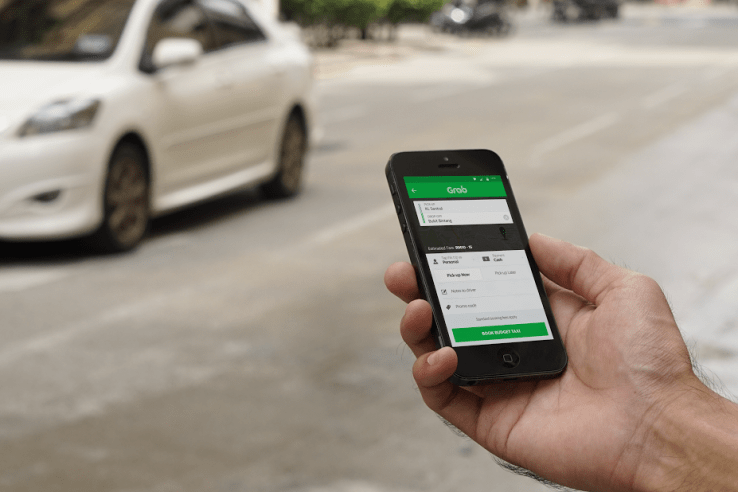
    Southeast Asia, with its population spread across six primary countries with differing currencies, cultures, regulation barriers and languages, was a distant priority, but TechCrunch understands things are changing with Uber keen to increase its rivalry with Grab, the ride-hailing service that claims 19 million app downloads and 350,000 drivers and is affiliated with Ola, China’s Didi and Lyft.

    Food, carpooling and bike taxis

    UberEats, its food-delivery service, its UberPool ride-sharing service, and UberMoto, its bike taxi service, are the three priorities, we understand. UberRush, its courier service, isn’t currently present in Asia but may also be introduced in selected markets before the year is out.
    UberEats recently entered Singapore, which became its first launch market in Asia, and the company hinted that it would also bring the service to Bangkok, Thailand, among other cities.
    Singapore was also one of the first ports of call for UberPool, the service that lets passengers ride with others who are headed in the same direction to save costs and ease inner city congestion. It is also in Indonesian capital Jakarta, while a similar service with shuttle buses launched in Manila, Philippines, this year.
    Finally, there’s UberMoto, which hasn’t quite been the success story that Uber had for hoped. Initially launched in Bangkok in Februaryit was banned from the Thai capital in May, while it has also struggled to find legality in India, the second launch market.
    Indonesia is the major focus for UberMoto as of now, but Uber has plenty of competition. Go-Jek, a local company backed by Sequoia, pioneered motorbike taxis as a service. With more than 200,000 bike drivers on its platform, it goes beyond helping passengers weave Jakarta’s gridlocked cities to get from A to B faster than four wheels, Go-Jek also offers services and food on-demand options. Establishing a motorbike taxi fleets as a platform for additional services is same playback that Uber is opting for, but it is up against a very strong incumbent.

    Rivalries

    Uber’s push for new services isn’t without other rivalries and resistance. Plenty of food delivery companies exist in the region, mainly that’s FoodPanda but Deliveroo recently came to town and there are bespoke companies, like Grain, too.
    Then there are those that are financially well equipped.
    Go-Jek seems to be preparing itself for an arms race. Earlier this month, the Wall Street Journal reported that the startup — which only operates in Indonesia right now — is raising $400 million in fresh capital at a valuation of more than $1 billion. We’ve independently verified that with sources close to negotiations, who told us that the round could be completed within the next couple of weeks.
    Go-Jek aside, Grab rivals Uber on motorbike taxis — as well as private cars — and the $1.6 billion-valued company has raised raised over $650 million to date. Its GrabBike service was also barred from Bangkok but it continues to do business there as a delivery service for packages and documents. Grab recently disclosed that Indonesia is its largest market in terms of rides, but it did not provide raw figures for how its business is performing.
    Grab has also introduced services. GrabHitch, its take on carpooling, launched in Singapore last year and has since expanded to Malaysia, while GrabFood is present in Indonesia. A Grab representative told us that, as of last month, GrabHitch counted 5,000 drivers in those two countries.
    That’s not quite all. Grab last week announced plans to introduce a payments platform this year, initially in Indonesia. A payment system that can be used in shops and stores — Grab partnered with Indonesian retail conglomerate Lippo to kick this off — will take it in a different direction as it too seeks to grow its userbase through services.

    The threats and challenges for Netflix in Asia

    Posted By: Uni logo - 07:33:00

    You might call it a Hollywood makeover of the tech industry; Netflix, a company that used to send you DVDs by mail and was almost sold to Blockbuster for a paltry $50 million, is now a juggernaut staring down big TV networks as it makes their programming and business models seem almost archaic for today’s world.
    The streaming service effected a culture of entertainment being “anywhere, on anything and anytime you like” as the benchmark expectation for an entire generation, forcing other networks out of their comfort zones and making them up their games.
    But to Asian internet users, Netflix seemed like another among many of the wonderful first-world luxuries that kept making waves on the news but never seemed within reach. Even today, being a native South Asian, it’s difficult getting used to the idea that one can get aNetflix subscription where high-speed internet access is still not available to everyone. The service was, until recently, available in only a select few regions with varying limitations on its library.
    The past two years have witnessed a renaissance of worldwide expansion in tech companies. The services that had been exclusive to the U.S. and Europe swept through Asiawith unprecedented efficiency. You can now summon an Uber cab in New Delhi or ask Google Now to help you navigate the wild valleys of Swat in Pakistan. This is because these companies aren’t unaware of the fact that Asia is currently the driver of the world’s economy, while other continents’ financial conditions are ever-increasingly strained. The continent’s snowballing growth is showing no signs of stopping, thanks to domestic supply and demand.

    Against well-adapted local players

    When Netflix set foot in developing and emerging markets such as India, it was greeted by stiff competition, long-established and deeply rooted among local audiences from the get-go. Players such as HotStar, a streaming service run by STAR India, and Eros, a company that both produces and distributes a large selection of Bollywood movies and Indian TV shows online, had seized the opportune power vacuum early while Netflix had been fixated on U.S. and European markets.
    These upstart players found success by catering to local tastes while keeping the price-of-entry in line with the region’s socioeconomic expectations. HotStar understood the mania that drew a large viewership for live cricket in India, while Eros Entertainment brought its offerings to the masses with free basic plans.
    Netflix, meanwhile, currently offers its most basic subscription for 500 INR (or around US$7), more than twice the cost for a monthly subscription to HotStar. Considering the fact that Netflix is still severely lacking when it comes to licensed local content available for streaming, the asking price falls somewhere between luxury and redundancy. Given the massive amounts of popularized content being churned out by Bollywood and Indian television every year, the Netflix library immediately loses its premium label and luster for the average user in India.
    In South-East Asia alone, the video-on-demand streaming market is projected to generate up to $42 million in subscription revenue in 2016. — Media Partners Asia

    No longer the first to market

    In other parts of Asia, there are more than 35 different streaming services catering to local markets with similar strategies. iFlix, available in Malaysia, Thailand and Philippines offers licensed content from U.S. studios to a subscriber base surpassing 1 million viewers. In Indonesia, the situation becomes bleaker for Netflix, as some ISPs are outright blocking its services, while iFlix has forged partnerships with local satellite services such as Ooredoo. Indonesia has the fourth largest population in the world, with more than 100 million internet users, a number that is projected to grow to 133 million in the next 3 years.

    The great walls of China

    Other challenges the streaming giant faces range from political to regulatory. The proverbial elephant on the list of countries in which Netflix has yet to launch is China, where it may take years for the service to get greenlit, if at all.
    China represents the second largest theatrical market in the world, and is quickly becoming the benchmark for international success for movie studios. When big budget risks such as Terminator Genisys and Pacific Rim failed to spark at the box office in western markets, they found resounding success among Chinese audiences, where moviegoers are not only accustomed to Hollywood’s over-the-top flare and spectacle, but outright expect it. It’s needless to say that catering to the Chinese market is becoming increasingly important for studios producing global content these days.
    There are caveats, though.
    In China, Netflix cannot operate without specific permission from the government, and even then it has to walk a razor-thin line over the nature of content it can and cannot distribute in the country. The Chinese government monitors, moderates and censors all content its citizens can access online.
    Netflix’s “House of Cards” found an unlikely audience on Chinese streaming site Sohu, to the extent that it became the most popular show at the time before censorship authorities caught wind of it and took it down. Chinese censorship laws prevent not only violence and sexually explicit content, but also dictate that any content based on anti-authoritarian, anti-military, religious or political themes be blocked altogether.
    “Recently, China’s online entertainment censorship regulations have actually become stricter and must officially meet the same standards met by more conservative television stations,” says Aynne Kokas, an Assistant Professor of Media Studies at the University of Virginia. “In practice, online content is much more difficult to regulate because of the vast numbers of distribution options available. But I don’t foresee a more formal liberalization of online censorship happening in the near term.”
    When I asked her whether Netflix had the capacity to adapt to such restrictions, she added: “I do envision Netflix altering, or at a minimum, expanding, its content to cater to China. We can already see that happening with Netflix original programming like Marco Polo and Crouching Tiger, Hidden Dragon: The Sword of Destiny. The film was partly funded and distributed by Netflix in the U.S., but was also produced and distributed by the China Film Group in China. Netflix is already working with Chinese partners on content and distribution.“
    What does not help Netflix’s case is the fact that most successful streaming services operating within China’s walled-off internet are funded by the government itself, adding to the list of hurdles that Netflix must vault over before it can even begin operating within the region. Other limitations include regulations like the mandatory government requirement for all broadcasters to host no more than 30 percent of foreign content, something thatNetflix already struggles with when it comes to content licensing (as noted in previous examples).

    What would success look like?

    In order to break into the largest markets in Asia alone,Netflix not only has to convince the governments to allow its operations, but also dance around regulations, censorship, finding appropriate content partners for licensing and original content.
    To put things into perspective, it took a juggernaut like Apple Inc. six years just to forge a partnership with China mobile before they were able to launch their products in the region. Similarly, Uber spent an exorbitant amount of time, money and effort to set up its operations in China.
    The fact that these companies still took on these challenges and investment risks to break in to these markets, however, stands as a testament to the lucrative nature and the shifting benchmark for successful globalization that Asia represents to the world. And here we have a company that has single-handedly declawed traditional TV and cinema’s monopoly on entertainment, and has transcended into millennial culture like no other brand before it. If there’s anyone that can make lightning strike twice, it’s probably Netflix.

    Sony posts $205M profit as downsized mobile business stops bleeding cash

    Posted By: Uni logo - 07:30:00

    Sony posted a slim ¥21.2 billion ($205 million) profit for its Q1 2016. That’s down on the ¥82.4 billion profit it carded this time last year, but in general the quarter was a mixed bag of positives and negatives following the impact of cost-cutting initiatives.
    We already knew the firm would take somewhat of a hit this quarter after it warned of the impact that the Kumamoto earthquake had on its manufacturing operations nearby. Revenue for the three-month period did reflect that, coming in at ¥1.613 trillion ($15.662 billion), down 11 percent annually.
    Other factors besides the quake, Sony said, included the strong yen — a factor Nintendo cited in its earnings yesterday — “the deterioration in investment performance” of its Sony Life business, and the downsizing of its smartphone business, which brought in 33 percent less revenue than one year previous.
    There’s a positive side to Sony Mobile’s performance however — it is now at breakeven. Slowing growth and increased competition in the smartphone market had weighed on Sony’s previous financials, with the smartphone business alone responsible for a $544 million loss in the last financial year. So it is quite notable that its mobile communications division posted a very slender ¥400 million ($4 million) operating profit for the quarter.
    That, Sony said, was down to tactical withdraws from tougher markets, and shift away from mid-range phones where competition is fiercest, towards higher-end devices with better margins. Restructuring also boosted its home entertainment and sound unit, operating income for which increased 85 percent annually to ¥20.2 billion ($197 million) despite revenue dropping seven percent over the period.
    Amid those changes Sony’s PlayStation business, which surpassed 40 million consoles sold to date in March, stood.
    Sony’s games and network unit — which includes PlayStation — was the stellar performer, accounting for the most revenue across the firm and over 75 percent of total Sony profits. It posted an operating profit of ¥44 billion ($427 million), up 126 percent year-on-year, on revenue of ¥330.4 billion ($3.2 billion) for the quarter, up 14.5 percent.
    That impressive rise, Sony put down to increased PS4 game and console sales, as well as some cost reductions made internally, including lower marketing spend — which makes sense for a console first launch in 2013. Sony is tapping into the rise of VR with PlayStation VR, its $399 take on things which is due to arrive in mid-October. Given that alternatives like Oculus require a suitable PC rig to work, PlayStation VR could make sense for many who don’t want additional cost or hassle.
    As mentioned at the top, many Sony units were impacted by the recent earthquake. Its imaging component business took a 26 percent revenue dip year-on-year, the semiconductor business was down 23 percent, and its component business saw revenue fall 23 percent.
    Sony Pictures carded a ¥10.6 billion ($103 million) loss which Sony blamed on currencies, despite some strong box office hits like Angry Birds, and revenue in its music business was up nine percent year-on-year.

    Copyright © 2016 Uni logo™ is a registered trademark.

    Designed by Unilogou. Hosted on Blogger Platform.