• unilogou. Powered by Blogger.

    Showing posts with label TAXI. Show all posts
    Showing posts with label TAXI. Show all posts

    Thursday, 4 August 2016

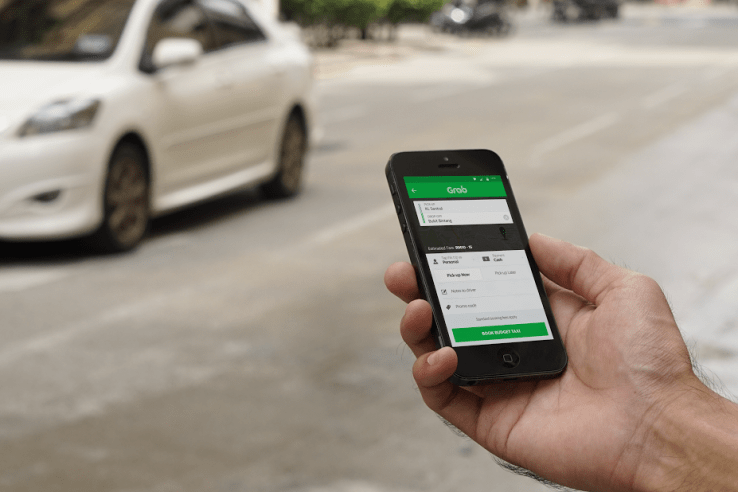
    Uber rival Grab is raising at $2.3B valuation, reportedly burning $35M a month

    Posted By: Uni logo - 05:40:00

    Grab, the company that rivals Uber in Southeast Asia, is in negotiations to close a new round of funding that could value it as high as $2.3 billion, multiple sources close to talks told TechCrunch. Grab was valued around $1.5 billion-$1.6 billion last August when it raised $350 million.
    The Wall Street Journal and Bloomberg this week reported that existing investors Didi Chuxing and SoftBank may lead a $600 million round of new financing. The sum could reach $1 billion after a second close.
    Grab has been in discussions with potential investors to raise money for a number of months, but the round is not yet closed, sources told TechCrunch. That target valuation of $2.3 billion, however, is subject to some secondary share sales from existing backers, we understand, which, once blended, could lower the figure.
    In the world of ride-hailing apps and fast-funding, Singapore-based Grab — which offers licensed taxis, private cars and motorbike taxis in six countries — hasn’t raised at the frequency of others. Its last financing came one year ago in August 2015 when it closed a $350 million Series E round. That included money from Didi and sovereign wealth fund China Investment Corporation (CIC) among others.
    Unlike Uber, which has seen numerous investors decks and financial presentations leaked over the years, precious little is known about the internals of Grab’s business.
    According to documents from Grab investors dated last year — circulated for potential secondary share sales — which were viewed by TechCrunch, the company was forecasted to burn $111 million in Q3 2015, that’s more than $35 million per month. The same data revealed that Grab had $606 million in cash on its books after it closed its Series E round.
    A Grab spokesperson told TechCrunch that the company has not yet touched its Series E money.
    The projections we viewed estimated that Grab would make $31 million in annual net revenue for 2015 — that’s the total amount of money it keeps from the transactions on its platform. That figure was forecast to grow to $193 million in 2016 and $526 million in 2017.
    Grab has never revealed the number of trips it completes each day across Southeast Asia. The same documents forecast that the company would reach 400,000 daily trips by December with a target of 3.5 million rides per day by the end of 2017.
    Grab declined to comment on the content of the documents.

    An uncertain alliance

    It’s notable that news is now leaking out that both Didi and Softbank are reportedly investing in this round, considering the wider state of play in Asia at the moment with both companies.
    SoftBank has pulled back on its overseas deals since Masayoshi Son decide to remain head of the company longer than planned, a move that saw his once heir apparent Nikesh Arora depart. In addition to cutting back on investments in India-based startups, SoftBank sold off a portion of its stake in Alibaba and its holdings in games firms GungHo and SuperCellA big move to buy ARM was viewed by analysts as a shift in strategy to invest in proven companies.
    For Didi, a further investment in Grab comes as doubts have been cast over its alliance with Grab, Lyft and Ola — the so-called Anti-Uber Alliance — following a deal to buy Uber China announced this week.
    As part of that acquisition, Didi is investing a reported $1 billion into Uber’s global business, while Uber CEO Travis Kalanick and Didi Chairman Cheng Wei will join each other’s boards. That deal appears to conflict with the alliance, since their opposition to Uber is the common factor that underpins their union.
    Lyft — which took a $100 million investment from Didi last year — told the Wall Street Journal this week it will “evaluate” its partnership with Didi “over the next few weeks.”
    Grab took news of the Didi-Uber deal more positively, with CEO Anthony Tan telling staff it is proof that a local rival can beat the U.S. ride-hailing giant.
    “They’ve lost once, and we will make them lose again,” he wrote in a company-wide memo obtained by TechCrunch.
    Tan and Grab’s competition is about to get stiffer, though. We reported last week that Uber is pushing new services aggressively in Southeast Asia, a region that has been a distant priority to its businesses in China and India, and Tan himself told staff that he expects Uber to increase its focus on Grab’s home turf.
    Uber is just one of the problems when it comes to Indonesia, the country Grab recently said is its largest based on rides. Motorbike taxi on-demand startup Go-Jek, which claims a fleet of 200,000 drivers, today closed $550 million in fresh investment at $1.2 billion valuation. Internal documents show the company completed 256,000 rides per day, as of April 2016.
    Grab faces its own challenges, too. Tan has spoken about the difficulty of hiring talent in Southeast Asia, and retaining hires is likewise a test. Numerous former Grab staff told TechCrunch that the company is struggling to motivate and retain its workforce, particularly those in technical positions.
    Specifically, the introduction of a bell curve assessment system — a model in which companies discard their least effective staff — has had a detrimental impact on morale, we were told. While popular in Silicon Valley, that style of management hasn’t been embraced by many startups in Southeast Asia.
    Other sources called Grab’s management ineffective and their policies haphazard, and claimed that the office it opened in Seattle in January is symptomatic of its struggle to attract and retain talent in Southeast Asia.
    Another challenge for the company is that it started out offering rides with licensed which are significantly less lucrative than Uber’s rides for example. For its ‘GrabTaxi’ licensed taxi ride service, Grab charges only a booking fee of $1-2 with the driver keeping the fare in full. Uber takes a variable cut of each ride it facilities, typically as much as 30 percent.
    Grab addressed this gap when it started a private car business — Grab Car — three years ago which uses Uber-style pricing, however it is somewhat cannibalized by the GrabTaxi service. According to data shared by Grab investors, GrabTaxi service accounted for 70 percent of all Grab trips taken in July 2015. The figures will have changed since then although the lower-profit taxi business is likely still dominant.
    Grab said last month that its GrabCar and GrabBike services account for “the vast majority” of trips it processes in Indonesia. The company did not provide a raw figure to support that statement, and it said that it does not break down out its ride per day or revenue figures across the region.

    Thursday, 28 July 2016

    China issues guidelines to legalize ride-hailing apps like Uber and Didi Chuxing

    Posted By: Uni logo - 04:35:00

    China took a big step forward today after it announced national guidelines to make ride-hailing services like Uber and Didi Chuxing legal in the country from November.
    Drivers from both services and others like Yidao Yongche, majority owned by big-spending LeEco, have operated in fuzzy areas, with police arresting drivers and impounding cars on a seemingly inconsistent basis in China. (As a non-Mandarin speaker, having police stop your Uber or Didi is a truly worrying experience that I’ve lived through.) These rules are still to be adopted by regional and local officials across China, but this is most definitively a step in the right direction for ride-hailing operators.
    Sources told Bloomberg that the main features of the rules, which are slated to go into effect from November 1 this year, include:
    • Online car booking services will be made legal
    • The government will encourage development of a sharing economy and online car booking and non-cash payments
    • Drivers must have a minimum of three years of driving experience to work on a ride-hailing platform
    • Cars cannot have more than seven seats and must be retired from service after reaching 600,000 km or over eight years in age
    • User information and data collected by car-booking platforms must be stored within China and for at least two years
    Some of those stipulations may count against part-time drivers, and it remains unclear how that will impact Uber and Didi’s fleet of cars. In general, though, the duo have both been very vocal in welcoming the regulations — most likely because they are not as extreme asan earlier version of the proposal had been.
    Uber called the announcement of the regulations “a welcome step in a country that has consistently shown itself to be forward-thinking when it comes to innovation.”
    “Modern regulations can let these services grow while ensuring public safety and protecting consumers,” the company added in a blog post.
    Didi Chuxing, the company that is widely acknowledged to be leading Uber in China andrecently raised a round in excess of $7 billion, called today’s development “a positive first step.”
    “We believe the Rules reflect the government’s open-minded regulatory approach to the mobile car-hailing industry in the broader context of the sharing economy,” it said in a statement.
    “As a member of the rideshare community, DiDi welcomes the government’s endorsement and encouragement of the industry and China’s emerging sharing economy. We believe the Rules will usher in a new stage of growth for China’s online ride-booking ecosystem and that DiDi is prepared to meet these new requirements,” the company added.
    It isn’t all rosy right off the bat, however. As mentioned, these rules will need to be adopted at both provincial and municipal level across China, and, in order to comply with them, the ride-hailing companies will need to apply and secure new licenses for their businesses.
    Didi — which said it will set aside around $15 million for a “development fund” to speed up its integration with regulators, taxi firms and drivers — did voice some concern at the licensing issue process proposed.
    We noticed that the Rules require, in general principle, local taxi administration authorities to manage the platform licensing application process, and a certain discretion is granted local governments to determine the detailed operating requirements. We call for local authorities to adopt market-driven approaches that encourage innovation and new business models in order to continue serving the real needs and interests of our ecosystem participants. One of the greatest merits of ridesharing is to mobilize and efficiently allocate fragmented and under-utilized resources to meet fluctuating transportation demands. We also hope local practices will allow for separate treatment of part-time drivers to foster supply-side reform in the transportation industry.
    Didi claims 14 million drivers and over 300 million active users with 10 million rides per day. Uber China doesn’t issue figures, but Chinese cities account for a number of Uber’s busiest cities on the planet. While those figures are impressive and indicative of how large a market China is, these companies are still scratching the service.
    Li Zijian, senior director for international strategy at Didi, recently estimated that his company has reached just 1.1 percent of consumers in the country. Li pegged the on-demand transportation industry in China to be worth $200 billion over the next five years, and legitimizing the industry is surely an important component — for both Didi and Uber.

    Wednesday, 22 June 2016

    Can taxi drivers still have a place in a driverless world?

    Posted By: Uni logo - 03:29:00


    Uber and Lyft, the two big mobile taxi firms in the U.S., have both mentioned a future for their services that does not include humans.
    Blacklane, a German mobile chauffeur service, has a different view on the future. Speaking to Business Insider, CEO Jens Wohltorf said people still want someone else in the vehicle, and taxi drivers may be able to transition from driving to providing information, entertainment, and beverages, similar to a cabin crew on an airplane.
    “When autonomous cars arrive, they [drivers] will have the time to concentrate on different things more often,” said Wohltorf. “There is a cabin crew in every aeroplane, right?”
    It’s an interesting thought, but not one many ridesharing services are likely to entertain. Once the driver is removed, all Uber, Lyft, and other ridesharing services have to worry about is the cost of fuel, which may vastly reduce the cost of a taxi.1
    That being said, ridesharing apps could provide a special service for riders that don’t feel safe in a self-driving car. We suspect that option, like Uber LUX, will be much more expensive. Blacklane is more likely to keep drivers inside the cars, as it provides a chauffeur service, rather than ridesharing or ride-hailing.
    “It’s not that we disagree with other companies autonomous vehicles in ride-sharing or ride-hailing,” said Blacklane communications director, Adam Parken. “It’s that in our market, we believe there will be a role for drivers [in the autonomous future.]”

    Daimler could provide cars to Blacklane — but no plans yet

    Black lane is not, as far as we know, building a self-driving platform. Its largest investor Daimler—the parent company of Mercedes—could be the provider of the self-driving platform for Black lane taxis, if it wants to integrate self-driving cars into its fleet in the future.
    The mobile chauffeur is more likely to take advantage of driver less taxis by offering a human service. In the interim between semi-autonomous and fully driverless, we expect to see many of these services crop up, running on the fear people have of an autonomous system driving them around the city.
    Fears of autonomy in the automotive industry are definitely real. Most people in U.S. and U.K. surveys have said they always want control of their car and don’t want driver less services to be available on the roads, despite the potential decrease in accidents on the road.


    General Motors flags down Lyft to start taxi trial

    Posted By: Uni logo - 03:26:00


    General Motors and Lyft want prototype autonomous taxis on the road by the end of the year, a preliminary step for the ride-sharing company in swapping human drivers with a machine.
    GM has spent $1.5 billion on the program so far – $500 million as the lead investor in Lyft’s funding round and $1 billion to acquire San Francisco-based Cruise Automation, which provides the self-driving system that will be installed inside prototype cars.
    Lyft will trial the program in an unknown city and use GM cars to test the autonomous features, according to WSJ. Customers will be able to opt-in or out of the program from the mobile app.
    It will be the first autonomous test that uses the public as testers, which may alarm regulators that don’t currently condone public use of driverless vehicles. Google, Uber, and Tesla have all run trials in California, Pittsburgh and Michigan, but always in a controlled environment with members of the press and the public.

    Lyft playing catch-up?

    Uber has already poached key executives from Ford and Google’s self-driving team, showing it places a big emphasis on autonomous cars for the future of its service. Lyft came a little late to the party, but the deal with GM makes it a key player in the rise of automotive automation, and makes the rivalry between Uber even more tenacious.
    GM isn’t just looking at the self-driving side of the deal, it wants Lyft drivers to lease or purchase cars through a program set up in Chicago, which will expand to more cities later this year. The Chevrolet Equinox is the car currently available for drivers, though GM is expected to add the Bolt to the list of choices to get more electric cars on the road.
    A few traditional carmakers are starting to partner with a tech company, almost as a security for the automotive future. Fiat Chrysler recently announced a partnership to provide Google more autonomous cars.
    Tesla and Uber are still lone warriors in the battle, though the latter is a partner of Baidu, who has its own self-driving car. Tesla has shown no signs of wanting to enter the taxi market, so it might become a partner for a new ride hailing app in the future.

    Friday, 13 May 2016

    General Motors flags down Lyft to start taxi trial

    Posted By: Uni logo - 23:56:00


    General Motors and Lyft want prototype autonomous taxis on the road by the end of the year, a preliminary step for the ride-sharing company in swapping human drivers with a machine.
    GM has spent $1.5 billion on the program so far – $500 million as the lead investor in Lyft’s funding round and $1 billion to acquire San Francisco-based Cruise Automation, which provides the self-driving system that will be installed inside prototype cars.
    Lyft will trial the program in an unknown city and use GM cars to test the autonomous features, according to WSJ. Customers will be able to opt-in or out of the program from the mobile app.

    It will be the first autonomous test that uses the public as tester1s, which may alarm regulators that don’t currently condone public use of driverless vehicles. Google, Uber, and Tesla have all run trials in California, Pittsburgh and Michigan, but always in a controlled environment with members of the press and the public.


    Lyft playing catch-up?

    Uber has already poached key executives from Ford and Google’s self-driving team, showing it places a big emphasis on autonomous cars for the future of its service. Lyft came a little late to the party, but the deal with GM makes it a key player in the rise of automotive automation, and makes the rivalry between Uber even more tenacious.
    GM isn’t just looking at the self-driving side of the deal, it wants Lyft drivers to lease or purchase cars through a program set up in Chicago, which will expand to more cities later this year. The Chevrolet Equinox is the car currently available for drivers, though GM is expected to add the Bolt to the list of choices to get more electric cars on the road.
    A few traditional carmakers are starting to partner with a tech company, almost as a security for the automotive future. Fiat Chrysler recently announced a partnership to provide Google more autonomous cars.
    Tesla and Uber are still lone warriors in the battle, though the latter is a partner of Baidu, who has its own self-driving car. Tesla has shown no signs of wanting to enter the taxi market, so it might become a partner for a new ride hailing app in the future.

    Copyright © 2016 Uni logo™ is a registered trademark.

    Designed by Unilogou. Hosted on Blogger Platform.