• unilogou. Powered by Blogger.

    Showing posts with label Google. Show all posts
    Showing posts with label Google. Show all posts

    Wednesday, 30 November 2016

    Google Earth Timelapse shows us how our planet has changed since 1984

    Posted By: Uni logo - 06:05:00
    Shirase Glacier, Antarctica

    Now, Google has updated Timelapse with the four past years of imagery — it now spans the period from 1984 to 2016 — and "petabytes" of new data, which includes new, sharper images. 
    The imagery gives you quite an amazing view into various processes that change the shape of our planet — deforestation, glacial motion, urbanization, war. Google offers a curated selection of interesting locations and events, such as the reconstruction of the Oakland Bay Bridge in San Francisco or the movement of the Hourihan Glacier in Antarctica
    San Francisco - Oakland Bay Bridge reconstruction

    San Francisco - Oakland Bay Bridge reconstruction
    IMAGE: GOOGLE/LANDSAT/COPERNICUS
    You can, however, point the map to any location in the world and see how it changed over time (though the imagery might not be of the same quality everywhere). 
    See a YouTube playlist with all of Google's curated Timelapse examples, below. 
    Google has shared an interesting insight on how Timelapse was created on its blog — it took three quadrillion pixels and more than 5,000,000 satellite images to do it. Check out the details here.

    Friday, 14 October 2016

    Verizon's Pixel and Pixel XL won't be inferior to Google's

    Posted By: Uni logo - 23:26:00
    Google's new Pixel phones come in three colors: Quite Black, Really Blue and Very Silver.

    Last week, Google told 9 to 5 Google it would be in charge of releasing monthly security updates for Verizon's Pixels and Verizon would be in charge of pushing out system updates (read: new versions of Android).
    Well, that's no longer the plan. Google will release both system updates and monthly security patches and Verizon's Pixel phones will receive them on the same day as Pixel phones sold through the Google online store according to Ars Technica.
    "First and foremost, all operating system and security updates to the Pixel devices will happen in partnership with Google," a Verizon spokesperson told Ars. "In other words, when Google releases an update, Verizon phones will receive the same update at the same time (much like iOS updates). Verizon will not stand in the way of any major updates and users will get all updates at the same time as Google."
    That's really great news! The fear with Verizon handling system updates was that it could drag its feet like it has in the past.
    And there's more good news: the three pre-installed "bloatware" apps that come on the Verizon Pixels will be removable and the phones will be carrier unlocked, meaning they'll work with any carrier.
    We previously recommended buying the Pixels directly from Google, but now that we know the Verizon versions will be identical to Google's (after you uninstall the three apps, of course), the only reason not to buy from Verizon is if you're on a different carrier. 
    If you're on Verizon, the Pixels are even more attractive now, especially if you trade in your old phone for up to $300.

    Upcoming Google Search update will emphasize mobile over desktop

    Posted By: Uni logo - 23:23:00


    The company is in the process of creating a new index for mobile devices, which will become the "primary" index for search, according to Google webmaster trends analyst Gary Illyes. This means searches from mobile devices will serve up the freshest results as Google will update its mobile index more frequently.
    Google has previously discussed such plans but Illyes' comments, which were reported bySearch Engine Land, are the first indication that the company plans to roll this out fairly soon. 
    A quick refresher on how Google Search works: Google's bots crawl the web tracking more than 60 trillion web pages and the links within them. These pages are then categorized into a massive index based on hundreds of different factors. This index, along with a series of algorithms, enables Google to turn up relevant search results when you enter a query into the search box.
    Right now, Google only uses one such index for all its mobile searches. Under the upcoming update Illyes detailed, though, Google will create a separate mobile-only index that will serve as the "primary" index for search. As Search Engine Land points out, it's unclear exactly how this will work or exactly what the impact will be, but at a basic level it means that desktop and mobile users will see different search results and Google will put more resources into those surfaced on mobil
    While some have interpreted this to mean that Google is "downgrading" desktop in some way, there are practical reasons why Google would want to prioritize mobile for updates. For one, mobile now accounts for the majority of all Google searches, so using an index that was created primarily for desktop no longer makes sense.
    Think of your own search habits: When you use Google from your phone, chances are, you're looking for an immediate answer to a question you have in the moment. Likewise, if you want to research a topic more deeply — something that requires combing through several pages of results — you probably save that for desktop. So, it follows that Google would want to make its freshest results mobile-first. 
    The change also stands to drastically improve the user experience for mobile users. Think of how frustrating it is to search for something on your phone only to land on a link that is virtually unreadable because the website isn't optimized for mobile. 
    This update, in theory, helps guard against that since Google could prioritize content that's optimized for mobile devices even more than it already does. We've seen signs of this already, particularly with AMP, which allows publishers and others to create ultra-fast loading versions of articles to display in search results. 
    While we'll have to wait for further details from Google to find out exactly what the implications of the change will be — Google didn't respond to Mashable's request for comment on the update —it does sound like we'll find out sooner rather than later. The new index should be rolling out "within months," Illyes told Search Engine Land.

    Saturday, 20 August 2016

    The fight is on to win the $560 billion self-driving car market

    Posted By: Uni logo - 02:08:00

    The autonomous car market will grow to an eye-watering $560 billion in the coming years, but many firms will end up road-kill in thae race for market share.
    The Detroit Bureau point out a new study by consulting firm AT Kearney estimates the market for autonomous vehicles will grow to $560 billion over the next 20 years.
    Researchers surveyed 150 executives from tech, automotive and communications industries as part of the study. They found that, while the connected car market will eventually be huge, it will take two decades to overcome significant barriers to growth.
    “While industry players have already developed or tested many of the technological building blocks, tough and tricky legal challenges remain, including new laws on accident liability, on where self-driving cars may operate, and on who may have a license,” AT Kearney said.
    “Also, new traffic guidelines have to be developed for autopilot and for fully autonomous driving. The incentives to establish the right legal framework are high, and executives in our study are confident this framework will develop, probably with California as the pioneer,” the report added.

    Are self-driving regulations the real traffic jam?

    This comes against the backdrop of concerns that America could become a disjointed patchwork of incompatible and competing regulations for self-driving cars.
    At this early stage in the technology’s evolution, many players are jockeying for position in an increasingly crowded field.
    But AT Kearney cautions that as the market matures, many players in the self-driving vehicle race will end up crashing and burning along the side of the road.
    “Manufacturers face hard questions as they jockey for position — from thinking about their value propositions, which core capabilities they need, and which players they should partner with, to developing business models that offer the best go-to-market strategies and the best chances to win,” said the report.
    All of the major car manufacturers are already well committed to developing self-driving car technology.As well, many of the leading tech firms are competing as well.
    Taxi market disruptor Uber is busy testing autonomous cars as part of a strategy to eventually integrate them it its ride-sharing fleet. And search giant Google continues to expand its autonomous vehicle testing program in a bid to remain the U.S. leader in the burgeoning technology.

    Thursday, 18 August 2016

    Uber’s first self-driving cars will start picking up passengers this month

    Posted By: Uni logo - 13:32:00

    It’s been a while since news broke in early 2015 that Uber was working on self-driving cars. Earlier this year, the company openly admitted it was testing cars in Pittsburgh, but we haven’t heard much more over the last 18 months.
    With Google, the self-driving car leader, slowly making progress with its autonomous cars, you’d be forgiven for thinking Uber’s efforts are far behind and barely visible in itsfrenemy‘s rearview mirror.
    Well think again!
    It turns out Uber has been making very rapid progress on its plan to replace its one million-plus drivers with computers. Bad news if you’re an Uber driver…
    In an interview with Bloomberg, CEO Travis Kalanick revealed that the company is preparing to add self-driving cars to its fleet of active drivers in Pittsburgh as soon as this month.
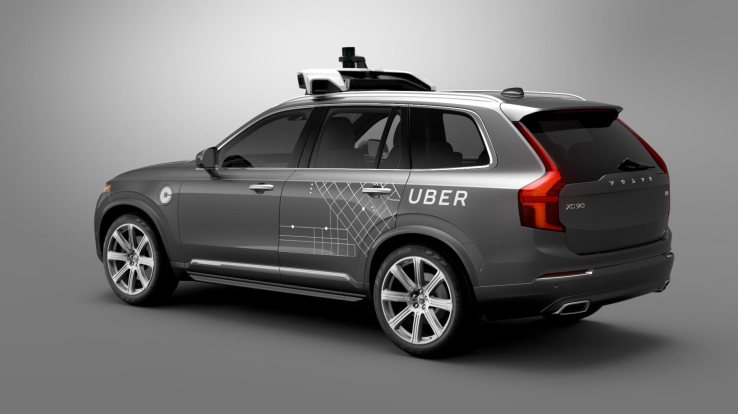
    The company will deploy around 100 modified Volvo XC90s outfitted with self-driving equipment. Each vehicle will be staffed by one engineer, who can take the wheel as/when needed, and a co-pilot to observe and take notes. There will also be a “liquid-cooled” computer sitting in the trunk recording trip and map data.
    That will mean that regular Uber punters in the city have a chance of getting an autonomous vehicle for their ride — their trip will be free if so.
    Precious little was known of Uber’s plans for self-driving cars, but the company told Bloomberg that it will outfit cars with autonomous driving kits rather than develop its own vehicles as Google is doing.
    To do that, Uber has quietly snapped up Otto, a promising startup that launched this year to bring self-driving technology to trucks. Otto’s technology can be fitted to existing trucks, and, according to Bloomberg, the technology will be adapted to create a lidar — laser detection — system to power autonomous Uber vehicles.
    The Otto acquisition is hugely notable, not only for the technology but the personnel involved.
    The company was founded by former Googlers Anthony Levandowski, Lior Ron, Don Burnette, and Claire Delaunay. Levandowski led Google’s self-driving car efforts, Ron was an executive on Google Maps and Motorola, while other staff have spent time with Apple, Tesla and other notable automotive firms.
    The deal is set to close as soon as this month, after which Levandowski will lead Uber’s driverless car efforts. In addition, two new R&D centers will open up to speed the technology’s development.
    “We were really excited about building something that could be launched early,” Levandowski told Bloomberg of why he left Google.
    His additional comments — which include calling Kalanick a “brother from another mother” — hint at frustrations with the slow speed of development from Google’s self-driving project. Uber, it seems, is more willing to move forward with self-driving at a faster pace.
    Time will tell how that plays out, but we’ll get our first glimpse soon enough.
    Uber Self Driving Cars

    Wednesday, 17 August 2016

    Connected cars need to play well with smart cities

    Posted By: Uni logo - 00:58:00


    As autonomous vehicles and smart city investments continue their blistering growth, experts say it’s vital that these two connected juggernauts work in better synchronicity.
    An article by IT Online discusses recent findings by the International Data Corporation (IDC) its report “Collaboration Between Automotive OEMs and City Leaders for Implementing Connected Car and Smart City Solutions.”
    In the report IDC looked at the interplay between these two massively transformational technologies which are generating huge levels of investment.
    Global spending on autonomous cars will reach $29.6 billion by 2017, while governments around the world plan to spend $16.5 billion on intelligent transportation systems in the same timeframe.
    IDC says that private-sector leaders of connected car technology must better collaborate with state and local governments to develop further advancements in urban environments.
    Specifically, IDC says these two factions must work together on developing solutions for such issues as urban congestion, environmental impacts, street safety, better vehicle design and more value-added services for citizens.
    “Connected cars have reached critical mass, and their interaction with the transportation infrastructure within Smart Cities is ongoing,” said IDC report authors Heather Ashton and Ruthbea Yesner Clarke.
    “Automotive OEMs and smart city leaders will need to work closely to ensure the continued development of, and support for, connected car capabilities and services such as vehicle-to-vehicle and vehicle-to-infrastructure communications that will increasingly include autonomous operations.”

    But are smart cities projects tackling real problems?

    IDC’s recommendations come amid reports that predict that annual revenues from smart city projects will grow to nearly $89 billion by 2025. Despite this spending most smart city initiatives, include smart transportation projects, are focusing on solving peripheral issues, with few big projects tackling core city problems.
    Meanwhile, connected car technology is witnessing a global race between technology giants like Tesla, Google and traditional auto manufacturers to develop the category killing robot vehicle. Yet these proponents of autonomous vehicles are focusing more on the technical self-sufficiency of their cars in urban environments, and less on how they integrate into the larger fabric of the reconfigured smart city of the future.

    Does Google’s next big OS have a touch of Fuchsia?

    Posted By: Uni logo - 00:55:00


    Fans of Google’s Android and Chrome operating systems will want to keep their eyes on a new project recently mirrored on GitHub called Fuchsia, and despite it appearing on the open source repository source, very little is actually known about the project as of now.
    There haven’t been any official announcements from Google, seemingly because the project is in its earliest stages of development.
    In an IRC chatlog distributed on popular technology news aggregate Hacker News, Google’s Brian Swetland stated: “The decision was made to build it open source, so might as well start there from the beginning,”
    What we can expect is an operating system that isn’t based on either the Chrome or Android systems. In fact, Fuchsia may not even be based on an existing Linux kernel. Android Police, the site that initially reported on rumors of the new project, expanded on Fuchsia’s use of the Magenta kernel, a powerful solution for operating systems that power a variety of device-types down to the simplest IoT systems.
    As a kernel, Magenta has the ability to scale from small connected devices to mobile, and even desktop systems.
    If Chrome is the solution of choice for desktop systems, and Android the designated operating system for mobile, then it stands to reason that Google’s next big operating system project would be focused on the emerging Internet of Things market, a quickly-evolving ecosystem of networked systems and devices that span many levels of size and complexity.

    Is Fuchsia the next step for Chrome and Android?

    Other rumors indicated that Fuchsia would become the base for a new generation of Chrome and/or Android, enabling these systems to take advantage of tomorrow’s demands. With augmented reality and VR putting additional strain on current-generation hardware and software, a streamlined operating environment would make expanding on these applications easier.
    Nick Mediati of PC World theorized: “One possibility I see is where Google uses Fuchsia instead of Linux as the underpinnings for next-generation versions of Chrome OS and Android. That is, both would use some form of Fuchsia — or the Magenta kernel — as the underlying basis of the two operating systems (as well as the operating system for other Google devices such as the Chromecast).”
    Whatever the case may be: This is going to be one project worth watching.

    Monday, 15 August 2016

    Google’s mysterious new Fuchsia operating system could run on almost anything

    Posted By: Uni logo - 14:25:00
    '
    Google has a new operating system called Fuchsia in development, with the early results publicly available on Github (and you can even compile and run it yourself, should you feel daring). The new OS differs from both Android and Chrome OS since it doesn’t run on a Linux kernel, and instead uses as its core code something called Magenta, which might make it better suited to running on embedded systems like fixed-purpose Internet of Things connected devices.
    The new project is actually going to be available on Raspberry Pi 3, according to project member Travis Geislebrecht, a Google team member who previously worked on Palm, Apple, Danger (makers of the Sidekick) OS projects, as well as embedded system OS development for Jawbone. Given its pedigree, and the fact that clues in the OS code suggest it can run on everything from dash infotainment systems for cars, to embedded devices like traffic lights and digital watches, all the way up to smartphones, tablets and PCs.
    Suggestions for what Fuchsia will actually be used for vary, but theories run anywhere from an OS to replace (and truly unify) both Chrome OS and Android, to something that can run with better efficiency on small, low-power devices like Android Wear smartwatches.
    It’s intriguing to imagine Google building One OS to Rule Them All, especially considering that it has likely learned a lot from the Android and Chrome OS experience about what a next-gen OS might look like. A restart would also let it course correct on some of the issues that have plagued Android, including updates that go out at the discretion of carrier and OEM partners, which result in the bulk of users being a couple of generations behind.
    It’s also always possible this is a skunkworks project that will quietly disappear, but it would make sense for someone like Google to build an OS designed for our modern connected world, in which almost everything is a computer, and almost everything has the potential to work together.

    Monday, 8 August 2016

    How Google Analytics ruined marketing

    Posted By: Uni logo - 03:50:00

    Marketers in the high-tech world who use phrases such as “social media marketing,” “Facebook marketing” and “content marketing” do not understand the basic difference between marketing strategies, marketing channels and marketing content. And Google Analytics is to blame.
    In the just over 10 years since the release of the platform in November 2005, too many tech marketers now ignore the difference between strategies and channels, favor digital channels that often deliver lower returns than traditional channels and think that direct responses are the only useful ROI metric.
    And all of that is wrong.

    No one ever said “television marketing”

    Imagine that it is the 1990s and I want to reach the people who watch “Friends” on television. I would have these three available strategies out of the five that comprise the traditional Promotion Mix:
    • Advertising
    • Publicity (in the form of a product placement)
    • Direct marketing (in the form of a direct-response infomercial)
    I could run an advertisement during an episode of “Friends.” I could pay NBC to have the coffee house hold an event that would feature my product in an episode. I could hire a “Friends” actor to appear in an infomercial that would air directly after an episode. And so on.
    Now, none of this would be “television marketing” because “television marketing” is not a “thing.” “Television” is a marketing channel, not a marketing strategy. If I choose to advertise on television, “advertising” is the strategy, the advertisement itself is the content and “television” is the channel over which I transmit the advertisement.
    In the same way, “Facebook marketing,” “social media marketing” and “content marketing” are not “things.” “Facebook” is a marketing channel. “Social media” is a collection of marketing channels. “Content” is a tactic, not a strategy. “Content” is produced in the execution of strategies such as advertising, SEO and publicity. Here are two examples.
    If a tech marketer creates a video and spreads it on Facebook, here is what he is doing:
    • Strategy = Advertising (one of the parts of the traditional Promotion Mix)
    • Content = The video itself
    • Channel = Facebook
    If someone creates informational material that aims to rank highly in Google search results, here is what he is doing:
    • Strategy = SEO (which may need to be added to a new, modern Promotion Mix)
    • Content = The blog post
    • Channel = The company’s blog/Google search results
    Why is this important? The terms that we use reflect the assumptions that underlie our approaches to marketing — and bad assumptions lead to bad marketing at best, and spam at worst. This is what I believe that Mark Ritson meant when he wrote his recent, controversial Marketing Week column stating that marketers need real marketing qualifications.
    After all — and as I think Ritson was implying — too many online marketers do not know basic principles such as the few that I have mentioned so far. And it was the introduction of Google Analytics that led to these poor assumptions and this bad terminology today.

    The traditional marketing analytics buckets

    Marketing campaigns have always involved the creation of a message, the insertion of that message into a piece of content and the transmission of that content over a channel to an audience.
    And as I wrote in my prior, much-discussed TechCrunch column that discussed how too many marketers in the tech world do not understand basic marketing terminology and practices, that overall process occurs within the strategic frameworks of the five “buckets” within the Promotion Mix (“promotion” is one of the four Ps in product marketing): direct marketing, advertising, sales promotion, personal selling and publicity.
    In this lengthy tutorial on integrating traditional and online marketing on Moz, I described how each of these “buckets” has pros and cons, as well as best practices:

    In the same way, “Facebook marketing,” “social media marketing” and “content marketing” are not “things.” “Facebook” is a marketing channel. “Social media” is a collection of marketing channels. “Content” is a tactic, not a strategy. “Content” is produced in the execution of strategies such as advertising, SEO and publicity. Here are two examples.
    If a tech marketer creates a video and spreads it on Facebook, here is what he is doing:
    • Strategy = Advertising (one of the parts of the traditional Promotion Mix)
    • Content = The video itself
    • Channel = Facebook
    If someone creates informational material that aims to rank highly in Google search results, here is what he is doing:
    • Strategy = SEO (which may need to be added to a new, modern Promotion Mix)
    • Content = The blog post
    • Channel = The company’s blog/Google search results
    Why is this important? The terms that we use reflect the assumptions that underlie our approaches to marketing — and bad assumptions lead to bad marketing at best, and spam at worst. This is what I believe that Mark Ritson meant when he wrote his recent, controversial Marketing Week column stating that marketers need real marketing qualifications.
    After all — and as I think Ritson was implying — too many online marketers do not know basic principles such as the few that I have mentioned so far. And it was the introduction of Google Analytics that led to these poor assumptions and this bad terminology today.

    The traditional marketing analytics buckets

    Marketing campaigns have always involved the creation of a message, the insertion of that message into a piece of content and the transmission of that content over a channel to an audience.
    And as I wrote in my prior, much-discussed TechCrunch column that discussed how too many marketers in the tech world do not understand basic marketing terminology and practices, that overall process occurs within the strategic frameworks of the five “buckets” within the Promotion Mix (“promotion” is one of the four Ps in product marketing): direct marketing, advertising, sales promotion, personal selling and publicity.
    In this lengthy tutorial on integrating traditional and online marketing on Moz, I described how each of these “buckets” has pros and cons, as well as best practices:
    Here’s a direct marketing example. Say that one writes advertising copy to generate direct-response leads. That same copy will often deliver similar results — subject to specific, individual format restrictions of each channel — across platforms, including direct mail, email, Facebook ads and Google AdWords, because human nature does not change.
    There is no “digital marketing” and “traditional marketing.” There is only marketing — just ask Campbell’s, which has now consolidated all offline and online work under the CMO.

    Google Analytics changed the buckets

    According to W3TECHS, Google Analytics is used by 55 percent of all websites and has a traffic analysis tool market share of 83 percent. More than half of those websites use GA as their only source of marketing data.
    Google transformed the marketing industry. However, the introduction and widespread adoption of GA pushed marketers to change their focus from the strategy to the channel (this is a screenshot from an old client of mine back when I was a consultant):

    Thursday, 4 August 2016

    Delphi joins crowded autonomous taxi run in Singapore

    Posted By: Uni logo - 12:26:00


    Joining self-driving startup nuTonomy’s Singaporean efforts, automotive supplier Delphi announced on Sunday that is has been awarded a contract by Singapore’s Land Transport Authority (LTA) to create an experimental pilot program for an autonomous taxi service.
    The program provides three routes for people to choose, all located in a Queenstown subzone called one-North. Delphi will outfit six Audi SQ5 cars with the autonomous tech to drive people.
    All cars will have a safety driver that can take over control of the car. Delphi expects by 2019 the safety driver will no longer be necessary, and by 2022 it wants the program to be fully operational.
    It will also pick the people that drive in the autonomous vehicles to start, though the company does want the opportunity to drive everyday commuters in the near future.
    Delphi believes the pilot program will provide the company with lots of data on the autonomous vehicle system, and hopefully improve the view people in Singapore have of self-driving cars.
    Even though Singapore is the first, Delphi has reportedly in discussions with other cities in Europe and North America. It makes note of this in the announcement video (below). San Francisco and London are two possible locations, both have lower regulations than most cities for self-driving vehicles.
    Delphi is not the first company to test autonomous vehicles in Singapore, in fact, it is a few months behind MIT spinoff nuTonomy. The startup arrived in Singapore in early 2016, in one-North where Delphi are starting to test cars, but recently signed an agreement with the LTA to expand its autonomous taxi pilot program.
    Surprisingly, Google, Tesla, and Uber have not made large investments into Singapore. That’s despite the country’s rather relaxed regulations on self-driving and tech-focused government,

    Delphi joins crowded autonomous taxi run in Singapore

    Posted By: Uni logo - 03:32:00
    Joining self-driving startup nuTonomy’s Singaporean efforts, automotive supplier Delphi announced on Sunday that is has been awarded a contract by Singapore’s Land Transport Authority (LTA) to create an experimental pilot program for an autonomous taxi service.
    The program provides three routes for people to choose, all located in a Queenstown subzone called one-North. Delphi will outfit six Audi SQ5 cars with the autonomous tech to drive people.
    All cars will have a safety driver that can take over control of the car. Delphi expects by 2019 the safety driver will no longer be necessary, and by 2022 it wants the program to be fully operational.
    It will also pick the people that drive in the autonomous vehicles to start, though the company does want the opportunity to drive everyday commuters in the near future.
    Delphi believes the pilot program will provide the company with lots of data on the autonomous vehicle system, and hopefully improve the view people in Singapore have of self-driving cars.
    Even though Singapore is the first, Delphi has reportedly in discussions with other cities in Europe and North America. It makes note of this in the announcement video (below). San Francisco and London are two possible locations, both have lower regulations than most cities for self-driving vehicles.
    Delphi is not the first company to test autonomous vehicles in Singapore, in fact, it is a few months behind MIT spinoff nuTonomy. The startup arrived in Singapore in early 2016, in one-North where Delphi are starting to test cars, but recently signed an agreement with the LTA to expand its autonomous taxi pilot program.
    Surprisingly, Google, Tesla, and Uber have not made large investments into Singapore. That’s despite the country’s rather relaxed regulations on self-driving and tech-focused government.

    Wednesday, 3 August 2016

    Moon Express becomes first private company to receive permission to go to the moon

    Posted By: Uni logo - 14:33:00

    Moon Express has officially become the first private company in the world to receive permission to travel beyond Earth’s orbit. After months of conversations with government officials, the company received the green light from the FAA to venture to the moon in 2017.
    “We are now free to set sail as explorers to Earth’s eighth continent, the moon, seeking new knowledge and resources to expand Earth’s economic sphere for the benefit of all humanity,” said Bob Richards, co-founder and CEO of Moon Express.
    The announcement marks an important milestone for private companies in the space industry because, so far, all commercial space activities have been limited to operations within Earth’s orbit.
    Moon Express was born out of the Google Lunar X-PRIZE, an international contest with $30 million up for grabs for a private company who can soft-land on the moon and travel across its surface.
    If successful, Moon Express will become the fourth entity in history to soft-land on the moon. The first three were all superpowers — the U.S., USSR and China – while Moon Express is privately funded and comprises 26 entrepreneurs and engineers.
    It’s important to note that the permission given to Moon Express doesn’t necessarily set a precedent for other companies. Naveen Jain, co-founder of Moon Express, told TechCrunch that this permission is a one-time exception for their company. Jain stated the U.S. government plans to take future requests to travel beyond Earth’s orbit on a case-by-case basis until laws governing this activity can be passed.
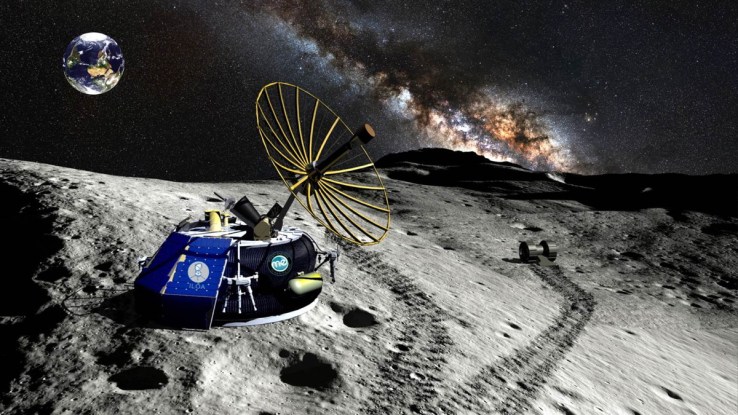
    Illustration of Moon Express lander / Image courtesy of Moon Express
    Interestingly, the legalities surrounding a private mission to the moon came about a bit backwards.
    First, Moon Express purchased a launch to the moon with Rocket Lab in October 2015. At that time, they didn’t have permission from the government to go to the moon or the regulatory security that they could have ownership of lunar resources they obtained if theycould get there.
    Then, in November 2015, the Commercial Space Launch Competitiveness Act was passed, which explicitly stated that private companies are allowed full ownership of resources they extract in space. The bill made it legal for Moon Express to mine the moon and keep what they extracted, but they still didn’t have permission to travel to the moon in the first place.
    This was the last piece of the regulatory puzzle, but from a security point of view, giving this permission to anyone with the resources to go is a bit tricky.
    For example, national assets like reconnaissance satellites that monitor specific areas of the Earth are located over 20,000 miles away in geosynchronous orbit (GEO). This is the farthest orbit that private companies have placed satellites in to date. Going beyond this orbit could potentially give a company full view of some of the most important space-based security satellites, making it important for the government to know exactly what a company intends to do on a mission past GEO.
    for receiving permission to do so. Jain explained that representatives from multiple federal agencies, including the State Department and the NSA worked together to determine that the FAA, which is already responsible for granting launch licenses to rocket companies, should be the official point of contact for this type of activity.
    On April 8th, 2016, Moon Express submitted an application for a 2017 commercial lunar mission to the FAA and has since received approval to move forward with its plans.
    “This simply shows that every company can achieve their moon-shot,” said Jain.
    The company will launch to the moon in the second half of 2017 on a rocket provided byRocket Lab. Jain stated that Moon Express’ first mission, which is a one-way trip, is expected to be profitable due to private payloads and sponsorships. The company also fully expects NASA to participate by sending a paid scientific payload, although their business plan is not dependent on it.
    Once on the surface, Moon Express hopes to win further X-PRIZE awards by moving across the surface. Instead of roving, they will re-fire their rockets on the MX-1 lander and “hop” to different locations.
    When asked if they expect to beat other frontrunners in the competition, Jain focused instead on their future plans, saying “We don’t start a company to win a prize. Winning the Google Lunar X-PRIZE would just be the icing on the cake. We choose to go to the moon because it’s good business.”
    In the future, the company expects to make money by harvesting resources on the Moon, like water and Helium-3, creating a fuel depot on the surface and eventually performing round-trip missions with the capability of bringing payloads back to the Earth. By the end of the year, Moon Express plans to double their employee base to over 50 people.
    Jain told TechCrunch that he believes this is just the beginning of private companies’ presence in deep space and that the way people will make money in space is only limited by our imagination. Likening it to how the iPhone’s App Store enabled the creation of a diverse set of apps from companies all over the world, Jain said “We just don’t know what the Pokemon Go or the Snapchat of the space industry is yet.”
    Now that Moon Express has received official permission to move forward with its plans, we can expect other U.S. companies with similar lunar aspirations, like Astrobotic, to follow suit in the near future.
    It’s been nearly a decade since the Google Lunar X-PRIZE was announced and now most of the regulatory pieces are finally falling into place. Eventually, space-faring nations will need to put a plan in place to streamline private ventures beyond Earth’s orbit. For now, we’ll have to watch exploration progress one company at a time.

    Tuesday, 2 August 2016

    Google’s AMP project expands beyond news

    Posted By: Uni logo - 14:04:00

    Six months after launching AMP for news stories in its mobile search results, Google today announced the next step for the project: moving AMP beyond news and bringing it to other mobile sites, too.
    Just like with the rollout of AMP pages for news sites, Google is launching a demo site today that will allow you to test what this experience is like and give developers the opportunity to fine-tune AMP support for their sites before it rolls out this feature to all users.
    Rudy Galfi, a product manager on the AMP team, told me that the team believes that after the successful rollout of AMP for news sites, it is now “ready for more.”
    There are already over 150 million AMP documents from over 650,000 domains in Google’s index and, as Galfi told me, the company has seen a lot of non-news sites adopt the format, too, even though these pages weren’t easily available to users yet.
    Back in June, Google partnered with eBay to bring AMP support to that company’s mobile pages, but the new demo site features AMP pages from the likes of Squarespace, Reddit, Flipkart, TripAdvisor, Disney, Genius, Food Network, Instructables, Drugs.com, the NFL and others. So if you search for “card tricks” on the demo site, for example, you will probably see a few instant-loading results from Instructables with the standard AMP lightning bolt symbol next to them. The same goes for lyrics, recipes and other content.
    While a lot of the early work on AMP focused on news sites, the format itself works well for other kinds of content, as well. Still, the team is working on better support for e-commerce sites and how to better handle forms, for example.
    The average AMP page currently loads four times faster than non-AMP pages. Median load times are under one second. Galfi stressed that there is no ranking change here, so having AMP pages available shouldn’t change a page’s ranking on the search results page. As a user, though, I’m far more inclined to tap on an AMP page when I see one in my search results than on a non-AMP page. At this point, after all, most mobile sites are cluttered with slow-loading ads (and maybe even roadblock ads). While AMP features support for ads (and paywalls), those ads load significantly faster and don’t really interrupt the browsing experience.
    A Google spokesperson told me that AMP support for non-news sites in Google’s mobile search results should roll out beyond the preview site in the coming months, but there is no clear time frame yet. If you want to give the preview a try, head over to g.co/ampdemo on a mobile device and search for some Taylor Swift lyrics.
    AmpBlueLinksDemo_v3_garciarobert

    Ex-Facebook CTO sells word processor Quip for $582 million to Salesforce

    Posted By: Uni logo - 01:36:00


    A young word processing app just found a new home — for a pretty hefty price tag. 

    Salesforce, the cloud software giant, has acquired Quip for $582 million, according to the company's filings with the Securities and Exchange Commission Monday. 
    Founded in 2012, Quip began as a mobile-oriented word processor and collaboration tool that competed with the likes of Microsoft Office and Google Docs. Quip works on PCs, yet the company said in blog post that it "shines on phones and tablets." Collaboration was also easier to visualize through a highlighted feed of updates.
    The mobile focus is not surprising given the founder's history. Quip CEO Bret Taylor was the co-creator of Google Maps, founder of social network FriendFeed (which was acquired by Facebook in 2009) and later the chief technology officer of Facebook during its aggressive push to mobile.
    Taylor also joined Twitter's board last month. 
    Quip announced the news in a blog post, saying Salesforce's strategy aligned with its own. 
    Salesforce and Quip share the same philosophy about software: it should be in the cloud, built for the mobile era, and be inherently social. Salesforce pioneered the shift to enterprise cloud computing—and Quip has been working since 2012 to reimagine a productivity platform for teams that allows them to be more connected, more collaborative and get more work done.
    Quip has not recently released user numbers. It offers a free version and premium versions for small companies at $12 per user per month and larger enterprises at $25 per user per month. 
    Salesforce's move to purchase Quip comes after a reported failed attempt to purchase LinkedIn, which sold to Microsoft for $26 billion last month. 
    Having its own word processing tool gives Salesforce another boost in its competition with Microsoft's Office 365. Salesforce Ventures was an investor in Quip's $45 million funding round. 
    The operation will still be run by Taylor and his team. 

    Copyright © 2016 Uni logo™ is a registered trademark.

    Designed by Unilogou. Hosted on Blogger Platform.