• unilogou. Powered by Blogger.

    Showing posts with label SENSORS. Show all posts
    Showing posts with label SENSORS. Show all posts

    Wednesday, 22 June 2016

    NRMA calls for autonomous car trials in Australia

    Posted By: Uni logo - 10:33:00


    Australia is behind on the rise of the autonomous car, but a new push by the National Roads and Motorists’ Association (NRMA) may force the government into action.
    NRMA’s new chief executive, Rohan Lund, called for the government to allow autonomous car trials, let the private sector implement peer-to-peer networks for traffic, and add smart sensors to the roads.
    “To solve the infrastructure and mobility challenges of the future, governments need to move beyond a business as usual approach,” said Lund to the AFR. “Simply building new infrastructure and throwing money at ad hoc projects will not of themselves solve congestion, improve travel times or future proof our infrastructure and transport services.”
    Some of these technologies are already being implemented in smart cities as a way to lower congestion and improve parking. Autonomous cars will supposedly fix both of these issues as well, but it’s unlikely Australia will be the first country to try out the cars.

    NRMA wants Australia to make them highway-legal now

    In the interim, NRMA wants the Australian government to legalize semi-autonomous driving on highways. Tesla’s already provides this system with its AutoPilot, but that is currently unavailable outside of the U.S., because it is considered “illegal” by most governments. And given the Aussie left-hand drive rules, they may have a point.
    NRMA is not all talk, it plans to launch its own car sharing app to compete with Uber, GoGet, and Flexicar. The app will use vehicles from the Thrifty business, owned by NRMA, which has 27,000 cars.
    “In a world where not everyone wants to own a car, or a second car for that matter, we can offer cars as a service at scale,” Lund said. “That may take the form of supplying a fleet for car hire, car sharing or even to Uber drivers.”
    All of the innovative ideas may fall on deaf ears at the moment, in the middle of a federal election. It may also give Labor some talking points about how to revive the economy, though the party doesn’t seem too interested in private businesses controlling transport.

    For autonomous vehicles, no tech is an island

    Posted By: Uni logo - 03:17:00

    The autonomous car industry is quickly becoming one of the most valuable emerging technology markets, but it will be hard, if not impossible, for manufacturers of hardware and software to reach a global audience without extensive partnerships.
    That’s according to research firm Vision Systems Intelligence, which says that manufacturers will have to build relations with chip, sensor, mapping, and development tool firms to make its autonomous car functional on all fronts.
    “No one company owns all the expertise necessary to build an autonomous vehicle. From low-level component suppliers to modules or systems, each domain is a highly complex field in itself,” say Phil Magney, founder and principal of Vision Systems Intelligence.
    building-blocks-of-autonomy
    In the infographic above, Vision Systems Intelligence shows the various sectors of the autonomous car market. What it doesn’t show is the partnerships already established, like Google and Uber’s mapping partnership on Android, or General Motors acquisition of Cruise Automation for $1 billion and $500 million partnership with Lyft.
    Other partnerships between ‘autonomous solution’ firms and suppliers are most likely active, though we doubt many are disclosed.
    It is interesting to see what blocks companies are active in. Intel is apparently active in processing, connectivity, and security/safety, while Nvidia works on autonomous solutions, processing, and algorithms. Google is only active in autonomous solutions and mapping according to the infographic, though we suspect the search giant is working on its own development tools and sensors for the autonomous car prototype.
    Partnerships are always important for emerging technologies to gain traction, but the autonomous car market will require a vast amount of interoperability between software, hardware, and services, similar to the smartphone or computer but on a larger scale.
    Some manufacturers are showing a willingness to work together, Fiat Chrysler was reportedly in talks with Uber and Amazon, on top of its Google deal and General Motors has once again hinted at a possible partnership with Google.

    Sunday, 19 June 2016

    U.S. government spent 20% more on IoT last year

    Posted By: Uni logo - 22:37:00
    The private sector may be driving new Internet of Things (IoT) technology, but a new study shows the US government is rapidly hopping on board.
    An article by Nextgov reports that a new study by research analysis firm Govini revealed that federal agencies are rapidly boosting their spending on sensor-driven technology. In fiscal 2015, the federal government spent $8.8 billion on IoT, which represents a 20% jump from fiscal 2014.
    Sensor spending specifically grew a considerable 56% from the previous year, while cloud storage for the data produced by those sensors grew by 48%.
    This increased spending comes as the government increasingly works to define its role in policing the burgeoning IoT market and develop the policy environment to help the industry grow.
    The Govini report found that most of the IoT growth came from the area of defense, which accounted for 88% of sensor spending in the previous four years. Key departments include Homeland Security which invested in a connected sensor network to monitor the US border and the Pentagon, which employs IoT tech to help soldiers improve their situational awareness.

    DoD & NASA biggest government IoT consumers

    A big non-defense spender was NASA, which has developed a connected network of devices and sensors to observe space and terrestrial patterns.
    IoT A notable example of defense-related IoT tech is the Persistent Threat Detection System by Lockheed Martin, which observes the nearby area via tethered aircraft.
    The IoT supply chain for defense spending was dominated by such large contractors as BAE Systems, Northrop Grumman, Raytheon and Lockheed Martin.
    Though big players like these are currently dominating the federal government IoT supply chain, Govini’s Matt Hummer told Nextgov in an interview that newcomers could still find opportunities to supply the US government.
    He said that federal information security protocols make it easier for smaller IoT firms to partner with big contractors when supplying federal departments and agencies. Part of this opportunity lies in the ambiguity of feds’ requests for proposals when constructing new networks which rarely mention the specific term “internet of things.”

    Sunday, 12 June 2016

    NRMA calls for autonomous car trials in Australia

    Posted By: Uni logo - 21:49:00


    Australia is behind on the rise of the autonomous car, but a new push by the National Roads and Motorists’ Association (NRMA) may force the government into action.
    NRMA’s new chief executive, Rohan Lund, called for the government to allow autonomous car trials, let the private sector implement peer-to-peer networks for traffic, and add smart sensors to the roads.
    “To solve the infrastructure and mobility challenges of the future, governments need to move beyond a business as usual approach,” said Lund to the AFR. “Simply building new infrastructure and throwing money at ad hoc projects will not of themselves solve congestion, improve travel times or future proof our infrastructure and transport services.”
    Some of these technologies are already being implemented in smart cities as a way to lower congestion and improve parking. Autonomous cars will supposedly fix both of these issues as well, but it’s unlikely Australia will be the first country to try out the cars.

    NRMA wants Australia to make them highway-legal now

    In the interim, NRMA wants the Australian government to legalize semi-autonomous driving on highways. Tesla’s already provides this system with its AutoPilot, but that is currently unavailable outside of the U.S., because it is considered “illegal” by most governments. And given the Aussie left-hand drive rules, they may have a point.
    NRMA is not all talk, it plans to launch its own car sharing app to compete with Uber, GoGet, and Flexicar. The app will use vehicles from the Thrifty business, owned by NRMA, which has 27,000 cars.
    “In a world where not everyone wants to own a car, or a second car for that matter, we can offer cars as a service at scale,” Lund said. “That may take the form of supplying a fleet for car hire, car sharing or even to Uber drivers.”
    All of the innovative ideas may fall on deaf ears at the moment, in the middle of a federal election. It may also give Labor some talking points about how to revive the economy, though the party doesn’t seem too interested in private businesses controlling transport.

    Thursday, 19 May 2016

    How IoT is changing the fashion retail experience

    Posted By: Uni logo - 10:48:00


    It’s plain to see that emerging technology has changed the retail experience beyond recognition.
    We can shop on the internet anywhere, and at any time, without a physical cash transaction and have it delivered to us in what can feel like the blink of an eye. In times where retail fashion can be bought in seconds and free returns mean that your apartment can be an at-home changing room, I was interested to talk last week to Healey Cypher, co-founder and CEO of Oak and creator of a hardware enabled platform that uses mirrors as a conduit to transform the retail experience.
    Oak has creating the Oak Mirror, a connected device that turns the bricks-and-mortar retail experience into one that is closer in reality to what we have come accustomed to online. Cypher reminded me that while it’s easy to do your shopping online, it still only accounts for a small amount of all retail sales:
    “In-store sales are still up to 95% of all retail experiences and e-commerce is less than 7% of all retail transactions. Retail is a $12 trillion industry that employs a quarter of the people in the US. and accounts for 50% of  expenditure of disposable income.”
    It is an sector that Cypher is passionate about, particularly in regard to improving the customer experience. Usually trying on clothing means stumbling around a store semi-dressed to find a different size or dealing with the ministrations of an overeager sales attendant who whips back the curtain to catch you in your…unawares.
    But Oak wants to make that a thing of the past.
    They currently have embedded their technology in a range of Ralph Lauren stores in the US. All in-store items are connected to it with RFID chips. This means an almost self-curated shopping  experience. Any clothes you select to try on appear on a connected touch screen which is part of the dressing room mirror. Need a new size or a different color? Just tap the screen and a store assistant – each outfitted with a corresponding iPad – brings you your choice. The screen also offers you styling recommendations based on what’s available in store and you can email your selection to yourself for future consideration.

    Oak Labs product image
    For those a little more discerning, the mirror even offered a variety of lighting experiences: Fifth Avenue Daylight, East Hampton Sunset and Evening at The Polo Bar.
    It’s easy to dismiss such notions as gimmick but the reality is that Oak see the benefits of their platform far beyond novelty factors.
    “The RFID gives perfect data. This means stores can always know what’s in stock at a glance, including size and colors. The average industry inventory accuracy is 65% in retail. It also enables buyers to see what other people bring into the fitting room and what items they are buying together. You learn whether certain items are always tried in one size but bought in another or tried but never purchased”.
    All of which is especially important for fashion houses, especially those that stock “fast fashion,” defined as fashion cycles of six weeks or less.
    Cypher admits that fashion is a traditional industry that has in some respects been slow to adopt technology. Two of the leading reasons he attributes this to are generational norms – “Younger, digital natives are more likely to adopt this technology than older store owners” – and also the difficulty in “getting retailers uses to expending capital on technology. They are more likely to see the value in expenditure on their front of house signage.”
    Yet, as Cypher notes, “consumers want things fast, easy, beautiful, robust and personal.” This will be the reality of retail fashion, and Oak is keen to be part of this innovation, blurring the boundaries between the digital and physical retail experience.

    Saturday, 7 May 2016

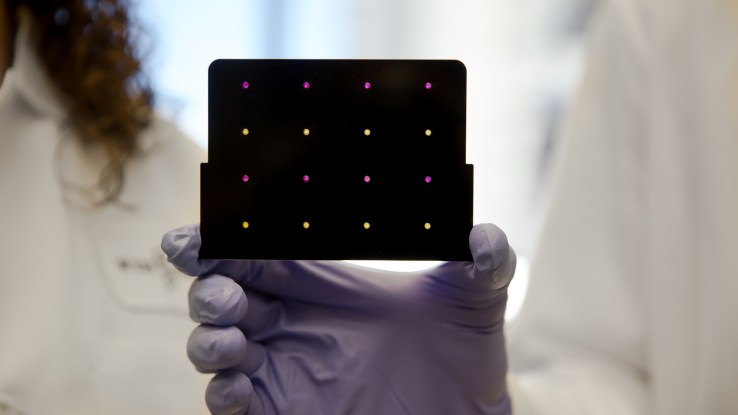
    A $1 paper-based test can detect the Zika virus in around two hours

    Posted By: Uni logo - 03:07:00


    “For our group it’s become an interesting case study in how quickly a group can mobilize in the face of an outbreak,” Dr. James Collins explains over the phone. The MIT biomedical engineering professor has been fielding press inquiries all day, in light of a newly published paper detailing the cheap, fast and effective tool his team developed to diagnose the growing threat of the Zika virus.
    “In late January, MIT sent out an email asking who was working on Zika,” he adds. “We were not. I turned to my team and former team members and asked them what we could do here. Could we use our synthetic biology platforms in a meaningful way and create a diagnostic test? The collective response was that we could, and everybody basically dropped what they were doing and turned their attention to coming up with this novel test, and in about five to six weeks, we did it.”
    In record time, the team — comprising members from Harvard, MIT, University of Toronto, Arizona State University, Cornell, University of Wisconsin-Madison and Boston University — built upon a technology developed by Collins’s team at Harvard’s Wyss Institute to create a simple, paper-based test that can be deployed to limited resource areas, detecting the disease in a fraction of the time and money of existing models.
    “We were trying to address a few needs,” explains Collins. “The need for a low-cost test and a need for a faster test and a need for a test that can be readily deployed in the field with little resources. I think this platform addresses each of those challenges nicely. The sensors themselves cost pennies to make. The development cost is also quite inexpensive. You’re talking probably less than a buck each for the test.”
    A drop of blood from the patient is boiled to release the RNA genome from the virus, followed by a bit more processing, at which point it’s applied to the paper.
    “What we’ve got is a really nice paper-based synthetic biology platform,” Collins says. “What we showed is that you can take the inner workings of cells, take a few dozen enzymes, and you can spot them on paper, freeze dry them, store them and distribute them at room temperature with very little loss of activity. That’s really at the heart of the innovation of the platform.”
    The whole process takes around two hours and can be performed entirely in the field with low-cost equipment, meaning it doesn’t need to be shipped to a big lab like the CDC for further testing. At present, the system is capable of detecting Zika and dengue, along with Ebola, the original target for the system.
    MIT-Zika-Detect-2-press
    Collins believes that it will be applied to a wide of pathogens in future applications.
    “We’re looking to use the test for the flu. We’re looking to use the test for HIV. We’re looking to develop the test for Lyme disease. We’re looking to use it for leprosy. And in a completely different form, we’re looking to see if we can use the platform to develop rapid and inexpensive cancer diagnosis.”
    In the meantime, the team’s primary focus is finding the best and quickest way to deploy the Zika test to the areas hardest hit by the outbreak.
    “We’re in discussions with groups in Brazil and Colombia to explore how we can get this into the field and into the hands of patients,” says Collins. “More testing is needed, but the platform holds great promise, and when we couple that with the right folks, I think this can be moved quickly for deployment.”

    Thursday, 28 April 2016

    How IoT’s Buddy could help solve Flint’s water crisis

    Posted By: Uni logo - 06:02:00


    Buddy has a goal, to use IoT for the greater good. They’ve created a water quality demo that showcases how Buddy integrates with distributed devices and sensors as part of an initiative they are setting up called IoT for Impact.
    The result is quality, real-time data, that could be used to preemptively alert health officials of system abnormalities – like those that impacted Flint, Michigan, recently – that could then be addressed immediately.
    I spoke to CEO and co-founder David McLauchlan, about the initiative. He explained:
    To some, IoT data is seen as superfluous.  Events with disastrous impact are surfacing all around us and coming to a head. The contaminated drinking water in Flint, poisoned water from fracking in New York and Pennsylvania, continued e. coli and listeria break outs in Massachusetts, or air quality issues in Oregon — these problems could have been predicted or in some way contained if IoT technology had been implemented.
    If sensors were placed in common water filters used in homes, the Flint water crisis could have been discovered and remediated. This could extend to solve other environmental problems, for example:
    If air quality sensors were as inexpensive and easy to install as LED garden lights, how many homeowners would be willing to place them in their yard and contribute to an early warning system for abnormal levels of pollution? And if micro-thermometers could be packaged with meat and produce from the time of harvest to the time of consumption, how quickly would noxious foods and their origins be identified and mitigated?
    McLauchlan believes there’s a real opportunity for IoT data to bring value to communities by predicting these events. He wants to start a conversation that will engage and ideally move other IoT and data solution providers into taking action. Fundamentally, he believes that people and positive social impact should be at the center of IoT value creation. 
    How could it work?
    turbidity_diagram (1)
    The Buddy demo uses water turbidity as a proxy for the overall water quality.  A variety of other water quality characteristics could be measured using this same design.  In their demo, data is captured from a turbidity sensor and displayed real-time on a dashboard.  If the turbidity level crosses a certain threshold (for example, 100 NTU), the sensor alerts by changing the color of smart lightbulbs in two separate locations.
    The demo can be broken down into the following key steps:
    1. Turbidity sensor is placed in water sample
    2. Data is collected, processed, and streamed real-time to Splunk
    3. As the sensor detects key thresholds, light bulbs change color indicating a threshold was met
    4. Data is compared against a data-set of water quality data provided by USGS
    5. Flint and other cities need help from all sectors

      McLaughlan admits that none of this is easy.  
      Sensor and beacon developers must work with product manufacturers to enable easy, low-cost data generation and transmission. Data collection, aggregation and processing platforms must be able to ingest the data, connect it to advanced software tools and make it accessible for in-depth analyses. And public agencies, policymakers, advocacy groups and scientific organizations must leverage the data in ways that increase our collective ability to prevent or minimize social crises.
      This type of information supply chain can’t happen in a vacuum. It can’t be achieved through closed-door meetings, and it can’t be contained in a lab. It requires widespread participation and collaboration, but the incentives are clear. Businesses can profit. Public agencies can reduce the human and financial cost of health crises. And individuals can play a greater role in their own safety and well-being.
      It will be exciting to follow up on IoT for Impact and the goal to create an information supply chain that would help confront—and in many cases prevent—human emergencies.

    IoT now helping make smart wine?

    Posted By: Uni logo - 06:02:00


    The Internet of Things (IoT) is transforming the agricultural industry through facilitating high precision crop control, useful data collection and automated farming, with an emphasis on water management, waste reduction and cost effectiveness.  Today farms  can leverage IoT to remotely monitor soil moisture, crop growth, smart connected harvesters and irrigation equipment. Then farmers can analyze operational data combined with 3rd party information, such as weather services, to provide new insights and improve decision making.
    TracoVino
    An interesting area where this is occurring is in the business of winemaking. German company MyOmega has created  the solar powered  IoT device TracoVino, with incorporates an  MYNXG controller and corresponding app to support winemakers to improve the quality of their wines, optimize workflows and to monitor vineyards remotely.mobiless
     Data is collected via solar powered sensor platforms installed in the vineyard which record the temperature, air and soil humidity levels, sunlight and light intensity. Extra sensors can be installed at any time to measure leaf wetness, soil pH values and nutrient levels. The sensors collected data which they send to the controller. Winemakers are then able to access the data on their smartphones at any time.  Winemakers are able to access forecasts for the condition of the vineyard, potential pest infestation or the expected quality and quantity of the wine at any time, and take suitable action.  The devices are currently being trialled at a four Bavarian vineyards.
    RowbotInRow
    Agricultural innovation is not limited to wine making. Rural start up Rowbot has created a team of small robots to help Corn growers.The problem facing many growers is that a rapidly growing crop, mixed with uncertain field conditions, leads to situations where in-season applications of nitrogen cannot be carried out as planned. Constraints and worries linked to crop height keep many growers from using in-season nitrogen management, a widely recognized best practice.The Rowbots work in teams to apply nitrogen fertilizer in sync with corn needs, inter-seed cover-crops into tall corn, and collect data to inform both current and future work.
     Deepfield Robots
    Deepfield Robotics, a start up under Bosch has been working hard in Germany to solve the problems faced by asparagus farmers.
    The quality of asparagus depends heavily on the temperature of the ground in which it’s grown. To control the temperature, farmers use a two-sided sheet of foil: the black side draws in sunlight to increase the heat of the asparagus bed, and the white side reflects light to cool the bed down. In order to make the right “black or white” decision, the farmer needs to measure the temperature of every field at least once each evening.  Deepfield explains
    That’s where we come in. Our IoT system frequently measures the temperatures of the bed at different levels and stores the data in the cloud. Then we provide this information plus additional analysis in a front-end interface, accessible anywhere, anytime.
    In April 2015 they installed ten prototypes in asparagus fields. These prototypes provided just the basic functionality of storing temperatures in the cloud. Using this as a starting point, they worked closely with the farmers to develop their solution further, based on many interviews with these pilot customers, four app updates and continuous back-end improvement.  The result: twelve weeks later at the end of asparagus season, the growth of 225,000 kg of asparagus.
     Freight Farms
    Freight+Farms+Leafy+Green+Machine
    For those situated in urban areas, Freight Farms  takes an innovative approach to farming, growing crops inside repurposed shipping containers, called Leafy Green Machines- literally a freight-truck-sized farm-in-a-box, with all the necessary equipment and storage required to grow produce.
    The company takes an innovative approach to farming, growing crops inside repurposed shipping containers, dubbed Leafy Green Machines. It is hoped that the use of an IoT platform will allow for more detailed monitoring of growing conditions in real-time.
    By using LogMeIn’s IoT platform Xively, it enables farmers to assess their crops remotely, tracking features such as temperature, humidity, CO2 levels and plant growth. Alerts are delivered whenever any of these metrics fall out of the ideal growing range. The data collected from users also enables Freight Farms to improve their own services, giving them greater insight into how customers are utilising their products. Container gardening is nothing new in urban areas, but it’s foreseeable that the water efficient containers could be of benefit to regions where drought causes a barrier to farming.
     OnFarm
    lg_map-903x1024
    OnFarm is part of a suite of  IoT technology platforms aimed at the farming industry. OnFarm’s software integrates nearly any type of data from any provider; from real-time soil moisture data to weather data, to image data. Users gain insight and guidance that enables their farming organization to make better more informed decisions resulting in immediate impact on farm inputs such as water, energy, and labor while increasing profitability. OnFarm allows farmers to have one solution to monitor, plan, and to make decisions reducing the friction of adopting and maximizing technology.
    It is clear that connected technology and data information is instrumental to the future of farming, particularly in regard to reducing water consumption and feeding the world’s population. Sensors, cloud computing and intelligent software all play a part in transforming farming as we know it.

    Copyright © 2016 Uni logo™ is a registered trademark.

    Designed by Unilogou. Hosted on Blogger Platform.