• unilogou. Powered by Blogger.

    Showing posts with label Europe. Show all posts
    Showing posts with label Europe. Show all posts

    Wednesday, 10 August 2016

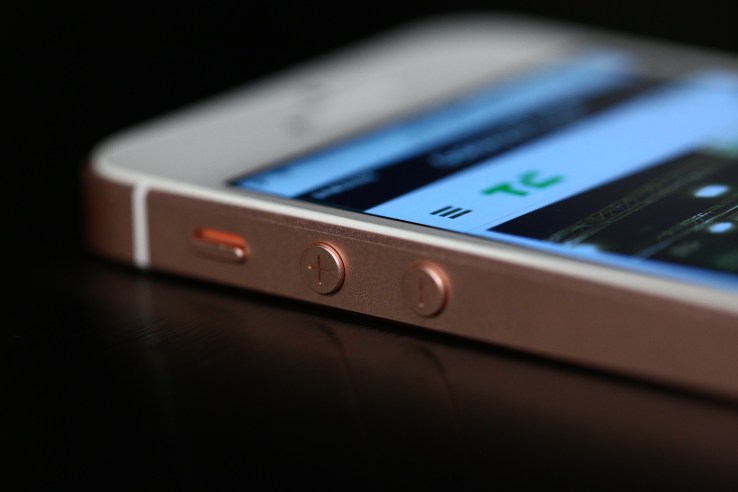
    The iPhone SE is selling just as Apple planned in the U.S. and Europe

    Posted By: Uni logo - 14:48:00

    Apple ripped up its playbook when it launched a smaller phone priced at $399 in March, but its iPhone SE strategy looks to be going as planned. The new four-inch iPhone gave Apple a welcome sales bump in key markets between April and June, according a new report.
    The second quarter of the year tends to be a relatively slow period for the U.S. firm’s phone sales, but data from Kantar suggests that Apple saw an increase in the U.S. and Europe.
    Apple’s new phones are unveiled in September each year — the next iPhone will reportedly be unveiled September 7 — so naturally anyone tempted to buy a new device months before may also be tempted to wait. That’s often reflected in quieter periods during Q2 and Q3, but that didn’t happen this time around, and the iPhone SE looks to be the main reason.
    Indeed, Apple’s overall iPhone sales for the quarter dropped 15 percent year-on-year to 40.4 million units, but it looks like the four-inch iPhone SE prevented a steeper decline.
    The story was different in some of the most critical smartphone markets.
    In the U.S., Kantar reported that the iPhone SE accounted for 5.1 percent of smartphone sales. That helped Apple increase its marketshare to 31.8 percent in the quarter, up 1.3 percent on the previous year. For context, the iPhone 6s and iPhone 6s Plus came in top at 15.1 percent, followed by Samsung’s Galaxy S7 and Galaxy S7 Edge on 14.1 percent, according to Kantar’s figures.
    The iPhone SE’s impact was all the more marked in the U.K., where it was the top selling smartphone with 9.2 percent marketshare, just ahead of the iPhone 6s on 9.1 percent. That helped Apple grow its share of sales in the country by 3.1 percent to 37.2 percent in Q2 2016.
    Across Europe, iOS marketshare grew 0.7 percent year-on-year, with particular progress in France (21 percent) and in Germany, where 14.2 percent of all smartphone sales represented growth for Apple for the first time in nine months.
    The iPhone SE factor didn’t conjure up the same impressive figures in China, where Kantar said the device took just 2.5 percent of sales. The analyst firm said that “supply constraints” had impacted potential sales — additionally, there are fiercely competitive devices at cheaper prices, while it isn’t clear if Apple’s brand cachet resonates as strongly with Chinese consumers when selling non-flagship phones. Proof of the competition? During Q2 2016, local players Huawei and Xiaomi overtook Apple on sales in urban China thanks to sub-$250 devices.
    Kantar doesn’t track figures for India, which has become a key focus market for Apple, so it isn’t clear just what kind of impact the iPhone SE had there.
    I previously questioned whether the $399 price was really low enough to make a major splash in India, and I believe that applies to emerging market regions likes Southeast Asia, too. It is sure to complement Apple’s existing products, but unlikely to outshine its top-range devices.
    Finally, it is worth noting that while the iPhone SE delivered increased marketshare for Apple, there is a financial cost. Apple’s overall gross margin for its most recent quarter dropped to below 38 percent on account of the iPhone SE.
    Apple, of course, has the highest margins in the business, so it can afford to offset that a little to grow into new demographics and consumer groups that its more expensive products can’t reach. The question is whether the impressive start for the iPhone SE can be sustained, and whether success might lead to other “more affordable” Apple phones in the future.
    kantar q2 2016

    Monday, 8 August 2016

    European charity auction platform CharityStars closes €2M Series A

    Posted By: Uni logo - 03:42:00

    European online charity auction platform CharityStars, which counts eBay as its main competitor (in addition to ChaityBuzz and IfOnly), has closed a modest €2 million in Series A funding. The round is led by 360 Capital Partners, with participation from A.S. Roma soccer player Stephan El Sharaawy, and LastMinute Group CEO Fabio Cannavale.
    The Milan, Italy-headquartered startup recently opened an office in London and says it will use the new funding to formally launch in the U.S. and China, where the auction platform is already seeing traction.
    “We have just launched the Chinese version of the site and we want to invest in targeted marketing campaigns,” explains CharityStars co-founder Francesco Nazzari Fusetti in a statement. “A paid online acquisition campaign would be a first for us, given that to date we have just benefited from free celebrity promotion through their social media channels.”
    To that end, CharityStars claims to have partnered with over 400 non-profit organisations, who are each holding an average of 10 charity auctions per year. The goal is to reach 2,000 charity partners by 2018. Another interesting metric is average auction sale price, which stands at €500. CharityStars aims to double this within 2 years.
    That’s because the startup charges a 20 per cent commission per auction, which is in stark contrast to eBay’s free listings for charities. Therefore, the higher the item goes for, the more revenue CharityStars generates.
    “Charities have always used eBay to sell items and unique items,” Nazari Fusetti tells me. “But those auctions are spread into millions of other auctions and they have lost their unicity. In CharityStars we have created a specific platform where VIPs, companies and users come together for the greater good”.
    Another differentiator is the way CharityStars’ platform is designed to bridge the gap between in-person charity galas or auctions, and online bidding. During events, guests bid using a tablet computer placed on their table with the startup’s app installed, while online users can simultaneously bid against guests.
    Noteworthy is that CharityStars has recently opened up the auction platform beyond non-profit organisations to private individuals who want to auction off items and give a percentage of the proceeds to charity.

    UK faces Human Rights challenge to state’s bulk hacking abroad

    Posted By: Uni logo - 03:40:00

    Privacy rights organization Privacy International has filed another legal challenge to the UK government’s use of bulk hacking against foreigners.
    The filing, with the European Court of Human Rights, follows Privacy International’s attempt earlier this year to challenge the use of bulk hacking against foreigners via the local oversight court for the UK’s intelligence agencies, the IPT.
    However the Tribunal refused to rule on whether GCHQ’s use of bulk hacking against entities outside the UK complies with the European Court of Human Rights. The IPT further judged the government’s use of hacking lawful under domestic law. Hence the move to file a challenge with the European court now.
    Privacy International has previously this year filed a separate judicial review at the UK High Court focused on another aspect of the IPT’s decision — challenging the use of so-called ‘thematic warrants’.
    Another of its legal challenges to the UK government’s surveillance practices resulted in the IPT’s first ever ruling against the domestic intelligence agencies — when in February 2015 it deemed GCHQ to have previously acted illegally in sharing data with the NSA.
    “By taking this case to the European Court of Human Rights, we aim to bring the government’s hacking under the rule of law,” writes Privacy International of its latest action. “The government is currently hacking abroad based on a very vague and broad power that provides few if any safeguards on this incredibly intrusive power.”
    The body is joined in the action by Germany’s Chaos Computer Club, GreenNet (UK), Jinbonet (Korea), May First (US) and RiseUp (US).
    Commenting in a statement, Scarlet Kim, Legal Officer at Privacy International, added: “The IPT’s decision permits the British Government to hack untold numbers of computers devices or networks abroad without any proper legal framework, oversight or safeguards. Hacking is extremely intrusive, allowing the hacker to, for example, switch on the webcam of a computer, or the mic of a phone without the owner having any idea.
    “Allowing the British Government to hack therefore sanctions an extraordinary expansion of state surveillance capabilities, with alarming consequences for the privacy and security of many people around the world. The European Court of Human Rights has a strong track record of ensuring that intelligence agencies act in compliance with human rights law. We call on the Court to hold GCHQ accountable for its unlawful bulk hacking practices.”
    The UK government is in the process of updating domestic surveillance legislation. The Investigatory Powers bill, currently at the review stage in the House of Lords, seeks to cement bulk hacking powers at the heart of the surveillance state via an updated legal framework.
    However the IP bill’s bulk powers are the subject of an independent review, taking place this summer. The opposition Labour party pushed the government for an outside review, calling for it to set out a robust operational case for their inclusion.
    Critics argue bulk powers are disproportionate and unnecessary. It will be up to QC David Anderson — who is leading the review, and who previously played a key role for the government when it was drafting the IP bill — to assess whether the use of bulk powers is justified and whether the bill contains sufficient safeguards for their operation. Although, unlike a judgement from the European Court of Human Rights, Anderson’s opinion will not be legally binding.

    Saturday, 30 July 2016

    Microsoft awards hardware startup ENTy the 2016 Imagine Cup

    Posted By: Uni logo - 04:13:00

    The festivities have wrapped for Microsoft’s Imagine Cup, a global competition among students and young people to create new software and devices. The winner this year wasENTy, a polished and highly practical hardware solution for tracking posture, helping with diagnosis and possibly treatment of diseases that affect balance.
    There were 35 teams in the finals, split evenly between three categories: games, innovation, and global citizenship. All of them presented to a panel of judges on Wednesday, after which a winner was selected for each category. Those three were each awarded $50,000, but the grand prize — prestige and a private mentoring session with Satya Nadella — was reserved for today’s final ceremony.
    It took place at my very own Garfield High School (go Bulldogs!) and filled up our newly refurbished Quincy Jones Auditorium. An energetic beatboxer opened things up, but with it being before 9AM and coffee not allowed inside, I was eager for things to get started in earnest.
    Eventually the finalists were ushered out, along with the three judges: Dr Jennifer Tang, a previous winner and founder of Eyenaemia; Kasey Champion, computer science education specialist at Microsoft Learning; and John Boyega, whom you might remember from 2011’s Attack the Block and some flick about a Star War.
    In the games category was PH21’s clever mobile title, Timelie, that combines tactical stealth with control over time. In global citizenship was Team Amanda, which aims to prevent bullying with a VR experience that measures the user’s response to bullying-related media. And in innovation was ENTy.
    ENTy (the ENT stands for ear, nose, and throat — not the sentient trees) is a device and app that monitor balance and posture in real time, meant to help doctors diagnose and check up on inner ear problems like vertigo.
    The patient straps on a device the size of a pack of cigarettes to the small of their back, and a set of sensors sends data to an associated app. There’s a real-time readout of position, and you can see that over time as well for a test that, for example, requires a patient to stand straight for 20 seconds with their eyes closed.
    The team is only three people, from Romania’s University Politechnica: Iulian-Razvan Mateșică on hardware, Cristian Alexandrescu on the app, and Flavia Oprea on business development. She took the lead in presenting the tech and fielding questions — extremely well I might add; in fact, all the presentations I saw were highly polished, especially for students for whom English is not their first, or even second, language.
    ENTy’s next step, presumably after getting some real talk from the CEO of Microsoft, will be to make the device a little more presentable. They’ve already tested it with several doctors and hundreds of patients, and the response has been very positive, but the device itself isn’t, as they say, ready for its close-up.
    “The doctors say they don’t want it any smaller,” Oprea said in a Q&A Thursday. “But we have a plan for B2C to make it smaller — it has to be, how do you say, a sexy wearable, for everybody.”
    To that end they are working with a firm in Bucharest to design and promote the device outside doctors’ offices, though the strictly medical side is also being pursued — but that seems to be mainly paperwork. Collecting data for machine learning is also on the table, but there’s even more red tape associated with that.
    After the ceremony, Oprea also spoke with great optimism about the prospects of young women in tech, at least in Bucharest.
    “The number of girls that are interested is growing,” she said. “We’re telling them not to be afraid, and not to listen to negative advice like ‘computers are for boys.'”
    As a final treat, Microsoft invited Garfield’s principal, Ted Howard, on stage to accept a donation: “$100,000 worth of” Surface Books, which I take to be 85 or 90 of them. The school is looking a lot better than it did when I was going there in the late ’90s, but you better believe GHS appreciates the gift — somehow I doubt they’re swimming in laptops.
    Here’s looking forward to next year’s cup and the fresh ideas that come with it.

    Friday, 24 June 2016

    Horrified Brits want to leave the country after the UK voted to Brexit

    Posted By: Uni logo - 03:29:00
    Https%3a%2f%2fblueprint-api-production.s3.amazonaws.com%2fuploads%2fcard%2fimage%2f126173%2fbrexit

    LONDON — The nation is reeling after the U.K. voted to Brexit the European Union in a generation-defining referendum.
    While those who voted to leave are happy with the result, not everyone shares their enthusiasm.
    Indeed, many Brits have decided that the referendum results are a bridge too far, and it's time for them to pack their bags and (Br)exit the U.K. itself. 
    One person's decision to move is based entirely on... erm... chocolate:
    Others feel that moving to EU member states would be embarrassing. Fair enough. 
    Some aren't too sure which country they can move to now:
    And others are waiting on the outcome of the US Presidential election before they make any decisions:
    But, some have already made up their minds where they're going to.
    One person thinks that Shire life is the way forward now:
    And Disclosure is contemplating a move to a different planet:

    Copyright © 2016 Uni logo™ is a registered trademark.

    Designed by Unilogou. Hosted on Blogger Platform.