• unilogou. Powered by Blogger.

    Showing posts with label WOMEN. Show all posts
    Showing posts with label WOMEN. Show all posts

    Thursday, 28 July 2016

    Pakistani social media star Qandeel Baloch's brother confesses to killing her for 'honour'

    Posted By: Uni logo - 04:21:00
    Https%3a%2f%2fblueprint-api-production.s3.amazonaws.com%2fuploads%2fcard%2fimage%2f147660%2fap_16198399363582

    A day after Pakistani model, actress and social media star Qandeel Baloch was killed, her brother admitted to strangling her in their family home in the city of Multan. As Baloch's death sparked a fresh debate on honour killings in the country, police have arrested Muhammad Waseem and plan to charge him with murder.
    Waseem, one of Baloch's six brothers told the police that he strangled her after giving her a sedative. He then fled the house, but was later arrested. "Girls are born only to stay at home and to bring honour to the family by following family traditions but Qandeel had never done that," Waseem said
    Around 1,000 women die every year to due to "honour killings," many of them killed by male relatives for "dishonoring" their family. Several Pakistani activists have asked for the immediate enactment of a stronger law against honour killings. Currently, a legal loophole allows culprits to be acquitted due to a provision that lets relatives of the victim forgive them.
    The prevalence of honour killings in the country was also the focus of this year's Oscar-winning documentary A Girl in the River. After the film's win the Pakistani Prime Minister Nawaz Sharif spoke of the need to change the law on honour killings.

    Pakistani police officers present Muhammad Waseem, the brother of slain model Qandeel Baloch, before the media following his arrest at a police station in Multan, Pakistan, Sunday, July 17, 2016.
    IMAGE: AP PHOTO/ASIM TANVEER
    Baloch, whose real name was Fauzia Azeem, became an Internet sensation over the course of the last year, with a series of photos and videos that challenged conservative norms and drew a large social media following. Last month, she was in the spotlight for her video with Muslim cleric Abdul Qavi, in which she wore his cap and took selfies. 
    After the ensuing controversy, Baloch had said she was receiving death threats and sought security from the government. In his statements, Baloch's brother Waseem said that he planned to murder her after her videos with Qavi went viral and was "only waiting for the best moment." 
    “I am a drug addict but I was in my senses when I murdered her and I accept it with pride. Now everybody will remember me with honour that I have provided relief to my parents and brothers who were suffering for the last two decades because of her," Waseem said. "I have no regrets."
    Baloch also identified herself as a "modern day feminist" and "believed in equality." "As women, we must stand up for ourselves. As women, we must stand up for each other. As women we must stand up for justice," she wrote in a recent Facebook post.
    A day before she was killed, Baloch spoke directly to her critics. "No matter how many times I will be pushed down under... but I'm a fighter, I will bounce back," one of her last Facebook posts read. "Qandeel Baloch is a one-woman army. Qandeel Baloch is an inspiration to those ladies who are treated badly and dominated by the society. I will keep on achieving and I know you will keep on hating. Damn, but who cares.

    Sunday, 22 May 2016

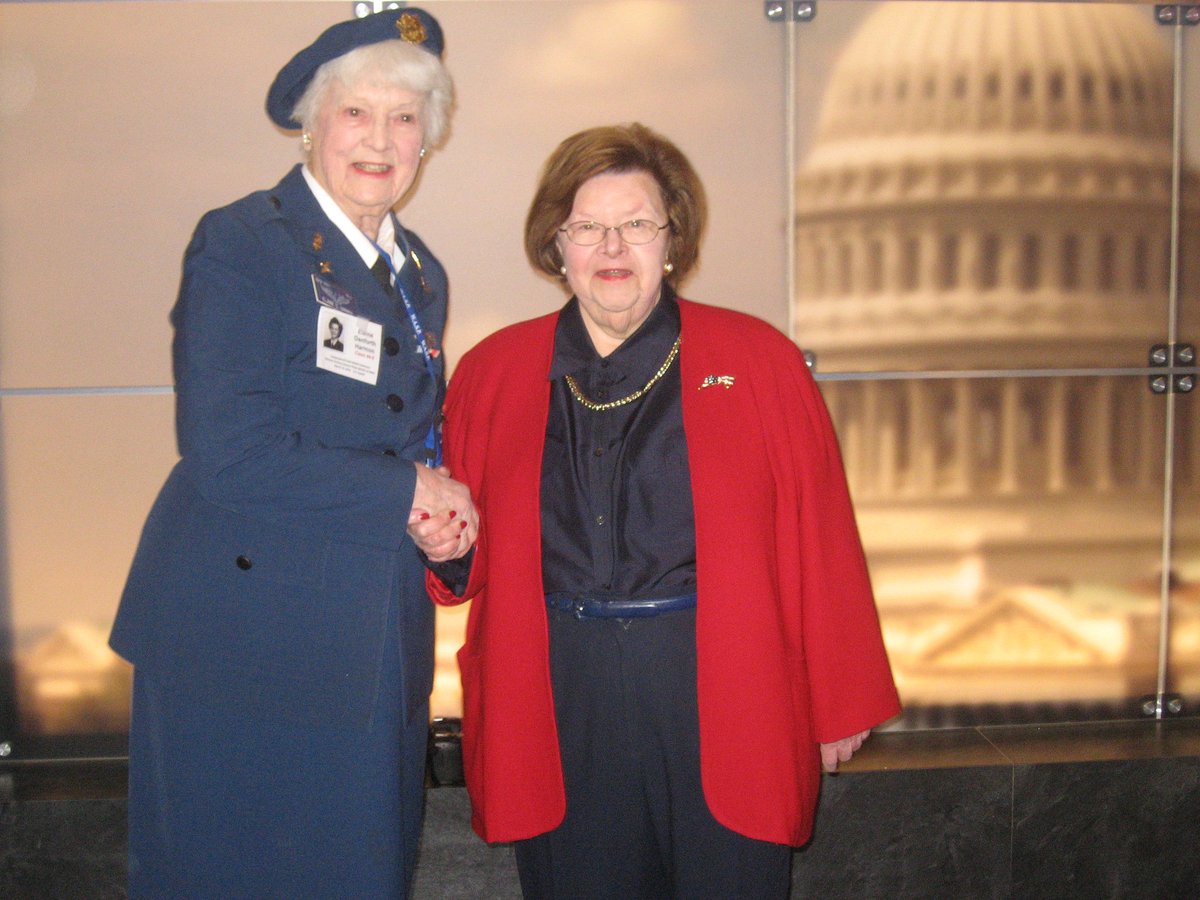
    Female pilots who flew during WWII can now be buried at Arlington

    Posted By: Uni logo - 02:53:00
    Https%3a%2f%2fblueprint-api-production.s3.amazonaws.com%2fuploads%2fcard%2fimage%2f94591%2fwomen-airforce-service-pilots

    More than 1,000 women were trained as pilots for the American military during World War II, but their legacy had never been fully recognized until Friday when President Barack Obama signed bipartisan legislation giving them the right to be laid to rest at Arlington National Cemetery
    The female service members were part of a program called Women's Airforce Service Pilots and were known by the acronym WASPs. They flew the largest bombers and quickest fighters. They towed targets for gunnery training and ferried more than half of the combat aircraft within the U.S. during World War II. Thirty-eight of the women died during their service. 
    Despite their essential contributions to the war effort, they were largely omitted from history,according to the Air Force Historical Support Division. Following the program's closure in 1944, their records were classified. 
    It wasn't until the 1970s, when the Air Force began training female pilots, that the WASPs insisted on recognition for their groundbreaking role. 
    Against opposition from traditional veterans groups, they were granted veteran status, with limited benefits, in 1977. A 2009 bill awarded a Congressional Gold Medal to women who served in the WASP. They weren't granted the right to a prestigious burial in Arlington National Cemetery until 2002, but a change made to Army policy last year overturned that policy. 
    The legislation signed by the president restored it, much to the relief of WASPs and their family members. Last year, Tiffany Miller, the granddaughter of Danforth Harmon, started a Change.orgpetition to recognize the WASP as eligible for burial and inurnment at Arlington; it was signed more than 178,000 times. 
    "It was her last wish to be in Arlington," Miller said to CNN, speaking of her grandmother Elaine Danforth Harmon. "We haven't been able to hold a funeral for her because we wanted to honor that wish." 
    Sen. Barbara A. Mikulski (D-Maryland) sponsored legislation and said in a statement that it "righted a terrible wrong."  
    "If they were good enough to fly for our country, risk their lives and earn the Congressional Gold Medal, they should be good enough for Arlington," she said.

    Tuesday, 17 May 2016

    Posted By: Uni logo - 22:33:00
    Https%3a%2f%2fblueprint-api-production.s3.amazonaws.com%2fuploads%2fcard%2fimage%2f91123%2fmyflow-tampon
    Menstruation. It’s a reality that 50% of the populous experiences but a topic that doesn’t get a lot of discussion — especially in tech circles.
    A new startup is hoping to change the conversation with a smart tampon called my.Flow, intended to help manage and track menstruation needs.
    As Engadget points out, my.Flow isn’t so much a smart tampon as it is a Bluetooth sensor that connects to a traditional tampon.
    But that sensor is pretty cool. It talks to a smartphone app that lets women know when their tampon is saturated and needs to be changed. (For some, there's nothing more embarrassing than leaking unexpectedly all over your new pants.)
    The app can also be used to track when your period starts and stops, as well as what days have the heaviest flow.
    The app also has built-in alerts to let you know when you need to change your tampon, regardless of flow. Doctors say that women should only wear a tampon for eight hours or less, in order to avoid toxic shock syndrome (TSS).
    My.Flow was founded by Amanda Brief, who came upon the idea during a wearables project at the University of California, Berkeley. Field then went to the Chinese-based hardware accelerator HAX.

    The only downside to the project — which is expected to release in 2017 and is seeking funding — is the way it connects. The tampon itself is like a traditional tampon, but it features an extra-long, insulated string. That string then literally connects to a key fob-sized Bluetooth sensor that attaches to your waistband.
    Although I appreciate that it would be prohibitively expensive (not to mention, kind of weird) to have actual electronics embedded into a cotton tampon, being required to essentially belt your tampon to your clothes seems like a step backward.
    As Engadget points out, self-adhesive maxipads were one of the best inventions of the 20th century. Going back to the Judy Blume-era of sanitary belts (even for a tampon) is something many women would avoid.

    IMAGE: MY.FLOW
    Moreover, the price of the my.Flow might be an issue. In addition to the sensor, which will reportedly sell for $50, the tampons that work with the sensors will cost a few dollars more than Tampax or Playtex. And you’ll need to use those tampons to get the benefits of the sensor.
    Still, I can’t hate on the idea – or the solution – that my.Flow is trying to solve. Menstruation stigma is still a very real thing, especially true in places outside of the Western world.
    We have whole industries dedicated to helping men sexually gratify themselves using the latest tech. It’s nice to see a project aimed at women's needs.
    Based on the prototype seen by Engadget and The Guardian, I don’t think the first iteration of my.Flow quite solves the problem, but I love the idea of connected tech that makes periods easier to track and leaks less of an issue.

    Wednesday, 11 May 2016

    Like Follow Follow Meet the 20-year-old girl who may be India’s youngest pilot

    Posted By: Uni logo - 10:53:00
    52d50c4d66fd613f314c6640847cb219

    This June, three women will make history by becoming the country's first female fighter pilots. In Mumbai, 20-year-old Ayesha Aziz has also broken a glass ceiling in the profession by becoming one of the youngest pilots in India.
    Driven by her childhood dream of becoming a pilot, Aziz began training at the Bombay Flying Club in 2011, when she was 16, and got her student pilot license in the same year. She took her flying lessons over the weekends, attending school during the rest of the week. “I love adventure, travel and meeting new people,” Aziz says. “I wanted to do something unconventional, and working as a pilot seemed especially unconventional.”
    Since getting her student license, Aziz is working towards clocking in the 200 flying hours that are required to get a commercial pilot license, which will enable her to work with an airline. She currently flies single engine Cessna 152 and 172 aircraft, and has completed 120 hours of flying.
    Ayesha Aziz

    IMAGE: AYESHA AZIZ
    While no one in her family in a pilot, Aziz attributes her success to her parents, especially her father, “who keeps motivating and pushing me”. Aziz says that she was fascinated by seeing aircrafts land and take-off as a kid. “Flying works against gravity, you give up everything that gets you down,” she says.
    Her role models include astronauts such as Sunita Williams, and she was further encouraged to pursue her childhood dream when she was selected to visit the NASA headquarters in 2012 to learn what it takes to be an astronaut.
    “It is challenging to be a pilot. You always have to be ahead of the aircraft and quick to takedecisions. You need presence of mind and you need to multi-task,” Aziz adds. “When you’re inside a cockpit all your worries have to be left behind, and your mind should be focused on whatyou're doing at that moment.”

    Saturday, 30 April 2016

    Pushing back against sexism, this is a new era for women online

    Posted By: Uni logo - 21:59:00


    At the end of 2014, Facebook, Twitter and Youtube were all given an ‘F’ grade for the way they dealt with – or rather, didn’t deal with – online violence against women. Sexism, abusive language and death threats were all included.
    The social media platforms were found to be lacking in transparency and accused of only taking such issues seriously when media picked up on the situation. But a growing movement of women is challenging global technology companies and empowering themselves and each other to be safer online.
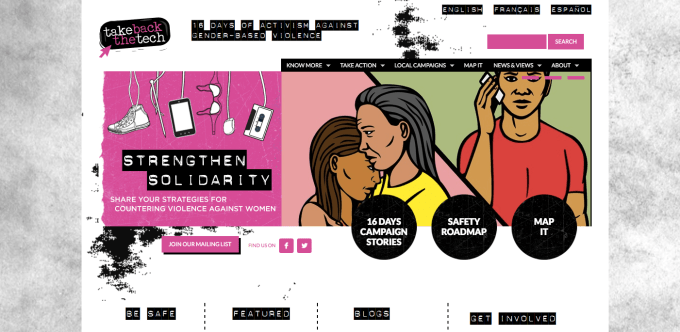
    Take Back the Tech! (TBTT) is an expanding group of women active in 16 countries. They are set on reclaiming online space, making the net safer and more representative, as well as a place for women to thrive and change the world.
    They’re making progress in a number of areas. Facebook and Twitter agreed to offer more protection for women’s freedom of speech, and freedom from violence, TBTT’s Pakistan partner Bytes for All has become a Twitter safety partner.
    Small but significant wins for TBTT, founded by the Association of Progressive Communications.
    Social media and the opportunities it offers for revenge pornography, cyberstalking and surveillance, are only one part of the problem, however.
    Across the world there are 200 million fewer women online than men, meaning men have more chance to present their own perspective online and hold even more power over women, according to the group.
    Part of TTBT’s work is to get more women online and trained in new technologies so they can have a louder voice. It also seeks recognition for women’s achievements in ICT and in all areas of life, and for these achievements to be fairly documented on Wikipedia history pages.
    Screen Shot 2016-04-30 at 4.57.17 AM
    Over 16 days of campaigning in 2015, TBTT’s Latin American campaign reached 1.5 million people on Twitter to raise awareness of tech-related violence against women.
    At the same time, 70 women took digital rights and online security workshops in Colombia and 26 women took the first Women Rock IT five-day training on technology and violence against women in Bosnia and Herzegovina.
    In the Democratic Republic of the Congo, nearly 5,000 students were trained in privacy and tech-related gender violence.
    There is a huge amount of work to plough on with. In particular, it will next deepen its work in Latin America. The organisation will be seeking positive cultural change in societies where violence and disrespect for women are ingrained. El Salvador, for example, has the highest femicide rate of every country in the world according to a report in 2012.
    TBTT will work with La Sandia Digital, which runs popular weekly feminist internet TV program Luchadoras, and supports women in Latin America to produce their own films documenting experiences around sexism. Films such as Living in Darkness which show how women are criminalised for not fulfilling oppressive roles around marriage and motherhood.
    TBTT has urgent work to do to get women equipped and ready to create a more inclusive, fairer and peaceful future. The internet is shaped constantly by making and sharing content. Occupying this from a feminist perspective amplifies women’s narratives, according to La Sandia.
    “Violence against women and girls online is increasing,” says Lulú V. Barrera, founder of Luchadoras. “We want to break down stereotypes of women.”
    Sarah Baker, TBTT coordinator is buoyed to see social media platforms starting to listen, but they’re only just scratching the surface, she says. “Simply expressing an intention to make changes is often followed very, very slowly by actual policy or mechanism changes. And then some seem to move backwards. Google, for example has recently hired the founder of 4chan, a site that is notorious for online abuse.”
    As technology changes by the second, there is a long and persistent journey ahead, but knowing that such organizations are relentless in their efforts to free girls and women from oppression can offer some comfort. It is essential that this peace-building work continues with full speed.

    Tuesday, 26 April 2016

    From 2017, all new mobile phones in India will have a panic button for women’s safety

    Posted By: Uni logo - 11:20:00
    Gettyimages-471796372

    In order to provide emergency assistance to women, all new mobile phones sold in India will need to have a panic button that enables users to make emergency calls from 2017. Further, in-built GPS navigation will be mandatory for all phones from 2018.
    The new rules were announced by India's telecom ministry to improve safety for women. While the numeric keys 5 and 9 will be used for panic buttons in feature phones, smartphone manufactures will have to introduce a new button or feature to send emergency alerts.
    All manufactures, including Apple and Samsung, will have to abide by the new rules and introduce this software updates for phones sold in India.
    Smartphone users should be able to make an emergency call by pressing the panic button for a long time, or by pressing the power on and off button in quick succession three times.
    "Technology is solely meant to make human life better and what better than using it for the security of women,” India’s telecom minister Ravi Shankar Prasad said in a statement. The feature had been first proposed by India’s minister for women and child development Maneka Gandhi last year, with Gandhi calling for the introduction of physical panic button on mobile phones last year. According to government data, there is a rape in India every 30 minutes.
    India phones women
    When pressed, the button will dial an emergency number, though it hasn’t been specified what this will be. India does not have a national emergency yet, but plans to introduce 112 as its single emergency response number across the country in the next few months. The addition of GPS will allow the local police to map the location of the women in distress.
    Several companies have already developed safety apps with similar features, such as Safetipin, bSafe, iSafety, TellTail and Delhi Police’s Himmat. Some of these, such as SAFER by Leaf Wearables, are even linked to smart jewellery and wearable devices. Ride-hailing apps like Uber and Ola also include a panic butto, which immediately alerts the local police and the passenger's contacts.
    Yet, the Indian government’s new measure will make emergency assistance available to a much bigger number of women and in a much more convenient way.
    Have something to add to this story? Share it in the comments.

    Copyright © 2016 Uni logo™ is a registered trademark.

    Designed by Unilogou. Hosted on Blogger Platform.