• unilogou. Powered by Blogger.

    Showing posts with label GRAB. Show all posts
    Showing posts with label GRAB. Show all posts

    Thursday, 4 August 2016

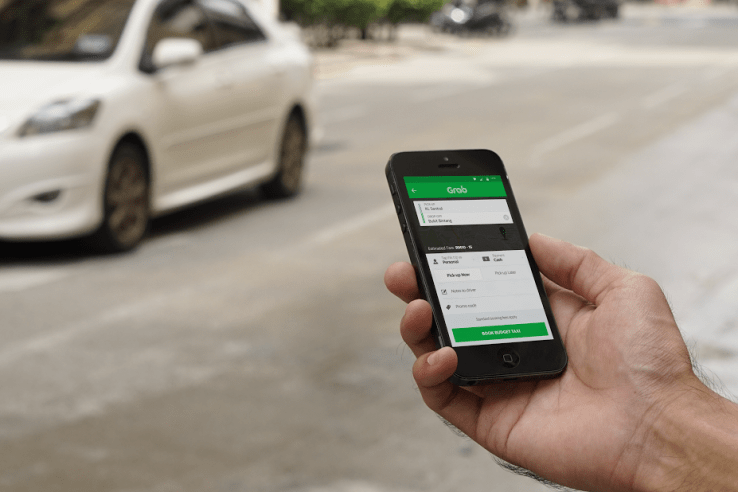
    Uber rival Grab is raising at $2.3B valuation, reportedly burning $35M a month

    Posted By: Uni logo - 05:40:00

    Grab, the company that rivals Uber in Southeast Asia, is in negotiations to close a new round of funding that could value it as high as $2.3 billion, multiple sources close to talks told TechCrunch. Grab was valued around $1.5 billion-$1.6 billion last August when it raised $350 million.
    The Wall Street Journal and Bloomberg this week reported that existing investors Didi Chuxing and SoftBank may lead a $600 million round of new financing. The sum could reach $1 billion after a second close.
    Grab has been in discussions with potential investors to raise money for a number of months, but the round is not yet closed, sources told TechCrunch. That target valuation of $2.3 billion, however, is subject to some secondary share sales from existing backers, we understand, which, once blended, could lower the figure.
    In the world of ride-hailing apps and fast-funding, Singapore-based Grab — which offers licensed taxis, private cars and motorbike taxis in six countries — hasn’t raised at the frequency of others. Its last financing came one year ago in August 2015 when it closed a $350 million Series E round. That included money from Didi and sovereign wealth fund China Investment Corporation (CIC) among others.
    Unlike Uber, which has seen numerous investors decks and financial presentations leaked over the years, precious little is known about the internals of Grab’s business.
    According to documents from Grab investors dated last year — circulated for potential secondary share sales — which were viewed by TechCrunch, the company was forecasted to burn $111 million in Q3 2015, that’s more than $35 million per month. The same data revealed that Grab had $606 million in cash on its books after it closed its Series E round.
    A Grab spokesperson told TechCrunch that the company has not yet touched its Series E money.
    The projections we viewed estimated that Grab would make $31 million in annual net revenue for 2015 — that’s the total amount of money it keeps from the transactions on its platform. That figure was forecast to grow to $193 million in 2016 and $526 million in 2017.
    Grab has never revealed the number of trips it completes each day across Southeast Asia. The same documents forecast that the company would reach 400,000 daily trips by December with a target of 3.5 million rides per day by the end of 2017.
    Grab declined to comment on the content of the documents.

    An uncertain alliance

    It’s notable that news is now leaking out that both Didi and Softbank are reportedly investing in this round, considering the wider state of play in Asia at the moment with both companies.
    SoftBank has pulled back on its overseas deals since Masayoshi Son decide to remain head of the company longer than planned, a move that saw his once heir apparent Nikesh Arora depart. In addition to cutting back on investments in India-based startups, SoftBank sold off a portion of its stake in Alibaba and its holdings in games firms GungHo and SuperCellA big move to buy ARM was viewed by analysts as a shift in strategy to invest in proven companies.
    For Didi, a further investment in Grab comes as doubts have been cast over its alliance with Grab, Lyft and Ola — the so-called Anti-Uber Alliance — following a deal to buy Uber China announced this week.
    As part of that acquisition, Didi is investing a reported $1 billion into Uber’s global business, while Uber CEO Travis Kalanick and Didi Chairman Cheng Wei will join each other’s boards. That deal appears to conflict with the alliance, since their opposition to Uber is the common factor that underpins their union.
    Lyft — which took a $100 million investment from Didi last year — told the Wall Street Journal this week it will “evaluate” its partnership with Didi “over the next few weeks.”
    Grab took news of the Didi-Uber deal more positively, with CEO Anthony Tan telling staff it is proof that a local rival can beat the U.S. ride-hailing giant.
    “They’ve lost once, and we will make them lose again,” he wrote in a company-wide memo obtained by TechCrunch.
    Tan and Grab’s competition is about to get stiffer, though. We reported last week that Uber is pushing new services aggressively in Southeast Asia, a region that has been a distant priority to its businesses in China and India, and Tan himself told staff that he expects Uber to increase its focus on Grab’s home turf.
    Uber is just one of the problems when it comes to Indonesia, the country Grab recently said is its largest based on rides. Motorbike taxi on-demand startup Go-Jek, which claims a fleet of 200,000 drivers, today closed $550 million in fresh investment at $1.2 billion valuation. Internal documents show the company completed 256,000 rides per day, as of April 2016.
    Grab faces its own challenges, too. Tan has spoken about the difficulty of hiring talent in Southeast Asia, and retaining hires is likewise a test. Numerous former Grab staff told TechCrunch that the company is struggling to motivate and retain its workforce, particularly those in technical positions.
    Specifically, the introduction of a bell curve assessment system — a model in which companies discard their least effective staff — has had a detrimental impact on morale, we were told. While popular in Silicon Valley, that style of management hasn’t been embraced by many startups in Southeast Asia.
    Other sources called Grab’s management ineffective and their policies haphazard, and claimed that the office it opened in Seattle in January is symptomatic of its struggle to attract and retain talent in Southeast Asia.
    Another challenge for the company is that it started out offering rides with licensed which are significantly less lucrative than Uber’s rides for example. For its ‘GrabTaxi’ licensed taxi ride service, Grab charges only a booking fee of $1-2 with the driver keeping the fare in full. Uber takes a variable cut of each ride it facilities, typically as much as 30 percent.
    Grab addressed this gap when it started a private car business — Grab Car — three years ago which uses Uber-style pricing, however it is somewhat cannibalized by the GrabTaxi service. According to data shared by Grab investors, GrabTaxi service accounted for 70 percent of all Grab trips taken in July 2015. The figures will have changed since then although the lower-profit taxi business is likely still dominant.
    Grab said last month that its GrabCar and GrabBike services account for “the vast majority” of trips it processes in Indonesia. The company did not provide a raw figure to support that statement, and it said that it does not break down out its ride per day or revenue figures across the region.
    Friday, 29 July 2016

    Uber focuses on services as it begins to see profits in Southeast Asia

    Posted By: Uni logo - 07:41:00

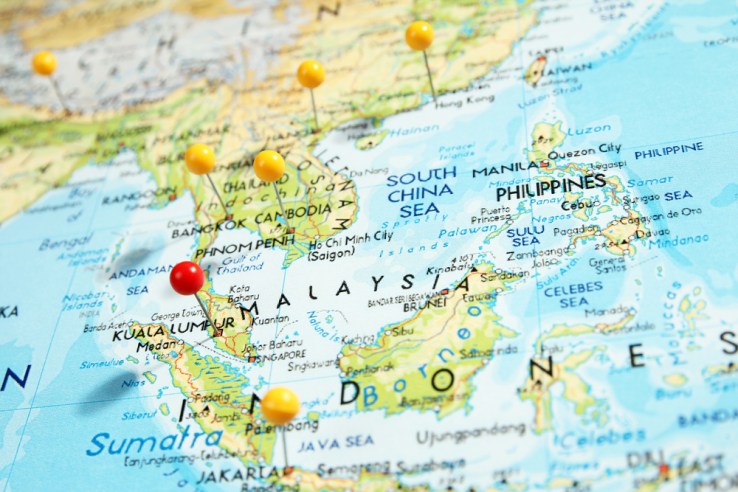
    Uber has abandoned its ‘land grab’ approach to Southeast Asia and instead switched its focus to new products and services as it begins to see profitability in key markets in the region.
    A source at the U.S. company told TechCrunch that its operations are now profitable in Singapore and the Philippines, two of its largest markets for numbers of rides and revenue, with others close behind. Uber declined to respond to repeated requests for comment.
    This is an interesting reveal since Uber said last month that it has reached profitability in all of its Western markets. Little is known about its emerging market presence, particularly in Southeast Asia — where it covers 15 cities across Singapore, Indonesia, Malaysia, Thailand, Vietnam and the Philippines.
    The company entered the region via Singapore more than three years ago, but its most ‘recent’ new country expansion — Vietnam — was two years ago. Since then, its team has been tasked with scaling the business across the region and now it has been decided that it is time to push on by introducing new services to tighten competition and grow its userbase.
    Despite a cumulative population of more than 600 million people, Southeast Asia sits in the shadow of China and India. That’s certainly been true for Uber, which has invested multiple billions into China via its Uber China subsidiary, while last summer it revealed a billion dollar warchest to battle Olaa $5 billion-valued rival backed by SoftBank, in India.
    Southeast Asia, with its population spread across six primary countries with differing currencies, cultures, regulation barriers and languages, was a distant priority, but TechCrunch understands things are changing with Uber keen to increase its rivalry with Grab, the ride-hailing service that claims 19 million app downloads and 350,000 drivers and is affiliated with Ola, China’s Didi and Lyft.

    Food, carpooling and bike taxis

    UberEats, its food-delivery service, its UberPool ride-sharing service, and UberMoto, its bike taxi service, are the three priorities, we understand. UberRush, its courier service, isn’t currently present in Asia but may also be introduced in selected markets before the year is out.
    UberEats recently entered Singapore, which became its first launch market in Asia, and the company hinted that it would also bring the service to Bangkok, Thailand, among other cities.
    Singapore was also one of the first ports of call for UberPool, the service that lets passengers ride with others who are headed in the same direction to save costs and ease inner city congestion. It is also in Indonesian capital Jakarta, while a similar service with shuttle buses launched in Manila, Philippines, this year.
    Finally, there’s UberMoto, which hasn’t quite been the success story that Uber had for hoped. Initially launched in Bangkok in Februaryit was banned from the Thai capital in May, while it has also struggled to find legality in India, the second launch market.
    Indonesia is the major focus for UberMoto as of now, but Uber has plenty of competition. Go-Jek, a local company backed by Sequoia, pioneered motorbike taxis as a service. With more than 200,000 bike drivers on its platform, it goes beyond helping passengers weave Jakarta’s gridlocked cities to get from A to B faster than four wheels, Go-Jek also offers services and food on-demand options. Establishing a motorbike taxi fleets as a platform for additional services is same playback that Uber is opting for, but it is up against a very strong incumbent.

    Rivalries

    Uber’s push for new services isn’t without other rivalries and resistance. Plenty of food delivery companies exist in the region, mainly that’s FoodPanda but Deliveroo recently came to town and there are bespoke companies, like Grain, too.
    Then there are those that are financially well equipped.
    Go-Jek seems to be preparing itself for an arms race. Earlier this month, the Wall Street Journal reported that the startup — which only operates in Indonesia right now — is raising $400 million in fresh capital at a valuation of more than $1 billion. We’ve independently verified that with sources close to negotiations, who told us that the round could be completed within the next couple of weeks.
    Go-Jek aside, Grab rivals Uber on motorbike taxis — as well as private cars — and the $1.6 billion-valued company has raised raised over $650 million to date. Its GrabBike service was also barred from Bangkok but it continues to do business there as a delivery service for packages and documents. Grab recently disclosed that Indonesia is its largest market in terms of rides, but it did not provide raw figures for how its business is performing.
    Grab has also introduced services. GrabHitch, its take on carpooling, launched in Singapore last year and has since expanded to Malaysia, while GrabFood is present in Indonesia. A Grab representative told us that, as of last month, GrabHitch counted 5,000 drivers in those two countries.
    That’s not quite all. Grab last week announced plans to introduce a payments platform this year, initially in Indonesia. A payment system that can be used in shops and stores — Grab partnered with Indonesian retail conglomerate Lippo to kick this off — will take it in a different direction as it too seeks to grow its userbase through services.

    Monday, 25 April 2016

    CARIBBEAN, TRAVEL, WORLD

    Posted By: Uni logo - 12:00:00
    Ap_350536690511

    SINGAPORE — Ride-hailing apps Uber and Grab are locked in their latest price war, and early data shows it's working to get more "butts in seats", Uber said on Monday.
    Uber's Singapore general manager, Warren Tseng, said in a press briefing that since the company cut its fares by 15% last week, it's noticed overall rides in Singapore have increased by 20%, and there was a 10% increase in new riders.
    Tseng said the company decided to lower fares because its data supported the hypothesis that the move would convert new riders over from other modes of transport like traditional taxis. The more riders try new ride-hailing apps, the more they're likely to continually opt for it eventually if they form the habit.
    A week ago, Uber's main competitor in Singapore, Grab, also slashed its prices in the app. It lowered its starting fare from S$3.50 ($2.59) to S$3 ($2.22), and lowered the mileage charge from 90 cents ($0.67) to 80 cents ($0.59) per kilometre.
    Grab's fare structure is different from Uber's. It displays a pre-calculated charge at the start of the ride, and doesn't adjust upward if unexpected jams occur. The fare is calculated based on distance and current demand and supply.
    Grab's Singapore head, Lim Kell Jay, also told Mashable the lowered fares are expected to supply more riders to Grab's network of private drivers.
    Both companies have said that the extra volume of riders is expected to help counter the lowered revenue per passenger, so drivers' earnings stay up. It's also clear that they're trying to subsidise some of the drivers' costs, by offering petrol discounts from tie-ups with fuel companies, among other items such as car insurance.

    The cash option is helping too

    Surprisingly, the new cash payment option that Uber opened two weeks ago is working, said Tseng.
    He said that despite Singapore's 90% credit card penetration rate, cash is still favoured in an estimated 30% of day-to-day transactions. The company said two weeks ago that it hopes cash will open the service to riders like students, who might not have credit cards.
    Since then, cash payments have been made in 5% of Uber's rides in Singapore, and this figure is expected to go up, he said. A third of first-time riders are also using cash, showing a possible reluctance to put in credit card data into the app at the beginning.
    Tseng noted that most of the cash sign-ups for first trips are also coming out of residential areas located further away from the city, such as the further eastern districts of Simei and Tampines, and up north in Woodlands and Yishun.
    A lot of Uber riders are part of demographic slices like foreign expats who are already accustomed to ride-hailing apps. Uber's lowered fares and cash strategy is designed to help the company reach a broader base of riders outside the city centre.
    Grab has offered cash payment as an option from its launch.
    UPDATE: April 26, 2016, 2:54 p.m. SGT An earlier version of this story stated that Uber saw a 20% rise in new sign-ups and 10% overall increase. The figures have been amended.
    Have something to add to this story? Share it in the comments.

    Copyright © 2016 Uni logo™ is a registered trademark.

    Designed by Unilogou. Hosted on Blogger Platform.