With Google, the self-driving car leader, slowly making progress with its autonomous cars, you’d be forgiven for thinking Uber’s efforts are far behind and barely visible in itsfrenemy‘s rearview mirror.
Well think again!
It turns out Uber has been making very rapid progress on its plan to replace its one million-plus drivers with computers. Bad news if you’re an Uber driver…
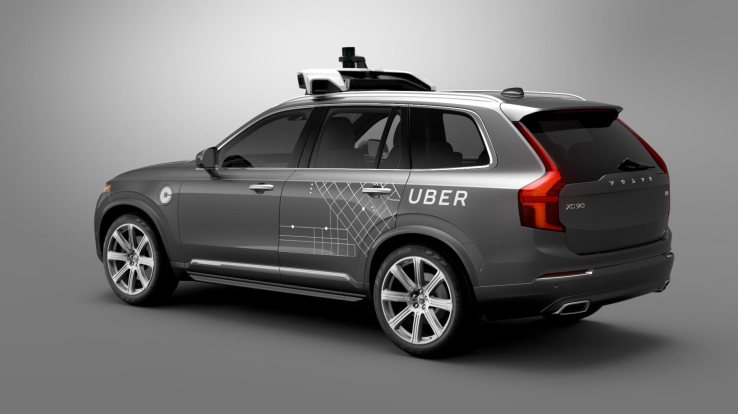
In an interview with Bloomberg, CEO Travis Kalanick revealed that the company is preparing to add self-driving cars to its fleet of active drivers in Pittsburgh as soon as this month.
The company will deploy around 100 modified Volvo XC90s outfitted with self-driving equipment. Each vehicle will be staffed by one engineer, who can take the wheel as/when needed, and a co-pilot to observe and take notes. There will also be a “liquid-cooled” computer sitting in the trunk recording trip and map data.
That will mean that regular Uber punters in the city have a chance of getting an autonomous vehicle for their ride — their trip will be free if so.
Precious little was known of Uber’s plans for self-driving cars, but the company told Bloomberg that it will outfit cars with autonomous driving kits rather than develop its own vehicles as Google is doing.
To do that, Uber has quietly snapped up Otto, a promising startup that launched this year to bring self-driving technology to trucks. Otto’s technology can be fitted to existing trucks, and, according to Bloomberg, the technology will be adapted to create a lidar — laser detection — system to power autonomous Uber vehicles.
The Otto acquisition is hugely notable, not only for the technology but the personnel involved.
The company was founded by former Googlers Anthony Levandowski, Lior Ron, Don Burnette, and Claire Delaunay. Levandowski led Google’s self-driving car efforts, Ron was an executive on Google Maps and Motorola, while other staff have spent time with Apple, Tesla and other notable automotive firms.
The deal is set to close as soon as this month, after which Levandowski will lead Uber’s driverless car efforts. In addition, two new R&D centers will open up to speed the technology’s development.
“We were really excited about building something that could be launched early,” Levandowski told Bloomberg of why he left Google.
His additional comments — which include calling Kalanick a “brother from another mother” — hint at frustrations with the slow speed of development from Google’s self-driving project. Uber, it seems, is more willing to move forward with self-driving at a faster pace.
Time will tell how that plays out, but we’ll get our first glimpse soon enough.
Imagine never having to stop for a red light again – Audi’s upcoming traffic light information system won’t get you all the way there, but it will help you stop with the guesswork around when a light is going to change from red to green.
The feature will provide a countdown of exactly when a traffic light will switch from stop to go, starting a few seconds before the change, based on data provided by city infrastructure. That means it’s limited to cities where such services are available, which includes a few major metropolitan areas I the U.S. currently. The Audi system gets its data from Traffic Technology Services, an info provider that connects the dots between city infrastructure and connected vehicles.
It’s also limited in terms of vehicles affected, with 2017 models including the Audi Q7, A4 and A4 all road with firm levels that include Audi connect being the only ones that can take advantage of the feature. Plus, it’s a pay service rolled into the Connect Prime subscription offering Audi provides. But despite its limited scope and scale, it is indeed an industry first, and one that will hopefully pave the way for deeper future integrations between smart city infrastructure and connected cars.
Similar solutions are available as third-party apps for your smartphone, including EnLighten, an app that sounds audible alerts when a traffic light is about to change. Audi’s system sounds like it might be more closely tied to official city traffic light servers, however.
Audi and EnLighten offer similar motivation for making traffic light advance warning info available to drivers: to diminish driver stress. I’m still curious to see how this performs as a directly integrated OEM offering on cars, in terms of alleviating distractions and stress.
Following two confirmed Tesla Autopilot-related crashes in the U.S., including a fatality, German lawmakers are planning legislation that would require carmakers to include a black box for cars.
More commonly associated with aircraft, the proposed black box would record when an autonomous system was engaged, when the car asked the driver to retake driving duties and when a human driver took control or not, according to Reuters.
The intent of this legislation would help both carmakers, regulators and law enforcement officials determine who is responsible in the event of an autonomous car crash.
Both Volvo and Mercedes-Benz have said they will accept responsibility for the actions of its cars when in autonomous driving mode.
I suspect, though, simply knowing when the system was engaged or not won't be the only factor used to determine fault or responsibility. What if, for example, the driver fails to have needed service or repairs performed on the car and the autonomous system malfunctions as a result?
While it now appears clear that legislators will need to rein in companies like Tesla from acting irresponsibly with its tech, I also fear any laws written that affect autonomous tech could be formulated without a broad understanding of how the systems work.
For example, along with the black box idea, German Transport Minister Alexander Dobrindt also wants legislation to include language that allows the human driver to check out and not pay attention to traffic but also requires them to remain in the driver seat so they can intervene in the case of an emergency.
It simply isn't realistic to expect a person to go from napping to evasive driving in a split second. Hopefully, Germany's home country automotive experts—who tend to be conservative players when it comes to autonomous tech— can help guide the legislation so that it's tied to reality.
Have something to add to this story? Share it in the comments.
The used car industry is an interesting business. The market is huge – 45 million used cars are bought each year in the U.S. But the biggest player, CarMax, only controls about 2% of the market – but is still valued at about $12 billion by Wall Street.
So that makes the market not only ripe for disruption, but also extremely lucrative.
Carvana is a used car dealer that thinks it can gain some of this marketshare by bringing an e-commerce approach to the industry. The startup, which we’ve covered before, has brought the entire sales process online. And today the startup is announcing that is has raised a $160M series C to further expand its model across the United States.
A prospective car buyers stars on Carvana’s website, and picks out the exact car they want. The company offers cars in almost every body style and price range, and had about 5,000 available as of last night. There’s no bargaining, but the company consistently offers prices a few thousand dollars better then Kelly Blue Book’s suggested retail price (and lets you compare the two).
All financing and paperwork gets done online, and you have the choice of either having your car delivered or available for pickup at one of the company’s “car vending machines”.
What’s a car vending machine? It’s literally a big glass building that automatically dispenses a car that is preloaded by the company in the days prior to the customer picking it up. Carvana opened their first one in Nashville last year, and will use this funding to open more around the country.
Does a car vending machine sound gimmicky? Of course. But the company explained that it also has a practical purpose, besides being great for advertising. The status quo for Carvana is currently to deliver your new car to your door, which obviously costs more than having you pick it up. So by building a car vending machine in each city the company can save the money they would spend on having employees delivery it to your door.
This $160M in funding follows $140M in equity and $400M in debt previously raised by the company. While Carvana won’t disclose specific investors, they have said that the round had participation from both new and existing institutional investors.
Like previous funding rounds, growth and expansion is where Carvana is planning on spending this money. But with this new funding they are planning to expand and have readily available inventory in over 20+ markets by the end of the year, which will probably require them to shell out a ton of cash for a ton of used cars.
Plus, the company needs to build more physical locations to store (and possibly vend) cars in each of these new cities. As Ernie Garcia, founder and CEO of the company explained, they could choose to grow slower with much less capital, but Carvana (and their investors) believe that they found a solid business model, and want to ramp up and strike while the iron is hot.
The new Bugatti Chiron isn't even on sale yet. And the car that the ultra-luxury French brand used to tease it, the Bugatti Vision Gran Turismo, wasn't ever intended for sale. Despite that, though, both the Chiron prototype and the one-of-one Vision were auctioned off to a Saudi prince for over $5 million.
Prince Badr bin Saud of Saudi Arabia posted two pictures taken by photographer GFWilliams to his Instagram account of the Bugatti prototypes, showing off his two new (presumably) prize possessions.
Since both of these cars were built for show rather than sale, it's unclear if they run and drive. Sometimes, carmakers do get prototypes up and running. Other times, they don't.
Regardless, the cars will make awesome additions to his collection.
No matter your feelings about the purchase, you can't deny that owning both of these stunning Bugattis proves that it's good to be the ... prince?
Generation Y, the millennial generation, is all about experiences. Turns out, they'd rather spend their money on travel, food and adventure than on material goods.
Frankly, that inclination never really made sense to me, a millennial. A trip is fleeting and memories are fluid. But stuff ... stuff is forever.
Accordingly, I've filled my life with dozens of cheap used cars, a pretty snazzy collection of sport coats (if I do say so myself) and more than a handful of Legos. All the while, I watched as my friends uploaded images of themselves in front of the Taj Mahal and Eiffel Tower and on the rims of Icelandic fjords.
For my exposure to foreign cultures and lands, I relied on TV shows and the occasional Snapple bottle top to satiate my negligible need for world exploration. Meanwhile, I settled into the realization that I would never side with my contemporaries in the argument of stuff versus experience.
That said, never in my life did I expect to find an object that I thought might knock my fellow millennials off the experience train and back onto the the possessions path. However, I think I've found it: The Aston Martin DB11, the tactile good that could cure the millennial obsession with experiences. And, funnily enough, I had to travel to Tuscany to experience it for myself.
Subtle beauty
Turns out, Tuscany is a beautiful place — and far greener than I had expected.
What struck me most about it, though, was that its visual splendor wasn't 'in your face.' Instead, it has a subtle allure. Unlike, say, the Grand Canyon, the Tuscan landscape doesn't punch you in the face. You could admire it and soak it in, or you could just as well ignore it.
If you do study the rolling, tree-covered hills of Tuscany, you're in for a treat. It's dotted with distinctive geography and picturesque towns. Because of its understated beauty, Tuscany was the perfect place to first lay eyes on the DB11.
Walking up to the DB11 for the first time, I couldn't believe I was looking at a production car and not a concept. That said, none of it was 'too much' or garish. Every single carefully crafted line was both subdued and essential to the whole.
IMAGE: NICK JAYNES/MASHABLE
The hood, for example, which is the largest single piece of aluminum on any production car, wraps over the front and gives it a sleek, sporty but hunkered-down look. And cut into the expansive piece of perfectly curved aluminum clamshell hood are four air vents that cool the engine beneath its skin.
Following the lines to the back, you discover the DB11 is far wider than you might expect. Its broad rear haunches drop off abruptly at the sharp C-shaped taillights. And although the rear-end is a bit squat, it hides some clever design work.
The lines of the DB11 send air underneath the bodywork, which is forced out on the rear lip of the car that Aston Martin calls the "Aeroblade." This creates a virtual spoiler of air, which serves the same aerodynamic function as a physical spoiler without causing any drag.
The distinctive new — but decidedly Aston Martin — exterior styling is underpinned by an all-new chassis. I won't bore you with its details. The highlight, however, is that since Aston Martin designed the chassis to accommodate both four passengers in the cabin and a V12 engine under the hood, it's far roomier than not only its predecessor, the DB9, but also other cars in its class.
Twin-turbo V12
The V12 Aston designers left room for in the chassis is an impressive thing indeed. Unlike so many carmakers today, Aston refuses to install engines with fewer cylinders to its cars. So it developed a new 5.2-liter V12 engine and bolted to it two turbochargers.
The result is raucous 600 horsepower that is routed to the rear wheels through an 8-speed automatic transaxle (a transmission/axle hybrid) mounted in the rear of the car. All told, the DB11 will do a 0 to 60 mph sprint in 3.9 seconds on the way to its 205-mph top speed.
You can fire the engine one of two ways: By pressing the ignition button quickly or holding it for several seconds. The latter causes the V12 to ignite quietly, rather than with a roar. Of course, I preferred the roar of the quick-push ignition.
For as shouty as it is at ignition, the DB11 is even louder at full throttle. And its perfectly tuned exhaust note is matched by some truly prodigious acceleration. Since the V12 is turbocharged, its acceleration isn't as snappy as other naturally aspirated engines.
I'd liken it to stepping on a fresh, bendy branch versus a dry, brittle one. That doesn't accurately impart the gravity of the turbo'd V12. So, instead, let's say pushing the throttle to the floor is like pestering a pet tiger versus a wild wolverine. A tamed tiger will put up with you for a minute before it attacks, but a wolverine will just haul off and maul you.
That's the DB11's V12: Thanks to the turbos, you can bat it around for a minute without fear of immediate retaliation. Push far enough, though, and its roar and raw, animalistic power will make your blood run cold.
IMAGE: DREW GIBSON/ASTON MARTIN
That's not to say that the car is unwieldy. The DB11 is a grand tourer, which means it's soft and more stately than a sports car. Its electronic steering is very light but also quite precise. And in its standard suspension ride mode, the DB11 glides down the road like a big, soft sedan. Though it can be ratcheted up to Sport+, which makes it taut without also being vertebrae-fusing.
Real materials
Even when you're not indulging in the sounds and organ-reordering acceleration of the DB11, you're still audience to one of the most stylish modern luxury interiors on the planet.
Aston Martin's representatives stressed that everything occupants see and feel inside the cabin is real. If it feels like leather, it is. If it feels like carbon fiber, it is. And if you're looking at the interior and think it reminds you a bit of a fine leather loafer, there's good reason. Aston designers borrowed leather detail work from high-end shoe designs.
IMAGE: NICK JAYNES/MASHABLE
They then mated all those high-end materials with segment-leading technology from Mercedes-Benz. That means the DB11 has both old-world luxury and also cutting-edge technology.
Ultimate experience
The thing is, for as apt as it was for Aston Martin to launch its latest car in Tuscany, I could have driven the DB11 in Toledo, Ohio and enjoyed it just as much. The rich greenery of Central Italy didn't make the experience for me, the car — and the painstaking, handcrafted care that went into making it — did.
That's because with its outstanding exterior styling, raw V12 power (and soundtrack) and sumptuous but tech-laden interior, the DB11 transcends the physical world and the rules governed by traditional objects and into the world of experience. You don't simply own ordrive the DB11, you experience it.
What's more, it's more than just one of the best 'things' on the planet, it's also one of the ultimate experiences money can buy. Millennials, your experience fixation has met its match.
Aston Martin hasn't just created the latest and greatest ultra-luxurious sport coupes on the planet, it has created one of the ultimate experiences money can buy.
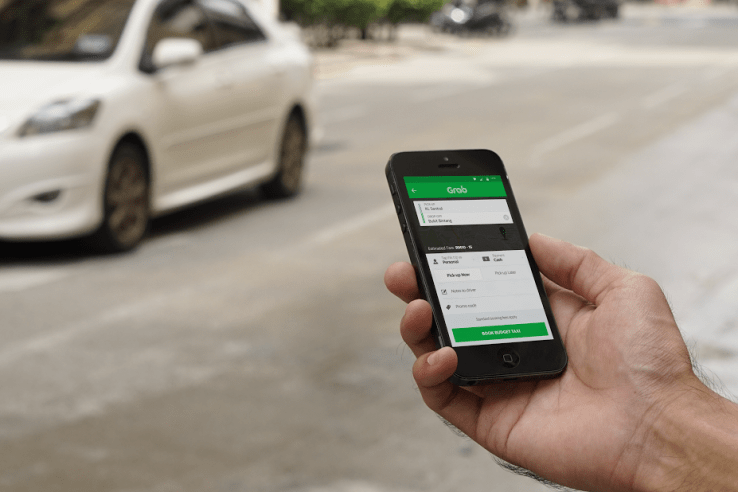
Grab, the company that rivals Uber in Southeast Asia, is in negotiations to close a new round of funding that could value it as high as $2.3 billion, multiple sources close to talks told TechCrunch. Grab was valued around $1.5 billion-$1.6 billion last August when it raised $350 million.
The Wall Street Journal and Bloomberg this week reported that existing investors Didi Chuxing and SoftBank may lead a $600 million round of new financing. The sum could reach $1 billion after a second close.
Grab has been in discussions with potential investors to raise money for a number of months, but the round is not yet closed, sources told TechCrunch. That target valuation of $2.3 billion, however, is subject to some secondary share sales from existing backers, we understand, which, once blended, could lower the figure.
In the world of ride-hailing apps and fast-funding, Singapore-based Grab — which offers licensed taxis, private cars and motorbike taxis in six countries — hasn’t raised at the frequency of others. Its last financing came one year ago in August 2015 when it closed a $350 million Series E round. That included money from Didi and sovereign wealth fund China Investment Corporation (CIC) among others.
Unlike Uber, which has seen numerous investors decks and financial presentations leaked over the years, precious little is known about the internals of Grab’s business.
According to documents from Grab investors dated last year — circulated for potential secondary share sales — which were viewed by TechCrunch, the company was forecasted to burn $111 million in Q3 2015, that’s more than $35 million per month. The same data revealed that Grab had $606 million in cash on its books after it closed its Series E round.
A Grab spokesperson told TechCrunch that the company has not yet touched its Series E money.
The projections we viewed estimated that Grab would make $31 million in annual net revenue for 2015 — that’s the total amount of money it keeps from the transactions on its platform. That figure was forecast to grow to $193 million in 2016 and $526 million in 2017.
Grab has never revealed the number of trips it completes each day across Southeast Asia. The same documents forecast that the company would reach 400,000 daily trips by December with a target of 3.5 million rides per day by the end of 2017.
Grab declined to comment on the content of the documents.
An uncertain alliance
It’s notable that news is now leaking out that both Didi and Softbank are reportedly investing in this round, considering the wider state of play in Asia at the moment with both companies.
As part of that acquisition, Didi is investing a reported $1 billion into Uber’s global business, while Uber CEO Travis Kalanick and Didi Chairman Cheng Wei will join each other’s boards. That deal appears to conflict with the alliance, since their opposition to Uber is the common factor that underpins their union.
Grab took news of the Didi-Uber deal more positively, with CEO Anthony Tan telling staff it is proof that a local rival can beat the U.S. ride-hailing giant.
Tan and Grab’s competition is about to get stiffer, though. We reported last week that Uber is pushing new services aggressively in Southeast Asia, a region that has been a distant priority to its businesses in China and India, and Tan himself told staff that he expects Uber to increase its focus on Grab’s home turf.
Uber is just one of the problems when it comes to Indonesia, the country Grab recently said is its largest based on rides. Motorbike taxi on-demand startup Go-Jek, which claims a fleet of 200,000 drivers, today closed $550 million in fresh investment at $1.2 billion valuation. Internal documents show the company completed 256,000 rides per day, as of April 2016.
Grab faces its own challenges, too. Tan has spoken about the difficulty of hiring talent in Southeast Asia, and retaining hires is likewise a test. Numerous former Grab staff told TechCrunch that the company is struggling to motivate and retain its workforce, particularly those in technical positions.
Specifically, the introduction of a bell curve assessment system — a model in which companies discard their least effective staff — has had a detrimental impact on morale, we were told. While popular in Silicon Valley, that style of management hasn’t been embraced by many startups in Southeast Asia.
Other sources called Grab’s management ineffective and their policies haphazard, and claimed that the office it opened in Seattle in January is symptomatic of its struggle to attract and retain talent in Southeast Asia.
Another challenge for the company is that it started out offering rides with licensed which are significantly less lucrative than Uber’s rides for example. For its ‘GrabTaxi’ licensed taxi ride service, Grab charges only a booking fee of $1-2 with the driver keeping the fare in full. Uber takes a variable cut of each ride it facilities, typically as much as 30 percent.
Grab addressed this gap when it started a private car business — Grab Car — three years ago which uses Uber-style pricing, however it is somewhat cannibalized by the GrabTaxi service. According to data shared by Grab investors, GrabTaxi service accounted for 70 percent of all Grab trips taken in July 2015. The figures will have changed since then although the lower-profit taxi business is likely still dominant.
Grab said last month that its GrabCar and GrabBike services account for “the vast majority” of trips it processes in Indonesia. The company did not provide a raw figure to support that statement, and it said that it does not break down out its ride per day or revenue figures across the region.
It's 2016 and there are no bad cars. There just aren't.
Sure, I recently kvetched about the Maserati Ghibli. But, in the grand schemes of things, the Ghibli is not a bad car — it's just a bit disappointing and arguably worse than its competitors. Not so long ago, cars used to be a lot worse than they are today. Let me explain what I mean.
Until very recently, the 1990s for example, even brand-new cars had issues that buyers would consider unacceptable today. Some suffered from throttle hesitation or inadequate brakes, while others were just generally poorly built and suffered from poor reliability. In the last two decades, through technological advances, virtually every carmaker has remedied these problems.
You might think that would make a car reviewer's job easier. In fact, it's had the opposite effect; it's made it much, much more difficult. That's because nearly every brand-new vehicle is pretty darn good.
They all ride smoothly. They're all pretty quiet. They are all incredibly safe. And they boast never-before-seen levels of efficiency and refinement. Accordingly, separating the wheat from the chaff isn't as simple as it once was.
IMAGE: AUDI
Once in a great while, though, a car comes along that stands out from the rest — one that does not just most things better but all of the things better than anything else on the road. And, right now, the car that most stands out in the market saturated by marvelous new cars is the 2017 Audi A4.
Surprise, surprise
When Audi unveiled the 2017 A4, at first blush, I was sort of underwhelmed. That's because it looks a lot like the last generation A4 — at car that, for all intents and purposes, was just "fine." It was a good car and a strong competitor in the compact luxury sedan marketplace. However, it never really inspired awe or really forced me to give it a second thought. In this way, the last A4 was like Tobey Maguire — good, but not revolutionary. You could easily forget it was around.
This new A4 is different.
Granted, the all-new A4 has slightly updated styling compared to the last A4. Broadly, though, from an exterior styling standpoint, there's not a lot of difference between the new and the old. And, although the 2017 A4 rides on a new chassis, based upon its looks, I mistakenly assumed the driving experience would be the same, too.
IMAGE: AUDI
Getting behind the wheel for the first time, the 2017 A4 immediately met my preconceived expectations:
✔️ A new interior with a few nice pieces of tech.
✔️ A nice driving feel, thanks to its refined and crisp new chassis.
✔️ An engine that is both peppy and relatively efficient.
✔️ Good, but not revolutionary.
Funnily enough, I carried these preconceptions with me through the first half of the week I drove it. "Yes, this is fine," I thought, as I commuted from home to work and back again. "Yes, the engine is smooth and the dark leather interior accented by aluminum bit has some nice features. But is it that special?" I reckoned it wasn't.
Then something happened. I was driving south down the 405 from Los Angeles toward Long Beach when it struck me like a bolt of lightning. I can't tell you exactly what it was, though.
Maybe it was the fact that I had clicked the 7-speed S tronic dual-clutch automatic transmission into Sport mode and was full-throttling the 252-horsepower turbocharged 2.0-liter four-cylinder engine past some chuckleheads on the freeway that hooked me. Maybe it was the perfectly tuned Bang & Olufsen sound system thumping away a flawless beat that put me into a euphoric trance. Or perhaps it was divine intervention.
Regardless of what exactly sent me over the edge, at that moment, I turned to my co-pilot and said, "This is the best car I've ever driven."
"Really?" he replied with surprise. He thought, like I had, that since the exterior of the A4 hadn't changed much that the rest of it hadn't either.
IMAGE: AUDI
21st century
As if I had planned it, I launched into a point-by-point demonstration of what I meant, showing him all the standout features. I started with the cabin, which I believe is the epitome of 21st century luxury and why the A4 takes the new car cake.
Everything about the interior is futuristic and intuitively laid out. The materials, for example, are sturdy and of surprisingly high quality. Zoom in on the smallest details like the compact climate control pod in the center dash and you'll find it is the perfect blend between visual and tactile elegance.
"Even the dang knobs feel solid!" I exclaimed, twisting the air temperature dial.
I then turned my co-pilot's attention to the screens. There are two of them. The first, in place of the instrument cluster, is the 12.3-inch display called the "virtual cockpit." Designed to limit distracted driving, the virtual cockpit puts all of the most important vehicle information right in front of the driver. Since it's Audi, the info is packaged in a very aesthetically pleasing way.
"See, with the push of a button, I can run a 3D version of Google Maps in the center or throw the speed up front," I explained.
IMAGE: AUDI
I then gestured to the center dash-mounted screen, which doesn't look like a tablet that was fitted to the dash as an afterthought, unlike some of the A4's competitors. I encouraged my co-pilot to play with the vehicle settings displayed on the screen via the Audi MMI joystick knob topped with a touchpad in the center console. There, he could also see Google Maps, among many other screens, or adjust the vehicle drive mode.
By then, he was hooked. "This thing is so futuristic!" he beamed.
While I generally try not to geek out too much on things like screens and climate control buttons in a review, I do so here because they exemplify what the A4 gets right. These aren't wholly distinctive features. Other European automakers offer 12.3-screens and quickly adjustable climate settings. None, however, does quite with the same elegance or intuitiveness as Audi.
I should mention, detailing those highlights doesn't even begin to address some of the other tech offered in the A4 like the full color head-up display (HUD) or Audi Connect 4G LTE Wi-Fi hotspot.
Audi's virtual cockpit
IMAGE: AUDI
Then we discussed the German sedan's driving characteristics. Depending on the drive mode (of which there are four), the A4 can behave like a distinctly different car, allowing drivers to literally dial the car in to suit their own tastes.
Dynamic mode, for example, ramps up throttle response, and allows the turbocharged engine to snarl a bit. Dynamic mode also changes shift points in the new transmission. What's more, it also stiffens up both the suspension and the steering. Alternately, Comfort mode has the opposite effect, quieting down and softening all the bits.
For fear of getting bogged down in detailing the nitty-gritty, as I did that day while cruising down the 405, let me summarize. All things taken into account, the A4 feels sturdier, more luxurious and refined than any of its competitors. It looks, drives, feels and acts like a much more expensive car than it is. And that's not something I can say for any other car in its price range.
Well-rounded
Now, I'll grant you that the A4 lacks some exterior excitement and some of the cars from its competitors are more visually appealing. Frankly, it was this lack of exterior flare that clouded my prejudgement of it. That said, there is something to be said for having an anonymous luxury sedan. Not everyone wants to be flashy or boastful with their car.
IMAGE: AUDI
Looking more broadly, let's think about the 2017 A4's place in the market.
Audi's home-country competitors have hung their hats on either luxury and driving dynamics to distinguish themselves in the marketplace. This, at a time when fewer buyers care about rear-wheel drive sports sedans and place less stock in wood-laden, old-world luxury interiors. Meanwhile, for the last decade or more, Audi has defined itself with its tech.
I believe wholeheartedly that attitude has allowed its designers not just to look at the world today but rather the future and what cars will be — and, more importantly, car buyers will want from them.
While other European carmakers are playing in automotive parameters set in the 1990s, Audi is playing on the field defined by the 2020s and beyond. You need not look any further than the 2017 A4 for example of what that looks like.
Because of that, the A4 isn't just "good" by 2016 standards like everything else, it is great — and the best new car on the road today.
2017 Audi A4
The Good
Most powerful base engine in its segment • Techie and refined interior • Attention to detail
The Bad
Uninteresting exterior styling
The Bottom Line
If you can look past the 2017 Audi A4's evolutionary exterior styling, inside you'll find one of the techiest, most refined and generally enjoyable cars on the road today at any price point.




 Popular
 Tags
Tags Videos