• unilogou. Powered by Blogger.

    Showing posts with label Technology. Show all posts
    Showing posts with label Technology. Show all posts

    Wednesday, 10 August 2016

    Apple releases its 5th developer betas, bringing new app Swift Playgrounds to iOS

    Posted By: Uni logo - 03:24:00

    Good news, Apple developers – Apple today has released its 5th version of the iOS 10 beta build along with new betas for watchOS 3, macOS, and tvOS. With this release, we’re getting closer to the final, public build of iOS – it’s likely that there will only be one or two more betas before its release expected in September.
    While the first few betas were buggy, as expected, Apple has been polishing up the code and fixing the broken bits with every subsequent beta release. In iOS beta 5, the company has addressed a number of issues with regard to iOS’s interaction with Apple TV, in-app purchases in the App Store, Bluetooth, iMessage, the Phone and Wallet apps, as well as accessories. Notably, the device will no longer panic when using the iPhone 6s Smart Battery Case, for instance.
    There are a few changes with this iOS build, however, as early testers have already discovered. The AI and facial recognition data in the Photo app has been reset, causing a new scanning process to take place, reports iPhoneHacks. In addition, the music Control Center has been tweaked, the Today view now includes the data and day, widgets have gotten darker backgrounds, and there’s a new lock sound, their report says.
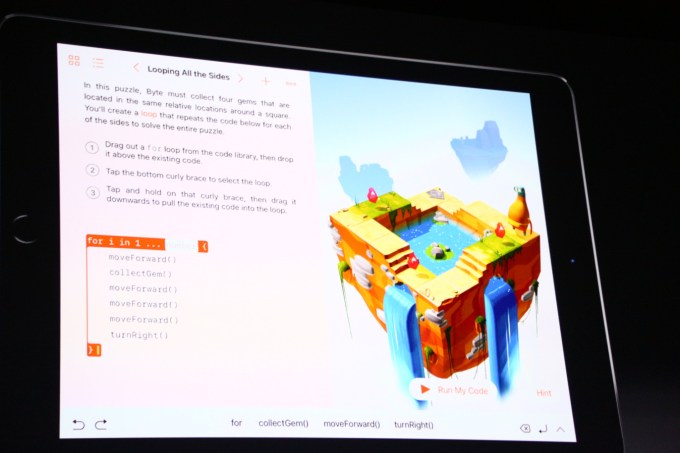
    iOS beta 5 also ships with Swift Playgrounds, the “learn to code” app for kids Apple introduced at WWDC 2016. The app arrives with Learn to Code parts 1 and 2, plus additional challenges users can explore. You can also create your own playgrounds based on the templates, create a blank playground, or open playgrounds in Xcode.
    The app also includes the new Graphing template, in addition to the Answers, Shapes and Blank templates.
    swift-playgrounds2
    Also, according to Apple’s release notes, Voicemail transcription is now available on iPhone 6s, iPhone 6s Plus and iPhone SE (with the Siri language set to English). However, there are still issues with FaceTime involving calls between this beta and macOS betas being broken; problems with “Recently Played” in “For You” in Apple Music not instantly refreshing; problems with Notes quitting unexpectedly; along with other minor bugs.
    In case you’re curious what’s new in the other platforms, macOS Sierra brings Siri to the Mac, the Photos app is updated, Safari has picture-in-picture for video, and more. WatchOS 3 is also a major update in terms of offering a redesigned users interface, with no more Friends screen, and faster launching apps. Apple TV’s tvOS update isn’t as major, but will get a new dark mode and sign-on for TV Everywhere apps. The device can also act as a HomeKit hub.
    The new macOS beta now supports Apple Pay by discovering an Apple Pay-capable phone or watch, and addresses other minor issues. The watchOS 3 beta, meanwhile, introduces a fix for the problem with Siri that when the request involves a deleted app, Siri may not have provided the intended response.

    Thursday, 4 August 2016

    LG will announce first Android 7.0 Nougat phone on Sept. 6

    Posted By: Uni logo - 13:50:00
    LG's V10 has two front-facing 5-megapixel cameras and a secondary screen above the main screen.
    Having choices is great. Samsung's releasing its impressive Galaxy Note 7 later this month, the new iPhones are coming next month and now LG's announced it'll also unveil a new phone in early September.

    The LG V20, which the company half-assedly announced — but didn't show — early last week, will debut in San Francisco on Sept. 6.
    The invite (below) doesn't reveal anything juicy. We've got a "Play More" title and "The second story begins."
    The first part could be alluding to LG's "Friends" modules, which headlined the company's G5. Although it seems unlikely the V20 will also be a modular phone, weirder things have happened. It could also merely be teasing the phone's beefed up entertainment features.
    The second part is a little more cryptic. On the surface, the V20 is, of course, the second version of the V10, but it could also be hinting at a second screen or second selfie camera, two things that made the V10 different from other phones.

    LG's G5 has two rear cameras. I wouldn't bet against that appearing on the V20. I liked the two-camera system a lot when I reviewed the phone.
    The craziest part of the announcement date might be the fact it could come one day before Apple reveals its new iPhones.
    Phone leaker Evan Blass tweeted that he has confirmed pre-orders of the new iPhones will begin on Sept. 9 with deliveries on Sept. 12. 
    Not to downplay the V20 and what it could bring — it will be the first Android phone to ship with Android 7.0 Nougat, after all — but announcing a new product right when new iPhones are rolled out is practically suicide.

    Good luck LG!

    Shoka put a brain for your bicycle in a connected smart bell

    Posted By: Uni logo - 13:45:00

    Connected bikes could be huge assets to the future of urban transit, especially as cities and cars grow more connected, too. But smart cycles can be very expensive, and cyclists also tend to be very particular about, and attached to, their bikes. Shoka’s new Shoka Bell is an accessory that adds a heavy helping of intelligence to your bike without requiring the purchase of an entirely new one – and it even lays the groundwork for communicating with the smart cities and smart motor vehicles of the future.
    The Shoka Bell, which is already fully funded on Kickstarter, has a built-in navigation system, a front light, a proximity based motion alarm and yes – a bell. The unit is about the size of an old, somewhat bulky Nokia flip phone, and attaches to any standard bike handlebars via a standard clamp. The internal battery will keep it running for up to 200 hours, and it turns on and off automatically when you start and finish your ride in order to make the most of its onboard powerhouse.
    Shoka purple back
    But Shoka Bell is a bell by name, and indeed, it has a number of bell-related features. A hardware joystick controller on the back lets you activate one of eight customizable sounds, to that you can use a different bell tone for cars and for pedestrians, or even play a pre-recorded message of your own creation. Useful for keeping some recorded swears on hand for easy blasting when you get cut off by a taxi in the bike lane.
    Beyond the bell, Shoka has navigation built-in, which works with the app to provide alerts about upcoming turns, as well as real-time updates to help you avoid busy intersections, and even notifications about nearby friends so you can join up to form a critical mass.
    Anti-theft features include a motion sensor that’s built into the clamp, not the Shoka Bell’s main unit, which means that if someone tries to swipe your bike it’ll set off a loud alarm that will ring your Bell even if it’s in your pocket up to 250 meters (820 feet) away.
    The hardware pairs with Shoka’s existing bike trip tracking app, but on the software side a more interesting feature is one planned for the future: a developer program to help connected cars detect and communicate with Shoka Bell, which could help with future obstacle avoidance systems and ultimately decrease accidents.
    Shoka Bell is looking to ship its first units to backers in March of next year, with backer reward units currently available starting at $99. The Hungary-based startup also has backing from Ruvento, a hardware VC based in Singapore.

    Wednesday, 3 August 2016

    Another Reason We Can’t Live Without Bees: They Can Deliver Pesticides

    Posted By: Uni logo - 04:34:00
    On David Passafiume's natural homestead a hour north of Toronto, there's a team of many specialists who spread a characteristic pesticide to crops. They work verging on consistently, live on the homestead, and don't get paid: turns out honey bees are glad to do this work for nothing. 

    Honey bees have constantly assumed an imperative part in horticulture as pollinators: The USDA assesses each third chomp of sustenance we eat profits by bumble bee fertilization. Be that as it may, a Canadian startup is enrolling honey bees to assist on the ranch recently. Honey bee Vector Technology, or BVT, has planned a framework that permits honey bees to stroll through a plate of a characteristic, mold-battling growth on out of the hive to fertilize blooms. The safe parasite really shields plants from contagious illnesses. 

    The organization charges the innovation as a financially savvy, naturally well disposed other option to manufactured fungicides. As more individuals begin paying consideration on the chemicals splashed on their sustenances, producers are searching for new answers for ensure their yields. However, can honey bees truly benefit starting an occupation as pesticide sprayers?

    “It works. It’s been night and day, honestly,” farmer Passafiume told me over the phone. He’s been using BVT’s system for seven years to protect his strawberry plants from gray mold, a nasty fungus that Passafiume said could wipe out as much as 60 percent of his crop during bad years. Since he started using BVT, he said the amount of gray mold on his strawberries is nearly zero.

    “We just don’t get it. It just doesn’t happen anymore,” he said.

    The founders of BVT aren’t the first to consider using bees to spread organic plant protectors, but they’re one of the first to take it to market. BVT has been testing out its technology for years on multiple different crops and recently opened a commercial production facility. Michael Collinson, the CEO of BVT, told me the system should be on the market in North America by late 2017.

    Internal studies Collinson sent to me showed that BVT’s technology protected strawberry plants from gray mold just as well as traditional pesticides, and actually resulted in a higher yield: more than double the number of strawberries were harvested from bee-treated plants than pesticide-treated ones. These results haven’t been published in a peer-reviewed journal, but the general concept behind the technology has been formally studied in the past. Still, there are a number of possible challenges to letting bumblebees dole out natural fungicides.

    “One challenge, of course, is ensuring that all or the majority of flowers are visited by bees,” said Patrick Byers, a regional horticulture specialist with the University of Missouri Extension who is an expert in plant pathology. “You’re also delivering a living organism in environmental conditions. These organisms are vulnerable to conditions—if it’s too hot, or too cold, or too dry. You need a way to make sure they arrive to the flower alive.”

    It’s also not clear if the technology could work on a large, industrial scale (Passafiume’s family farm grows just 8.5 acres of berries). Byers, who has no affiliation with BVT, told me he wouldn’t write the technology off and said it could prove to be a really innovative approach to fending off plant disease, but said there needs to be more research to prove the concept works. Otherwise, it might be hard to convince farmers to change their ways.

    But Collinson told me that’s what BVT is aiming to do right now: convince farmers that this technology not only works just as well as traditional pesticides, but can actually improve their crops and save money. Not worrying about gray mold means farmers can water their plants more readily. Allowing them to plump up and reducing the amount of pesticides saves money in products, equipment, and labor.

    Passafiume is already on board and said it’s only a matter of time until other farmers see the benefit.

    “There’s that mentality where if you’re not in the sprayer trying to control stuff, you don’t feel like you’ve done your bit. But I can’t imagine, with the results coming in, people won’t make the switch,” Passafiume said. “I’ve been stung a couple of times, but that’s the only downside.”

    Sunday, 31 July 2016

    The human role in a bot-dominated future

    Posted By: Uni logo - 05:07:00

    Imagine a world where bots are ubiquitous… a world where nearly every online interaction takes place with a Siri, Alexa, Cortana or some soon-to-be-named artificial being. Here, banking is a breeze, as a customer service bot can quickly extrapolate your banking preferences from your online search history. In this world, your cupboards and refrigerator are always full, because your groceries are reordered every week automatically, based on consumption data.
    But in such a world, where bots provide the ultimate convenience of a futuristic lifestyle, is there still room for human help?
    At the most recent F8 Conference, Facebook CEO Mark Zuckerberg made some bold claimsabout a bot’s place in the future of commerce. Using 1-800-Flowers as an example, Zuckerberg argued that by integrating bot chats into the sales process, a customer would never have to dial 1-800-Flowers or speak to a human again. In theory, using chat with bot support can expedite the buyer-seller interaction and bring the consumer closer to a sale. While Zuckerberg may be correct to say that customers much prefer chat interaction to using the phone, we can’t necessarily leap to the conclusion that their preference includes chatting with a robot.
    Human interaction is, and has always been, vital to a high-quality customer experience. Even Facebook supports this claim, as they’ve partnered with several companies to help with the hand-off from bot to human during live chats. Facebook COO, Sheryl Sandberg, has publicly stated that, “…we simply don’t have the technology yet to actually imagine that a bot could replace humans in the sales process.”
    So, what is the human role in a bot-dominated future?
    Remember that frustration every time you call customer service and end up with an automated voice (IVR)? That’s where we are with bot chats. And guess what happens every time a bot fails? You end up talking to a real, live customer service representative — back to square one.
    There’s no doubt we’ve come a long way with artificial intelligence, but for the strides we’ve made, we’re still a ways away from the creation of a bot that can successfully pass all facets of the Turing test. While a bot can handle a good portion of a conversation with a human, there will undoubtedly be times when it gets confused and fails (especially when it comes to switching from one topic/area to another). In these situations, your bot chat gets handed over to a human to complete your engagement.
    Even with all the buzz today, the bot is nothing new. In the late 1990s, when AOL Instant Messenger was all the rage, I remember chatting with SmarterChild. At its core, SmarterChild was essentially an early version of a bot. You could chat with it about school, life or sports — much like you would do with your real friends. SmarterChild worked great (most of the time) and seemed quite sophisticated. Though, in fairness, a majority of the chats were conducted by twelve-year-olds.
    So, the real question today is whether the bot is really going to define the future, or are we all just falling for the same hype we did when we were ‘tweens?
    To answer this question, it’s important to understand the technology behind a bot. While we’ve seen tremendous strides and advances in computer technology and software development over the last 20 years, bot technology has essentially been siloed into two categories: those based on simple logic trees (SLT) and those that rely on natural language processing (NLP) or machine learning (ML).
    An SLT bot relies on the traditional logic tree to gather information and redirect the user. For example, an insurance bot may ask several questions to determine which policy is ideal for you. If your answers match what the bot has anticipated, the experience will be seamless. However, if your answers stray from those predicted and stored in the bot database, you might hit a dead-end. If you’re lucky, you’ll be handed off to a human to complete the interaction. If you’re not, you’ll end up in bot purgatory. Most bot technology today relies on SLT.
    An NLP and machine learning (ML) bot is meant to function more like a real conversationalist by picking up keywords and phrases from the user’s input to gather information, instead of requiring direct answers to specific questions. In theory, this category of bot sounds like the better option. Examples of this type of bot are Apple’s Siri and Amazon’s Alexa.
    While Siri and Alexa are pretty good at simple functions like giving the weather or telling a joke, they still have a ways to go with complex functions and lengthy commands.
    Regardless of whether you are engaging with an SLT or NLP bot, the likelihood of ending up needing to speak to a real person is incredibly high. SLT bots often lack the complexity we expect from technology today, while we are unable to fully utilize the technology necessary for NLP or ML bots at this point.
    Fortunately, customers enjoy the efficiency of interacting with a real person. While the trend is moving away from long, formal conversations, customers still expect the same quality of service from chat, whether live or bot. In fact, a recent study by American Express found that 78 percent of customers have bailed on a transaction or not made an intended purchase because of a poor service experience. The same study also found that 67 percent of customers have hung up the phone out of frustration when they could not talk to a real person. In most of those cases, the customer was forced to endure a dialogue with a bot.
    We will likely see a two-stage industry transition as we attempt to adopt bot technology into daily transactions. The first will be very human interaction-intensive, as real people will be required to take over every interaction that a bot fails to handle. The risk of a poor customer experience is simply too much for top brands to stomach, so staffing their engagement centers to take over when the bot fails will be a very real side effect.
    It seems inevitable that at some point ML and NLP will allow for a bot to become more intelligent, to a point where the failure rate is minimal. At that time, it isn’t unreasonable to believe that a majority of interactions will take place on bot channels. Will the bot channels stand alone, or will they be integrated into the existing channel landscape? If they exist on their own, what happens to the other channels?
    In a scenario where the preferred customer engagement moves away from a brand’s website and onto a bot channel like Facebook Messenger, a question of scale is presented. Even with low failure rates, the number of human hand-offs will most likely grow because of the sheer volume of engagements that will likely occur.
    It’s more than likely that we’ll see exponential adoption of bot technology, but human capital for engagement is both inevitable and necessary for sales and customer support. Depending on the lifetime value of the customer and the margin of the product, the specific value of an engagement with a real person can be very significant.
    As we prepare for a more automated future, it’s important to not forget about the role of the human in engagement. And, as great as R2-D2 was in “A New Hope,” we all must remember that there was a human in that bot.

    Serious privacy flaws discovered in Glow fertility tracker app

    Posted By: Uni logo - 04:59:00

    There are scores of startups making fertility tracker and family planning apps today, but aConsumer Reports investigation has singled out Glow Inc. for serious security and privacy flaws.
    First, Consumer Reports’ team was able to access very personal information including data and comments about users’ sex lives, history of miscarriages, abortions and more, through a privacy loophole having to do with the way the app allowed couples to link their accounts and share data.
    Additionally, Consumer Reports found that Pregnancy Glow community forums transmitted personal data about its users including their full name, e-mail address, approximate location, birthdate and number of other health details they’d logged within the app.
    The data was easily unearthed and parsed using a free-to-download security testing app, and online calculators, the report said.
    Glow reportedly made immediate moves to fix the security problems with their app and issued a satisfactory update to their app after Consumer Reports notified them of the vulnerabilities.
    And as Glow investor and executive chairman Max Levchin specified after our story initially ran on Saturday:
    However, it’s a bit unsettling the startup hadn’t thoroughly tested its own systems enough to find and fix those flaws first.
    Consumer Reports set up dummy accounts to test the app for privacy and security flaws, and did not access users’ private data.
    Glow CEO Mike Huang was not immediately available for comment.
    It will be interesting to see if the scrutiny aimed at Glow, and the flaws exposed,  inspire a wave of security-oriented updates across fertility tracker apps on iOS and Android.
    Glow’s competition includes a hefty number of websites, mobile apps and even wearables to help couples get or avoid getting pregnant.
    Venture funded competitors include SOSV-backed Kindara, which works in conjunction with a smart thermometer called Wink to measure basal body temperature; Union Square Ventures-backed period and ovulation tracker Clue; and Natural Cycles, which is backed by Bonnier Media Growth.
    Fertility tracking apps have been found, so far, to be “generally inaccurate” in a study by researchers with Weill Cornell Medicine in New York City, published in the July issue of the journal Obstetrics & Gynecology.
    That’s not good news for people relying on them for family planning. And it’s definitely not good news for women who do not want to become pregnant and fail to use other methods of contraception along with the tech.

    Saturday, 30 July 2016

    Microsoft awards hardware startup ENTy the 2016 Imagine Cup

    Posted By: Uni logo - 04:13:00

    The festivities have wrapped for Microsoft’s Imagine Cup, a global competition among students and young people to create new software and devices. The winner this year wasENTy, a polished and highly practical hardware solution for tracking posture, helping with diagnosis and possibly treatment of diseases that affect balance.
    There were 35 teams in the finals, split evenly between three categories: games, innovation, and global citizenship. All of them presented to a panel of judges on Wednesday, after which a winner was selected for each category. Those three were each awarded $50,000, but the grand prize — prestige and a private mentoring session with Satya Nadella — was reserved for today’s final ceremony.
    It took place at my very own Garfield High School (go Bulldogs!) and filled up our newly refurbished Quincy Jones Auditorium. An energetic beatboxer opened things up, but with it being before 9AM and coffee not allowed inside, I was eager for things to get started in earnest.
    Eventually the finalists were ushered out, along with the three judges: Dr Jennifer Tang, a previous winner and founder of Eyenaemia; Kasey Champion, computer science education specialist at Microsoft Learning; and John Boyega, whom you might remember from 2011’s Attack the Block and some flick about a Star War.
    In the games category was PH21’s clever mobile title, Timelie, that combines tactical stealth with control over time. In global citizenship was Team Amanda, which aims to prevent bullying with a VR experience that measures the user’s response to bullying-related media. And in innovation was ENTy.
    ENTy (the ENT stands for ear, nose, and throat — not the sentient trees) is a device and app that monitor balance and posture in real time, meant to help doctors diagnose and check up on inner ear problems like vertigo.
    The patient straps on a device the size of a pack of cigarettes to the small of their back, and a set of sensors sends data to an associated app. There’s a real-time readout of position, and you can see that over time as well for a test that, for example, requires a patient to stand straight for 20 seconds with their eyes closed.
    The team is only three people, from Romania’s University Politechnica: Iulian-Razvan MateÈ™ică on hardware, Cristian Alexandrescu on the app, and Flavia Oprea on business development. She took the lead in presenting the tech and fielding questions — extremely well I might add; in fact, all the presentations I saw were highly polished, especially for students for whom English is not their first, or even second, language.
    ENTy’s next step, presumably after getting some real talk from the CEO of Microsoft, will be to make the device a little more presentable. They’ve already tested it with several doctors and hundreds of patients, and the response has been very positive, but the device itself isn’t, as they say, ready for its close-up.
    “The doctors say they don’t want it any smaller,” Oprea said in a Q&A Thursday. “But we have a plan for B2C to make it smaller — it has to be, how do you say, a sexy wearable, for everybody.”
    To that end they are working with a firm in Bucharest to design and promote the device outside doctors’ offices, though the strictly medical side is also being pursued — but that seems to be mainly paperwork. Collecting data for machine learning is also on the table, but there’s even more red tape associated with that.
    After the ceremony, Oprea also spoke with great optimism about the prospects of young women in tech, at least in Bucharest.
    “The number of girls that are interested is growing,” she said. “We’re telling them not to be afraid, and not to listen to negative advice like ‘computers are for boys.'”
    As a final treat, Microsoft invited Garfield’s principal, Ted Howard, on stage to accept a donation: “$100,000 worth of” Surface Books, which I take to be 85 or 90 of them. The school is looking a lot better than it did when I was going there in the late ’90s, but you better believe GHS appreciates the gift — somehow I doubt they’re swimming in laptops.
    Here’s looking forward to next year’s cup and the fresh ideas that come with it.

    Thursday, 28 July 2016

    Apple sold its billionth iPhone last week

    Posted By: Uni logo - 04:49:00

    It would have been a nice piece of information to share during yesterday’s earnings report, but Tim Cook and Co. were clearly too preoccupied with service revenues and R&D. And hey, no better way to kick off a midweek meeting than a little positive news — particularly if you can carry some of yesterday’s expectation-beating positivity into the following day to help rally the troops.
    iPhone sales may have declined for the quarter, but Apple’s still posting big numbers in the smartphone arena. During an employee meeting in Cupertino this morning, Apple’s CEO announced that the company moved its one-billionth phone last week.
    “We never set out to make the most, but we’ve always set out to make the best products that make a difference,” Cook said, holding number one billion aloft for the crowd, during a not especially understated address. “Thank you to everyone at Apple for helping change the world every day.”
    The news comes a little over two years after Apple was reported to have sold iPhone number 500 million — a milestone it passed without much notice nearly seven years after the launch of the company’s first handset.

    Roomi raises $4 million to help you find a roommate

    Posted By: Uni logo - 04:40:00

    At first glance, Roomi looks like it’s just another rental listing app. But there’s a twist — all of these homes already have tenants.
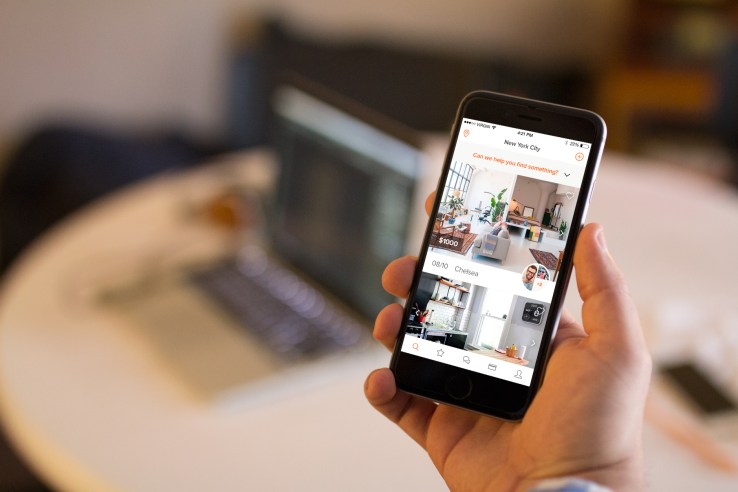
    An alternative to Craigslist, Roomi thinks it can find you a better roommate. Are you a gym rat? Do you like to throw parties? The app syncs with Facebook to give you a glimpse of prospective cohabitants.
    Launched last year, Roomi has over 375,000 users across North America. They have now raised an additional $4 million in seed funding led by DCM Ventures to expand internationally. This brings their total funding to $6 million.
    “There’s a whole generation of millennials leading a housing transformation — they live and rent differently than their parents did. They are moving more frequently and renting later into their lives,” David Cheng, investor at DCM Ventures explained why he sees a market opportunity. “We believe that Roomi, as a dedicated platform for rentals and co-living, caters to this generation’s housing needs.”
    CEO Ajay Yadav told TechCrunch that “the goal is to build a platform people can trust.” He said that Roomi is going to be working with services to incorporate stringent background checks, to make sure that someone isn’t unwittingly moving in with someone with a criminal record.
    It’s the roommate-first approach which he hopes will set Roomi apart from Trulia, Zillow and the rest of the many other housing apps. “The person is as important as the place you’re going to be living in,” he said.
    But Roomi’s business is still nascent. When asked where their revenue comes from, Yadav said, “right now we don’t make any money.”

    China issues guidelines to legalize ride-hailing apps like Uber and Didi Chuxing

    Posted By: Uni logo - 04:35:00

    China took a big step forward today after it announced national guidelines to make ride-hailing services like Uber and Didi Chuxing legal in the country from November.
    Drivers from both services and others like Yidao Yongche, majority owned by big-spending LeEco, have operated in fuzzy areas, with police arresting drivers and impounding cars on a seemingly inconsistent basis in China. (As a non-Mandarin speaker, having police stop your Uber or Didi is a truly worrying experience that I’ve lived through.) These rules are still to be adopted by regional and local officials across China, but this is most definitively a step in the right direction for ride-hailing operators.
    Sources told Bloomberg that the main features of the rules, which are slated to go into effect from November 1 this year, include:
    • Online car booking services will be made legal
    • The government will encourage development of a sharing economy and online car booking and non-cash payments
    • Drivers must have a minimum of three years of driving experience to work on a ride-hailing platform
    • Cars cannot have more than seven seats and must be retired from service after reaching 600,000 km or over eight years in age
    • User information and data collected by car-booking platforms must be stored within China and for at least two years
    Some of those stipulations may count against part-time drivers, and it remains unclear how that will impact Uber and Didi’s fleet of cars. In general, though, the duo have both been very vocal in welcoming the regulations — most likely because they are not as extreme asan earlier version of the proposal had been.
    Uber called the announcement of the regulations “a welcome step in a country that has consistently shown itself to be forward-thinking when it comes to innovation.”
    “Modern regulations can let these services grow while ensuring public safety and protecting consumers,” the company added in a blog post.
    Didi Chuxing, the company that is widely acknowledged to be leading Uber in China andrecently raised a round in excess of $7 billion, called today’s development “a positive first step.”
    “We believe the Rules reflect the government’s open-minded regulatory approach to the mobile car-hailing industry in the broader context of the sharing economy,” it said in a statement.
    “As a member of the rideshare community, DiDi welcomes the government’s endorsement and encouragement of the industry and China’s emerging sharing economy. We believe the Rules will usher in a new stage of growth for China’s online ride-booking ecosystem and that DiDi is prepared to meet these new requirements,” the company added.
    It isn’t all rosy right off the bat, however. As mentioned, these rules will need to be adopted at both provincial and municipal level across China, and, in order to comply with them, the ride-hailing companies will need to apply and secure new licenses for their businesses.
    Didi — which said it will set aside around $15 million for a “development fund” to speed up its integration with regulators, taxi firms and drivers — did voice some concern at the licensing issue process proposed.
    We noticed that the Rules require, in general principle, local taxi administration authorities to manage the platform licensing application process, and a certain discretion is granted local governments to determine the detailed operating requirements. We call for local authorities to adopt market-driven approaches that encourage innovation and new business models in order to continue serving the real needs and interests of our ecosystem participants. One of the greatest merits of ridesharing is to mobilize and efficiently allocate fragmented and under-utilized resources to meet fluctuating transportation demands. We also hope local practices will allow for separate treatment of part-time drivers to foster supply-side reform in the transportation industry.
    Didi claims 14 million drivers and over 300 million active users with 10 million rides per day. Uber China doesn’t issue figures, but Chinese cities account for a number of Uber’s busiest cities on the planet. While those figures are impressive and indicative of how large a market China is, these companies are still scratching the service.
    Li Zijian, senior director for international strategy at Didi, recently estimated that his company has reached just 1.1 percent of consumers in the country. Li pegged the on-demand transportation industry in China to be worth $200 billion over the next five years, and legitimizing the industry is surely an important component — for both Didi and Uber.

    Wednesday, 27 July 2016

    Xiaomi’s first laptop is a Macbook Air rival that’s as cheap as $540

    Posted By: Uni logo - 13:27:00

    Chinese smartphone and smart device maker Xiaomi just announced its first laptop — and boy does it look familiar to products belonging to a company that begins with the letter ‘A’ 😉
    The Chinese tech giant is holding a press event to unveil its new Redmi Pro smartphone today, but it also dropped a surprise with the unveiling of the Mi Notebook Air. Even the name sounds familiar, right?
    The laptop comes in two sizes — 13.3-inch and 12.5-inch — running Windows with a full-HD display, full-metal body and type-C USB charging and two USB slots. There’s a full-sized keyboard with Apple-esque keys that are individually backlit. The company’s ‘Xiaomi Sync’ software is pre-installed to pair data from a Xiaomi smartphone, and you can unlock the laptop using a Mi Band wearable.
    The starting price is 3599 CNY, or around $540, for the 12.5-inch model with the larger, flagship model coming in at 4,999, or $750. Don’t hold your breath on an international launch, since many of Xiaomi’s products — particularly its first forays into new categories — are China-only affairs. What we know so far is it will go on sale in China from August 2.
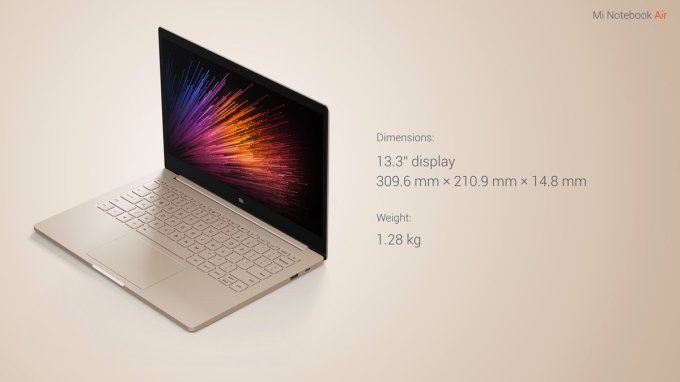
    Under the hood, Xiaomi is promising an Intel Core i5 Processor with 8GB DDR4 RAM and 256GB PCIe SSD, and an expandable SSD slot. For games, there’s a dedicated NVIDIA GeForce 940MX graphics card. Size-wise, we are talking 306.9 mm x 210.9 mm x 14.8 mm with an apparent weight of 1.28 kg.
    Those specs slip a little for the smaller model, which includes an Intel Core M3 processor with integrated graphics, 4GB RAM and 128GB in expandable SSD.
    minotebook2
    As is so often the case, Apple is the standard for Xiaomi’s product comparison. The Chinese company said the Mi Notebook Air is thinner (13 percent) than its equivalent Macbook Air, and 11 percent smaller than its rival thanks to a 5.56 mm bezel.
    There was plenty of speculation about a Xiaomi laptop last year, and now that has materialized into a physical product it’ll be interesting to see how many units Xiaomi ships. Let it not be forgotten that the company has struggled to justify its huge $45 billion valuation. It sold “over 70 million devices” in 2015 and, while that figure is very respectable,an increase on its previous year while many in the industry are seeing volumes fall, it was some way behind Xiaomi’s original target. Added to that, there’s been no indication that its smart home focus — the idea that Xiaomi can build an ecosystem of products for Chinese consumers — has come to fruition yet.
    That focus was a key driver for Xiaomi’s colossal valuation. Because, with hardware a fiercely competitive business with low margins despite Xiaomi’s smart approach to sourcing components, the potential for a data and services business that connects the dots can help Xiaomi stand apart from its rivals.
    Some may see a laptop as an unnecessary product line, particularly in China where the audience is mobile-first internet users, but does fit into Xiaomi’s ambition to own every connected device in a Chinese consumer household. Or at least to offer an attractive option for any kind of internet-connected hardware product.

    Monday, 13 June 2016

    Semi-autonomous car hits new record speed at Indy track

    Posted By: Uni logo - 02:47:00


    Arrow Electronics second semi-autonomous (SAM) race car has broken another speed record, achieving 152 mph at the Indianapolis Motor Speedway on Sunday.
    Former IndyCar driver and current team owner, Sam Schmidt, was in the driving seat of the modified 2016 Corvette Z06 during the Indianapolis 500, surpassing his previous record of 107 mph in 2014. Schmidt has been paralyzed since his racing accident in 2000, but found a new way to drive thanks to Arrow’s autonomous technology.
    The electronics firm added specialized sensors that can follow the driver’s head movement, letting them steer, accelerate, and brake. The company claims this is a way for disabled people to enjoy the experience of driving on the road, without giving the computer full autonomy.

    Arrow has been building on what it’s learned

    “Arrow’s engineers incorporated insights learned from the previous model to build an advanced car design that incorporates cutting-edge Internet of Things technologies and live data-streaming, among other exciting improvements,” said Joe Verrengia, Arrow’s global director of corporate social responsibility. “We hope the SAM car continues to inspire and drive technology innovation forward.”
    While we wait for autonomous cars to become safe and legal, semi-autonomous features like head movement could be a smart way to tackle the challenge of disabled drivers. Reports suggest that we’re going to see a large influx of disabled and elderly drivers, once autonomous cars are available to the public.
    “It was a thrill to be back in control and hitting racing speeds on the Indianapolis Motor Speedway again,” said Schmidt. “The SAM project is a great example of what’s possible when the right people come together to innovate and push boundaries.”
    To expedite the development process and get more developers on board, Arrow has made its car platform open source. Engineers are able to add functionality to the platform or use it for their own projects.

    Wednesday, 18 May 2016

    Xiaomi shows off a 4K Android TV set-top box at I/O

    Posted By: Uni logo - 21:18:00


    Like a number of other bits and bobs announced at Google I/O thus far, there are still some important questions left unanswered about the Mi Box — but here’s what we do know about Xiaomi’s forthcoming set-top box.
    It’s sleek, it’s small and it’s apparently won the Chinese phone maker a couple of design awards already. The Mi Box is powered by Android TV 6.0, is capable of beaming 4K video at 60 FPS and supports Dolby Digital Plus audio playback.
    Xiaomi Mi Box
    It does HDMI 2.0a and features a quad-core ARM processor, Mali 450 GPU and has 2GB of RAM and 8GB of storage, which is expandable via USB. Oh, and there’s a Bluetooth remote, as well. That peripheral supports voice control, so users can search for content, ask contextual questions (actors’ names, etc.) and launch apps using their voice. The controller also doubles as a gaming controller for Android TV-compatible games.
    The company will also be offering a separate Mi Game Controller, which is compatible with the set-top box and other Android devices. Availability details for both products are still forthcoming, though the company noted that the product is “coming soon” in a press release issued today. A Xiaomi spokesperson added that the company is “working closely with Google” on the U.S. launch.

    Wednesday, 11 May 2016

    Apple granted a patent that places second screen on iPad cover

    Posted By: Uni logo - 11:26:00
    Https%3a%2f%2fblueprint-api-production.s3.amazonaws.com%2fuploads%2fcard%2fimage%2f86043%2fscreen_shot_2016-05-11_at_11.28.09_am

    Despite its name, the iPad Smart Cover is not particularly smart; it folds well and wakes your iPad from sleep, but that's about it. 
    Judging by a patent recently granted to the company by the U.S. Patent Office, dug out by Patently Apple, the Smart Cover might become a lot smarter in the future. 
    Titled "Cover attachment with flexible display," the patent describes a foldable cover for a tablet device with a "flexible display" built in. 
    Apple sees this approach as an alternative to making the actual tablet bigger.
    "Increasing the display area could lead to a significant expansion in functionality. Unfortunately (...) device manufacturers generally choose between making the display and therefore the device itself larger, thereby reducing the portability or making the device and display smaller with the result of a less functional device," the patent text explains. 

    An iPad cover could act not only as a screen, but also as a surface to type or write on.
    IMAGE: APPLE, USPTO
    The advantages of having a second screen are obvious: You could have it display auxiliary info, such as the title of the song or movie currently being played on the tablet, alongside touchscreen controls. It could be used as a full-fledged second display, comparable to that of the main display; alternatively, only a portion of the cover could be a screen, with the rest reserved for solar cells. 

    There's a lot of ways to make a tablet cover more useful; placing a smaller screen and some solar cells on it is one alternative.
    IMAGE: APPLE, USPTO
    As always, a patent does not necessarily means such a product will see the light of day soon, or ever. 
    What's interesting about this patent is that it was originally filed in 2011 (we covered it in August 2012), and though some of the concepts from it actually came to life (the iPad Pro's smart connector is one example), some of them are still quite futuristic. We certainly hope Apple will continue to innovate in the tablet area, despite iPad's steadily dwindling sales

    Copyright © 2016 Uni logo™ is a registered trademark.

    Designed by Unilogou. Hosted on Blogger Platform.