• unilogou. Powered by Blogger.

    Showing posts with label Sony. Show all posts
    Showing posts with label Sony. Show all posts

    Wednesday, 17 August 2016

    Sony gets smart with enterprise AR

    Posted By: Uni logo - 01:02:00


    Since their initial consumer-focused introduction, smart glasses are now quickly finding a home within the business world as well. Here, augmented reality (AR) can be used to create simple, efficient solutions for the enterprise. Sony’s SmartEyeglass is a good example of how Industry 4.0 technology can quickly create business value and competitive advantages in the market.
    The ongoing digitalization of industry has created a torrent of valuable business data, but this has also created the need to control and process this data as it is created. Different from traditional display-fixed visualization, smart glasses provide the opportunity to portray data in a natural way within the everyday work environment.

    Sony’s SmartEyeglass: demonstrating AR use cases

    Sony’s SmartEyeglass are monochrome binocular AR glasses. The glasses contain a holographic display that allows the wearer to obtain information in their natural field of view. This display technology, coupled with a camera and other built-in sensors, enables the wearer to receive direct instructions or useful information about their surroundings to assist with tasks in the workplace.
    segremoteguidance2
    Sony showcases several possible use cases for the SmartEyeglass on Developer World. Examples range from showing fire fighters important information when they enter burning buildings to providing opera guests with easy-to-view subtitles and translations. One solution where Sony’s SmartEyeglass has great potential is that of remote guidance.
    Joakim Elvander, Partner Engineer, and Developer Advocate at Sony, explains the basics of the remote guidance. “One of the main benefits of the SmartEyeglass is the ability to enable a two-way communication. By using the built-in camera to stream the wearer’s view at another location, the viewer can send back situation-based instructions to the wearer visualized on his or her field-of-view through the SmartEyeglass.”
    So how can remote guidance improve the everyday workplace? Remote guidance has a potentially high return on investment for several types of companies,” says Joakim. “These range from smaller maintenance businesses that want to leverage expertise in a back-office, to large worldwide companies that stand to save millions of dollars by providing remote solution solving instead of needing experts to travel around the world.”
    SEG explained
    In order to showcase the SmartEyeglass, Elvander has created a remote guidance demo.
    “The demo highlights new ways to use the augmented technology,” according to Joakim. “Furthermore, it shows future partners smarter use cases and functionality. It incorporates much of the functionality of the glasses but has a main focus on the interaction between the two participants. The enhanced communication via its smart visualization and functionality is a small part of the future possibilities, but it still demonstrates what the type of solutions can add to the era of Industry 4.0.”
    In addition to showcasing the video stream, the demo also displays how the person receiving the stream can interact with the wearer. This can be done through text or graphics, but also by using mouse-click instructions, meaning the instructor can highlight objects in the streamed video that are then translated into augmented markers in the wearer’s field-of-view. It is also possible to add instructions outside the field-of-view. This allows the instructor to indicate to the wearer where to look, visualized with an arrow and text—a feature that can be especially useful in a noisy environment.
    Sony is showcasing the demo at events to help businesses see for themselves what can be achieved with the technology.

    The future of smart glasses: Augmenting the workplace

    AR glasses may still be perceived by some as purely futuristic, but it should not be underestimated. An increasing number of businesses are catching on and it is just a matter of time before products like SmartEyeglass are an everyday occurrence for certain fields. Workplaces such as factory floors and noisy construction sites are only a few examples of achievable industrial implementations; the possibilities are only limited by the imagination of those developing.
    If you want to know more about the SmartEyeglass and AR in the workplace, take a look at the Sony SmartEyeglass website. There you can find more information about potential partnerships as well as develop your own solutions for the product. You can also check out the SmartEyeglass product video which helps demonstrate some handy use cases.
    Wednesday, 10 August 2016

    Sony will likely unveil the PlayStation 4 ‘Neo’ on September 7

    Posted By: Uni logo - 03:19:00

    September 7 is going to be a busy day. Sony sent out invites for a press event in New York. The company will likely unveil the successor to the PlayStation 4. On the same day, Apple could also hold its usual iPhone launch event for the rumored iPhone 7.
    The event is called “PlayStation Meeting,” and the company plans to “share details about the PlayStation business.”
    Given that Sony already acknowledged that the PlayStation 4 ‘Neo’ was real and wouldn’t be announced at E3 in June, everything indicates that Sony is ready to announce the PS4 ‘Neo’ just in time for a launch before the holiday season.
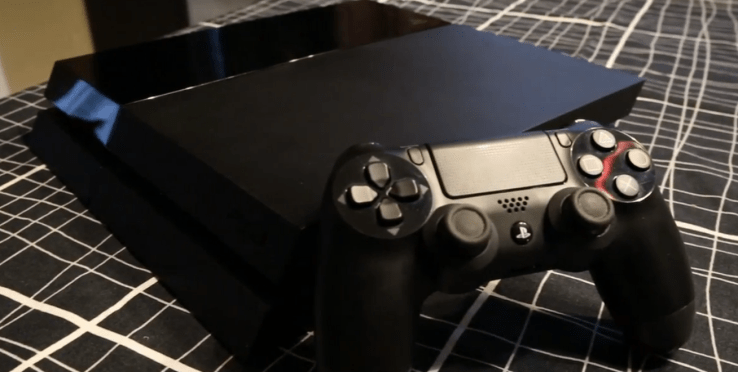
    Rumors of a more powerful PlayStation 4 codenamed ‘Neo’ started emerging in March on Kotaku. The new console is supposed to be much more powerful than the existing PlayStation 4 in order to support more demanding games, and especially for the PlayStation VR headset.
    Virtual reality is quite demanding, and that’s why many people are buying new graphics cards for their computers. The PlaySation 4 was released three years ago and could be a bottleneck for good looking virtual reality games. If you want a smooth experience, you need to run a game at a consistent frame rate above 60 frames per second — otherwise you’ll get nauseous. And because the screen in your VR headset is so close to your face, you want a good resolution as well. The existing PS4 will support the PlayStation VR, but the PS4 ‘Neo’ is the console you want for virtual reality.
    In addition to virtual reality, the PS4 ‘Neo’ could be a good companion for your brand new 4K TV. The new console should support 4K movies, TV shows and even games. Sony doesn’t want to fragment its user base, so don’t expect PS4 ‘Neo’ exclusive games — all games should still work on the good old PS4.
    Microsoft will unveil a competitor to the PS4 ‘Neo’ next year. The Xbox One ‘Scorpio’ could be even more powerful than the ‘Neo’, but will also launch a year after Sony’s new console. We will have a team on the ground in New York to cover Sony’s PlayStation event.

    Friday, 29 July 2016

    Sony posts $205M profit as downsized mobile business stops bleeding cash

    Posted By: Uni logo - 07:30:00

    Sony posted a slim ¥21.2 billion ($205 million) profit for its Q1 2016. That’s down on the ¥82.4 billion profit it carded this time last year, but in general the quarter was a mixed bag of positives and negatives following the impact of cost-cutting initiatives.
    We already knew the firm would take somewhat of a hit this quarter after it warned of the impact that the Kumamoto earthquake had on its manufacturing operations nearby. Revenue for the three-month period did reflect that, coming in at ¥1.613 trillion ($15.662 billion), down 11 percent annually.
    Other factors besides the quake, Sony said, included the strong yen — a factor Nintendo cited in its earnings yesterday — “the deterioration in investment performance” of its Sony Life business, and the downsizing of its smartphone business, which brought in 33 percent less revenue than one year previous.
    There’s a positive side to Sony Mobile’s performance however — it is now at breakeven. Slowing growth and increased competition in the smartphone market had weighed on Sony’s previous financials, with the smartphone business alone responsible for a $544 million loss in the last financial year. So it is quite notable that its mobile communications division posted a very slender ¥400 million ($4 million) operating profit for the quarter.
    That, Sony said, was down to tactical withdraws from tougher markets, and shift away from mid-range phones where competition is fiercest, towards higher-end devices with better margins. Restructuring also boosted its home entertainment and sound unit, operating income for which increased 85 percent annually to ¥20.2 billion ($197 million) despite revenue dropping seven percent over the period.
    Amid those changes Sony’s PlayStation business, which surpassed 40 million consoles sold to date in March, stood.
    Sony’s games and network unit — which includes PlayStation — was the stellar performer, accounting for the most revenue across the firm and over 75 percent of total Sony profits. It posted an operating profit of ¥44 billion ($427 million), up 126 percent year-on-year, on revenue of ¥330.4 billion ($3.2 billion) for the quarter, up 14.5 percent.
    That impressive rise, Sony put down to increased PS4 game and console sales, as well as some cost reductions made internally, including lower marketing spend — which makes sense for a console first launch in 2013. Sony is tapping into the rise of VR with PlayStation VR, its $399 take on things which is due to arrive in mid-October. Given that alternatives like Oculus require a suitable PC rig to work, PlayStation VR could make sense for many who don’t want additional cost or hassle.
    As mentioned at the top, many Sony units were impacted by the recent earthquake. Its imaging component business took a 26 percent revenue dip year-on-year, the semiconductor business was down 23 percent, and its component business saw revenue fall 23 percent.
    Sony Pictures carded a ¥10.6 billion ($103 million) loss which Sony blamed on currencies, despite some strong box office hits like Angry Birds, and revenue in its music business was up nine percent year-on-year.

    Wednesday, 20 July 2016

    Sony wants to 'bring the real world into your living room' with Z series TVs

    Posted By: Uni logo - 12:39:00
    Https%3a%2f%2fblueprint-api-production.s3.amazonaws.com%2fuploads%2fcard%2fimage%2f151056%2fxbr_65z9d_btye__2_
    LOS ANGELES — Sony Electronics is stepping up its television game.

    The tech giant announced the launch of its Z Series of TVs, a line of 4K HDR Ultra HD models, at an event on Wednesday.
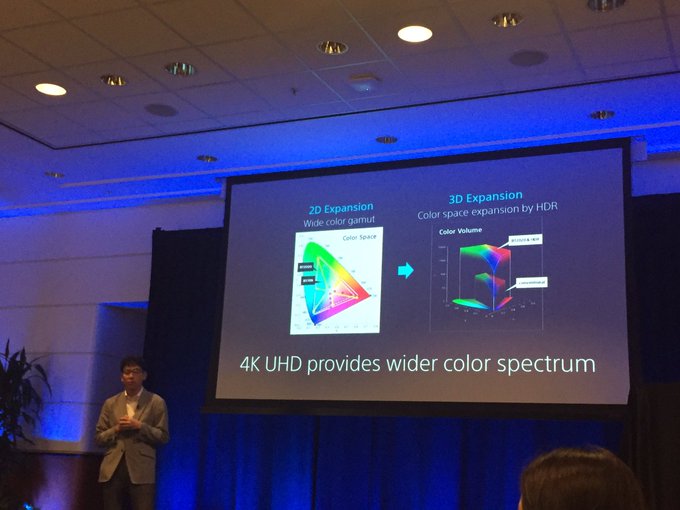
    The TVs have displays that are said to feature ultra-contrast and more realistic, accurate color. They also boast Backlight Master Drive Technology, which Sony says expands brightness and contrast, and features a LED structure that delivers "deep blacks and dazzling lights."
    “The Z series is a generational advance in TV technology, which brings the 4K HDR viewing experience to a whole new level. Our best and brightest HDR Ultra HD television is proof of Sony’s continuing commitment to deliver the ultimate home entertainment experiences to our customers,” Mike Fasulo, President and COO of Sony Electronics, said in a statement. “With expertise in both the creative and the technical aspects of 4K HDR shooting, editing, recording, transmission and display, Sony understands 4K HDR like no other company. The Z series is a direct result of that unique partnership between our engineering and creative teams.”
    The Z series also supports Android TV, Google's TV platform, which taps into movies, music, photos, games, search and apps. Users can also utilize Google Play and Google Cast.
    The Z series is available for pre-sale beginning Wednesday. Prices start at $6,999.

    Friday, 17 June 2016

    Get a sneak peek at the PlayStation VR at Best Buy and Gamestop

    Posted By: Uni logo - 03:19:00
    Https%3a%2f%2fblueprint-api-production.s3.amazonaws.com%2fuploads%2fcard%2fimage%2f118669%2fpsvr-2

    Still on the fence when it comes to virtual reality? Sony is looking to entice you into buying its VR headset with an early test drive. 
    PlayStation VR will appear in 30 Best Buy and Gamestop locations starting on Friday and 300 stores across the country by June 24, long before the device goes on sale in the fall. 
    This is an important opportunity for Sony to show its consumers why virtual reality is cool and how the PlayStation VR works with the PS4. Games and experiences available to demo include PlayStation VR WorldsEVE: Valkyrie, Headmaster, Battlezone and the puzzle game SuperHyperCube.
    Sony has a link to find locations near you, and is throwing a multi-city "Road to Greatness" tour, which will bring PlayStation games to different music festivals throughout the summer. 
    PlayStation VR will launch on Oct. 13 for $399. The current batch of pre-orders has sold out, but Sony announced more will be available over the next few months.

    Monday, 30 May 2016

    Posted By: Uni logo - 06:36:00
    Https%3a%2f%2fblueprint-api-production.s3.amazonaws.com%2fuploads%2fcard%2fimage%2f99135%2f4a3124323a3a47cfa6c94cdd7d7ce75b
    It's 2019 and the Xbox Three has just been released. 
    You excitedly pack up your beloved Xbox Two and take it to your favorite local electronics store. Two hours later — after a hard drive transfer and a signed payment plan — you get home and fire up Halo 6 to see just how sharp it looks on the newly beefed up Three.
    This scenario is obviously fiction, but getting a new gaming console for your home could look very similar in just a few years from now. That's our takeaway from the recent rumors coming out of Microsoft and Sony.
    Consoles are typically relevant for around five years — sometimes longer — before something newer and shinier comes along to replace them. The older machines stick around, but game developers shift their attention to the more powerful hardware.
    That's set to change if these rumors are accurate. Microsoft and Sony both are said to be introducing upgraded Xbox One and PlayStation 4 machines that support all the same games as the consoles released in 2013, but with enough added graphics and processing power to make everything run smoother and look better.
    In addition, some of these reports indicate that the mid-generation upgrades are part of a larger shift for Microsoft and Sony, toward more regular console releases. Only instead of new machines replacing the old ones — the way things have always been — they'd just boost the performance for existing games.
    If that sounds familiar, it's probably because most of us have a similar relationship with our smartphone providers. Each year, new phones and tablets surface to offer marginal performance increases. Some people flock to get the hot, new thing right away, others hold off and upgrade after two or three years.
    Buying the latest iPhone or Galaxy outright costs hundreds and hundreds of dollars — in many cases it's north of $600, which is more than even a new console would cost. But wireless carriers chop up that cost into monthly installments, usually paid off over two years, so there isn't as much sticker shock.
    After a certain period (typically 12 months), the customer can either continue paying off the cost of the phone in monthly installments or trade it in for a newer model. Of course, that restarts the installment plan, which continues, year after year, ad infinitum. The traded-in phones are repurposed, either as refurbished models or as spare parts.
    Now, imagine a world where there are new Microsoft and Sony consoles released every one or two years. 
    Can you see yourself spending $600 on a machine that plays all the same games that your $600 machine from two years ago does? Sure, they look sharper and load faster, but most people aren't going to spend that kind of money on such a regular basis.
    Right now, we're on the precipice of a new paradigm for console releases. But it's still got to make financial sense for the platform holders. If they're looking at fewer sales on a per-generation basis, how can they keep up a flow of income?
    That's where, I think, a little bit of the mobile ideology around upgrades and installment plans will come into play. Microsoft and Sony can potentially "lease" out their hardware, in same way that the Verizons and AT&Ts of the world do. You pay a monthly fee over a period of time, until you either pay it off or return it and upgrade to the next one.
    There's even a precedent for this in the video game industry.

    IMAGE: MARTYN LANDI/PA WIRE
    Way back in 2012 — one year before the PS4 and Xbox One launched — Microsoft came up with a console subscription plan. For $99, plus another $15 per month over a two-year (minimum) period, you'd get an Xbox 360, a Kinect and an Xbox Live Gold subscription.
    It wasn't a huge success for a number of reasons. First: the Xbox 360's days were numbered by 2012. By then, most were counting the days until the new consoles launched. Not many were willing to commit to two years with a console that might be yesterday's news in one.
    What's more, it wasn't a very good deal. Buying that whole package up front at the time would have cost around $390. A full two-year contract, on the other hand, would have totaled out at $460. 
    Smartphone upgrade plans make sense for consumers because they save you money, in a sense. A one-year upgrade plan commits you to paying the monthly rate for 18 months, or upgrading after 12. The remaining six months are wiped away because you return the phone, which still has value.
    That's going to be the key for getting subsidized hardware contracts to make sense. Gamers that upgrade to a new console — one that supports all the same software — have no further need for their older hardware. So why not let them swap old for new, and let the value of the older hardware offset what you spend to upgrade?
    Personally, I think Microsoft's subsidized Xbox 360s were meant to be a test case. It was a noteworthy idea that made no reasonable sense at such a late moment in the console cycle... except as a proof-of-concept.
    There are lots of questions to be answered in the run-up to E3. The Neo and/or Scorpio might not be announced this year; hell, they might not even be real (though they probably are). I toss out this idea of subsidized upgrades because — based on past events plus what we know, or think we know, right now — it's the only thing that makes sense.

    Tuesday, 17 May 2016

    Sony Xperia XA Ultra takes 16-megapixel stabilized selfies

    Posted By: Uni logo - 04:37:00
    Https%3a%2f%2fblueprint-api-production.s3.amazonaws.com%2fuploads%2fcard%2fimage%2f90593%2fscreen_shot_2016-05-17_at_10.13.59_am

    Sony's Xperia X line of photography-focused phones has a new addition: The 6-inch Xperia XA Ultra. 
    It's a mid-range phone in most departments, with a MediaTek Helio P10 octa-core processor, 3GB of RAM, 16GB of storage memory and only a 2,700mAh battery — a tiny figure for such a large device. 
    Where the XA Ultra shines, however, is photography. On the back, the phone has a 21.5-megapixel Sony Exmor R camera with hybrid autofocus. The selfie cam doesn't lag too far behind, with a 16-megapixel sensor, optical image stabilization and an 88-degree lens. 
    The metal-encased phone is also quite slim for a 6-incher — 0.33 inches — and has exceptionally slim bezels around the screen (Sony calls this "infinity-feel borderless display"), meaning it shouldn't feel as clunky as some huge phones out there. 

    Sony Xperia XA Ultra comes in three colors: white, black and lime gold.
    IMAGE: SONY
    Now, about that battery life. Sony claims the battery will power the phone for up to two days — a figure we won't believe until we test it — but it also says that using the phone together with Sony's Quick Charger UCH12 will get you 5.5 hours of battery life after just 10 minutes of charging (though the quick charger doesn't appear to be included with the phone). 
    Sony hasn't shared pricing and availability for the Xperia XA Ultra yet, but we do know it will be coming in July in black, white and lime gold. 

    Friday, 22 April 2016

    Here's Every Feature From Sony's Latest PS4 System Software Update

    Posted By: Uni logo - 00:42:00
    Here's Every Feature From Sony's Latest PS4 System Software Update

    Playing PS4 games on your Windows PC or Mac might be the headline feature of the latest PS4 system software update from Sony, but there's more to version 3.50 codenamed Musashi than the company has let on.
    There are some unannounced features including support for hard drives up to 4TB, USB music playback, and managing storage on PlayStation Plus. These are just some of the features eagle-eyed PS4 users on Reddit have uncovered. Here's a list of what else you can expect when you update your PS4:
    • User Scheduled/Created Events. 
    • Play Together button - easily invite people in your party to the same game. 
    • Friend online notifications can be turned on or off on a person to person basis. 
    • Appear offline. 
    • Remote play on PC/Mac. 
    • Dailymotion Live Support for streaming. 
    • Teens (13 to 17 years old) can now create their own accounts with limited access to play offline games, rather than having to use a sub account. 
    • Easier to search for communities by text, language, time zone. 
    • You can now share other people's activities so your friend's can see it too. 
    • Tweets to messaging - you can see short replies to messages without jumping to a different screen. 
    • You can tag other players when sharing video and screenshots (if you have your Facebook/Twitter permissions enabled, the tags will carry over to the sharing on those sites).
    • You can check the status of PSN. 
    • Improvements to PlayStation Plus (improvements to managing online storage and ability to see friends who play the same games as you). 
    • You can disable the screenshot on-screen notification (in Settings under Notifications) allowing you to take multiple screenshots in a row without the screenshot taken popup. 
    • The sound indicating the screenshot was taken still functions as normal. 
    • Life From PlayStation Improvements:
      - There's a search field on the game list now. Previously you had to use the "global" search, that'd return matches for everything (pre-recorded, videos, screenshots) and not just live streams.
      - You can pin up to three games that will stay on the top of the list. You can set a party member limit now. From 2-8 people.
    Download the Gadgets 360 app for Android and iOS to stay up to date with the latest tech news, product reviews, and exclusive deals on the popular mobiles.

    Copyright © 2016 Uni logo™ is a registered trademark.

    Designed by Unilogou. Hosted on Blogger Platform.