• unilogou. Powered by Blogger.

    Showing posts with label Car sharing. Show all posts
    Showing posts with label Car sharing. Show all posts

    Thursday, 18 August 2016

    Uber’s first self-driving cars will start picking up passengers this month

    Posted By: Uni logo - 13:32:00

    It’s been a while since news broke in early 2015 that Uber was working on self-driving cars. Earlier this year, the company openly admitted it was testing cars in Pittsburgh, but we haven’t heard much more over the last 18 months.
    With Google, the self-driving car leader, slowly making progress with its autonomous cars, you’d be forgiven for thinking Uber’s efforts are far behind and barely visible in itsfrenemy‘s rearview mirror.
    Well think again!
    It turns out Uber has been making very rapid progress on its plan to replace its one million-plus drivers with computers. Bad news if you’re an Uber driver…
    In an interview with Bloomberg, CEO Travis Kalanick revealed that the company is preparing to add self-driving cars to its fleet of active drivers in Pittsburgh as soon as this month.
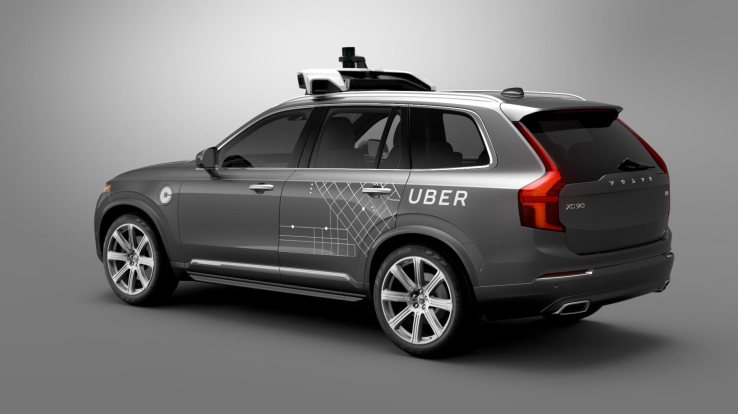
    The company will deploy around 100 modified Volvo XC90s outfitted with self-driving equipment. Each vehicle will be staffed by one engineer, who can take the wheel as/when needed, and a co-pilot to observe and take notes. There will also be a “liquid-cooled” computer sitting in the trunk recording trip and map data.
    That will mean that regular Uber punters in the city have a chance of getting an autonomous vehicle for their ride — their trip will be free if so.
    Precious little was known of Uber’s plans for self-driving cars, but the company told Bloomberg that it will outfit cars with autonomous driving kits rather than develop its own vehicles as Google is doing.
    To do that, Uber has quietly snapped up Otto, a promising startup that launched this year to bring self-driving technology to trucks. Otto’s technology can be fitted to existing trucks, and, according to Bloomberg, the technology will be adapted to create a lidar — laser detection — system to power autonomous Uber vehicles.
    The Otto acquisition is hugely notable, not only for the technology but the personnel involved.
    The company was founded by former Googlers Anthony Levandowski, Lior Ron, Don Burnette, and Claire Delaunay. Levandowski led Google’s self-driving car efforts, Ron was an executive on Google Maps and Motorola, while other staff have spent time with Apple, Tesla and other notable automotive firms.
    The deal is set to close as soon as this month, after which Levandowski will lead Uber’s driverless car efforts. In addition, two new R&D centers will open up to speed the technology’s development.
    “We were really excited about building something that could be launched early,” Levandowski told Bloomberg of why he left Google.
    His additional comments — which include calling Kalanick a “brother from another mother” — hint at frustrations with the slow speed of development from Google’s self-driving project. Uber, it seems, is more willing to move forward with self-driving at a faster pace.
    Time will tell how that plays out, but we’ll get our first glimpse soon enough.
    Uber Self Driving Cars

    Wednesday, 3 August 2016

    ReachNow expands BMW car sharing to Portland

    Posted By: Uni logo - 14:28:00

    After launching in Seattle in April, BMW’s car sharing service ReachNow is expanding down the I-5 corridor to Portland, Oregon. In Seattle, more than 13,000 people signed up in the first month, and ReachNow was able to add 150 vehicles and expand its service area by late June. It’s likely the Portland expansion will follow the same plan, with a fleet of vehicles in the city center and expansion to farther-flung neighborhoods as demand increases.
    Portland is no stranger to car sharing. Daimler’s car2go has been operating its fleet of smart fortwos (some of which are plug-in electric vehicles) here since March 2012. And Zipcar has been offering a wide variety of vehicles in Portland, from hatchbacks to pickup trucks, under various names since 1998. ReachNow has more kinds of cars than car2go but fewer than Zipcar, and they’re all from the BMW family: BMW 3 series, BMW i3 PHEVs and several Mini Cooper models.
    Currently, car2go has a membership of 45,000 in Portland and a fleet of 465 vehicles. In a phone interview, Portland’s car2go general manager Ken Hills said, “Portland is a great city for car share. There’s good density, and it’s a tech-savvy town with early adopters who are really receptive.” As for adding another service to the mix in a city of 630,000 residents, Hills said, “Having a competitor will also increase awareness and options. Flexibility is a good thing, and the more awareness, the better.”
    Portland is the second official city ReachNow will serve, but the pilot project in the United States was in the San Francisco area. (The service is known as DriveNow in Europe). In a phone conversation earlier this summer, ReachNow CEO Steve Banfield noted that San Francisco does not support free-floating car sharing, like ReachNow and car2go, where users can pick up a nearby car and drop it off wherever they like, as long as it’s in the service area. San Francisco does support station-based car sharing, like Zipcar, where you pick up and drop off vehicles at fixed locations. This, plus the challenge of just parking in San Francisco, made Seattle — and now Portland — a better fit for ReachNow.
    In a more recent phone interview after the Portland announcement, Banfield noted that Portland’s city government is supportive of car sharing, having already welcomed car2go and Zipcar. And with a population already aware of car sharing, Portland “ticks a lot of boxes in its own right,” he said.
    Banfield pointed out that car sharing is only the tip of ReachNow’s service iceberg. “We said in April that we would expand service and features as well as expand across North America.” And we can expect to see some of those new services later this fall, according to Banfield. “We’re telegraphing every punch we’re taking,” he said. “We’re trying to move really, really fast.”
    There’s no official word on when Portlanders will be able to actually use ReachNow, though it seemed from our conversation like it would happen within a matter of weeks, not months. In the meantime, Portlanders (and everyone else in the country) can sign up in advance of ReachNow reaching their city for free.

    Friday, 29 July 2016

    Uber focuses on services as it begins to see profits in Southeast Asia

    Posted By: Uni logo - 07:41:00

    Uber has abandoned its ‘land grab’ approach to Southeast Asia and instead switched its focus to new products and services as it begins to see profitability in key markets in the region.
    A source at the U.S. company told TechCrunch that its operations are now profitable in Singapore and the Philippines, two of its largest markets for numbers of rides and revenue, with others close behind. Uber declined to respond to repeated requests for comment.
    This is an interesting reveal since Uber said last month that it has reached profitability in all of its Western markets. Little is known about its emerging market presence, particularly in Southeast Asia — where it covers 15 cities across Singapore, Indonesia, Malaysia, Thailand, Vietnam and the Philippines.
    The company entered the region via Singapore more than three years ago, but its most ‘recent’ new country expansion — Vietnam — was two years ago. Since then, its team has been tasked with scaling the business across the region and now it has been decided that it is time to push on by introducing new services to tighten competition and grow its userbase.
    Despite a cumulative population of more than 600 million people, Southeast Asia sits in the shadow of China and India. That’s certainly been true for Uber, which has invested multiple billions into China via its Uber China subsidiary, while last summer it revealed a billion dollar warchest to battle Olaa $5 billion-valued rival backed by SoftBank, in India.
    Southeast Asia, with its population spread across six primary countries with differing currencies, cultures, regulation barriers and languages, was a distant priority, but TechCrunch understands things are changing with Uber keen to increase its rivalry with Grab, the ride-hailing service that claims 19 million app downloads and 350,000 drivers and is affiliated with Ola, China’s Didi and Lyft.

    Food, carpooling and bike taxis

    UberEats, its food-delivery service, its UberPool ride-sharing service, and UberMoto, its bike taxi service, are the three priorities, we understand. UberRush, its courier service, isn’t currently present in Asia but may also be introduced in selected markets before the year is out.
    UberEats recently entered Singapore, which became its first launch market in Asia, and the company hinted that it would also bring the service to Bangkok, Thailand, among other cities.
    Singapore was also one of the first ports of call for UberPool, the service that lets passengers ride with others who are headed in the same direction to save costs and ease inner city congestion. It is also in Indonesian capital Jakarta, while a similar service with shuttle buses launched in Manila, Philippines, this year.
    Finally, there’s UberMoto, which hasn’t quite been the success story that Uber had for hoped. Initially launched in Bangkok in Februaryit was banned from the Thai capital in May, while it has also struggled to find legality in India, the second launch market.
    Indonesia is the major focus for UberMoto as of now, but Uber has plenty of competition. Go-Jek, a local company backed by Sequoia, pioneered motorbike taxis as a service. With more than 200,000 bike drivers on its platform, it goes beyond helping passengers weave Jakarta’s gridlocked cities to get from A to B faster than four wheels, Go-Jek also offers services and food on-demand options. Establishing a motorbike taxi fleets as a platform for additional services is same playback that Uber is opting for, but it is up against a very strong incumbent.

    Rivalries

    Uber’s push for new services isn’t without other rivalries and resistance. Plenty of food delivery companies exist in the region, mainly that’s FoodPanda but Deliveroo recently came to town and there are bespoke companies, like Grain, too.
    Then there are those that are financially well equipped.
    Go-Jek seems to be preparing itself for an arms race. Earlier this month, the Wall Street Journal reported that the startup — which only operates in Indonesia right now — is raising $400 million in fresh capital at a valuation of more than $1 billion. We’ve independently verified that with sources close to negotiations, who told us that the round could be completed within the next couple of weeks.
    Go-Jek aside, Grab rivals Uber on motorbike taxis — as well as private cars — and the $1.6 billion-valued company has raised raised over $650 million to date. Its GrabBike service was also barred from Bangkok but it continues to do business there as a delivery service for packages and documents. Grab recently disclosed that Indonesia is its largest market in terms of rides, but it did not provide raw figures for how its business is performing.
    Grab has also introduced services. GrabHitch, its take on carpooling, launched in Singapore last year and has since expanded to Malaysia, while GrabFood is present in Indonesia. A Grab representative told us that, as of last month, GrabHitch counted 5,000 drivers in those two countries.
    That’s not quite all. Grab last week announced plans to introduce a payments platform this year, initially in Indonesia. A payment system that can be used in shops and stores — Grab partnered with Indonesian retail conglomerate Lippo to kick this off — will take it in a different direction as it too seeks to grow its userbase through services.

    Uber co-founder launches new real estate venture for Expa called Haus

    Posted By: Uni logo - 07:13:00

    Garrett Camp, Uber cofounder and CEO of Expa Studios, is today unveiling Expa’s latest project, Haus. Haus is the studio’s first real estate play and focuses entirely on the buying and selling of residential property, digitizing and organizing offers from buyers so that all parties (the buyer, seller, and agents) have more transparency and immediacy through the negotiation process.
    There are plenty of startups out there that concentrate on discovery of properties, Camp said. But the issue that hasn’t really been touched by technology is that of making and accepting official offers.
    Haus digitizes that entire experience, letting sellers put their listing on the platform, where buyers and their agents can both post their offers, amend them, and see an anonymized version of other offers that have been made on the property.
    As it stands now, real estate brokers are shuttling offers to sellers’ agents via fax, email, or simply in-person. On the other side, sellers’ agents are trying to properly compile multiple offers in spreadsheets, in an email, or with pen and paper.
    This might seem simple — write down all the best offers and pick the highest number, right? But there are a number of factors within a single offer beyond the actual overall price, including the financial security of the buyer, extra terms of the deal, amount of cash up-front, and more.
    The real estate industry isn’t necessarily known for its transparency. While sellers’ agents are required to show them every offer on the table, buyers have little access to the actual movement on a particular listing.
    Haus aims to clear up that opacity by showing each offer, with its unique nuances, to both the seller and the other interested buyers.
    But this type of transparency is not without its potential downsides.
    When a seller receives a few good offers on a home, the sellers agent will ask for best and last offer by noon tomorrow, for example. If buyers were able to see the terms of all the other offers, as they would when using Haus, then this could drive the price of the home up as buyers enter into a bidding war. Not to mention, unethical sellers or agents could artificially inflate the price of a home through shill bidding, as an offer is not legally binding.
    While Haus helps sellers measure the demand on their property, it might also drive away potential buyers who don’t want to get in a bidding war over an already-expensive purchase. Or, on the other side, this might short a seller who would have received a much higher best and final bid from a buyer, but saw that offer drop to barely beat the next-best offer.
    “We think the openness will create a more efficient market and that the number of offers and price will ultimately be dependent on demand,” said Haus GM Sarah Ham. “Bidding wars are a common, almost accepted, part of the real estate process today. But with our approach, buyers know where they stand. Buyers will know what they need to offer to make their offer competitive, but they also won’t negotiate against themselves.”
    There may also be some concern over this replacing agents entirely, though Camp sees this as a complement to what brokers offer their clients, offering efficiency in the part of the process (compiling offers) that can be slow and time-consuming. Plus, most folks still need a broker’s expertise when it comes to marketing the home, finding a home, understanding the true value of a property, and of course, drafting up the paperwork.
    While there may be some question over the transparency angle, Haus certainly offers way more efficiency when it comes to compiling and presenting offers to the buyer. Camp likens it to the town car industry of the past, which (as you might already know) was blown up by Camp’s previous startup, a little company called Uber.
    “Collecting offers and presenting them is a very manual process, the way that town car companies would pick up a phone, write the fare on the board, and send the next available driver to that location,” said Camp. “It just seems much more efficient for agents to use a platform to coordinate all of this information automatically.”
    Haus isn’t currently charging anything, but eventually they’ll pull from the broker fee once the company understands how it can generate extra business for realtors by saving them time during the negotiation process.

    Thursday, 28 July 2016

    China issues guidelines to legalize ride-hailing apps like Uber and Didi Chuxing

    Posted By: Uni logo - 04:35:00

    China took a big step forward today after it announced national guidelines to make ride-hailing services like Uber and Didi Chuxing legal in the country from November.
    Drivers from both services and others like Yidao Yongche, majority owned by big-spending LeEco, have operated in fuzzy areas, with police arresting drivers and impounding cars on a seemingly inconsistent basis in China. (As a non-Mandarin speaker, having police stop your Uber or Didi is a truly worrying experience that I’ve lived through.) These rules are still to be adopted by regional and local officials across China, but this is most definitively a step in the right direction for ride-hailing operators.
    Sources told Bloomberg that the main features of the rules, which are slated to go into effect from November 1 this year, include:
    • Online car booking services will be made legal
    • The government will encourage development of a sharing economy and online car booking and non-cash payments
    • Drivers must have a minimum of three years of driving experience to work on a ride-hailing platform
    • Cars cannot have more than seven seats and must be retired from service after reaching 600,000 km or over eight years in age
    • User information and data collected by car-booking platforms must be stored within China and for at least two years
    Some of those stipulations may count against part-time drivers, and it remains unclear how that will impact Uber and Didi’s fleet of cars. In general, though, the duo have both been very vocal in welcoming the regulations — most likely because they are not as extreme asan earlier version of the proposal had been.
    Uber called the announcement of the regulations “a welcome step in a country that has consistently shown itself to be forward-thinking when it comes to innovation.”
    “Modern regulations can let these services grow while ensuring public safety and protecting consumers,” the company added in a blog post.
    Didi Chuxing, the company that is widely acknowledged to be leading Uber in China andrecently raised a round in excess of $7 billion, called today’s development “a positive first step.”
    “We believe the Rules reflect the government’s open-minded regulatory approach to the mobile car-hailing industry in the broader context of the sharing economy,” it said in a statement.
    “As a member of the rideshare community, DiDi welcomes the government’s endorsement and encouragement of the industry and China’s emerging sharing economy. We believe the Rules will usher in a new stage of growth for China’s online ride-booking ecosystem and that DiDi is prepared to meet these new requirements,” the company added.
    It isn’t all rosy right off the bat, however. As mentioned, these rules will need to be adopted at both provincial and municipal level across China, and, in order to comply with them, the ride-hailing companies will need to apply and secure new licenses for their businesses.
    Didi — which said it will set aside around $15 million for a “development fund” to speed up its integration with regulators, taxi firms and drivers — did voice some concern at the licensing issue process proposed.
    We noticed that the Rules require, in general principle, local taxi administration authorities to manage the platform licensing application process, and a certain discretion is granted local governments to determine the detailed operating requirements. We call for local authorities to adopt market-driven approaches that encourage innovation and new business models in order to continue serving the real needs and interests of our ecosystem participants. One of the greatest merits of ridesharing is to mobilize and efficiently allocate fragmented and under-utilized resources to meet fluctuating transportation demands. We also hope local practices will allow for separate treatment of part-time drivers to foster supply-side reform in the transportation industry.
    Didi claims 14 million drivers and over 300 million active users with 10 million rides per day. Uber China doesn’t issue figures, but Chinese cities account for a number of Uber’s busiest cities on the planet. While those figures are impressive and indicative of how large a market China is, these companies are still scratching the service.
    Li Zijian, senior director for international strategy at Didi, recently estimated that his company has reached just 1.1 percent of consumers in the country. Li pegged the on-demand transportation industry in China to be worth $200 billion over the next five years, and legitimizing the industry is surely an important component — for both Didi and Uber.

    Copyright © 2016 Uni logo™ is a registered trademark.

    Designed by Unilogou. Hosted on Blogger Platform.