• unilogou. Powered by Blogger.

    Showing posts with label IOS. Show all posts
    Showing posts with label IOS. Show all posts

    Monday, 15 August 2016

    Apple releases its 6th developer betas for iOS, macOS, watchOS and tvOS

    Posted By: Uni logo - 14:36:00

    Barely a week after Apple released its fifth developer beta builds of its iOS, tvOS, watchOS and MacOS Sierra platforms, the sixth beta releases have now arrived in short order. Given the quick turnaround time, there isn’t much that’s changed between the previous and current builds, besides some minor bug fixing, it appears.
    In addition, Apple also rolled out the iOS 10 public beta 5, which is the version of the operating system available to non-developers who want to try out the new features ahead of the public launch.
    As we get closer to the expected September public launch of iOS, the betas have gotten more stable and the new features they introduce in each build have been of lesser importance, generally speaking. Instead, they’re more focused squashing bugs. For instance, early testers are reporting in the comments of a 9to5Mac blog post about the betas that the new iOS beta is fixing the dock glitch which saw the background of the dock move around and become distorted when the iPad was moved.
    First introduced at this year’s WWDC, iOS 10 will bring a number of new features, including redesigned Music and News apps, an updated lock screen, redesigned Notification Center widgets, a revamped iMessage experience, a new “learn to code” app called Swift Playgrounds, a more powerful version of Siri and more. 
    MacOS Sierra, meanwhile, will introduce Siri to the desktop and include an updated Photos app and version of Safari, offering picture-in-picture mode, among other things. Apple TV is getting a dark mode and single sign-on for authenticated TV apps. WatchOS is also getting a makeover with a redesigned user interface, removal of the “friends” screen when pushing the side button, and faster launching apps.
    According to a recent report from Bloomberg, Apple is planning to unveil new versions of the iPhone at its September 7th event, but it may not be announcing its overhaul MacBook Pros at the same time. However, final releases of iOS tend to arrive just ahead of new iPhones, which means we could see iOS 10 publicly launch as soon as September 14,notes to 9to5Mac.

    Wednesday, 10 August 2016

    Apple releases its 5th developer betas, bringing new app Swift Playgrounds to iOS

    Posted By: Uni logo - 03:24:00

    Good news, Apple developers – Apple today has released its 5th version of the iOS 10 beta build along with new betas for watchOS 3, macOS, and tvOS. With this release, we’re getting closer to the final, public build of iOS – it’s likely that there will only be one or two more betas before its release expected in September.
    While the first few betas were buggy, as expected, Apple has been polishing up the code and fixing the broken bits with every subsequent beta release. In iOS beta 5, the company has addressed a number of issues with regard to iOS’s interaction with Apple TV, in-app purchases in the App Store, Bluetooth, iMessage, the Phone and Wallet apps, as well as accessories. Notably, the device will no longer panic when using the iPhone 6s Smart Battery Case, for instance.
    There are a few changes with this iOS build, however, as early testers have already discovered. The AI and facial recognition data in the Photo app has been reset, causing a new scanning process to take place, reports iPhoneHacks. In addition, the music Control Center has been tweaked, the Today view now includes the data and day, widgets have gotten darker backgrounds, and there’s a new lock sound, their report says.
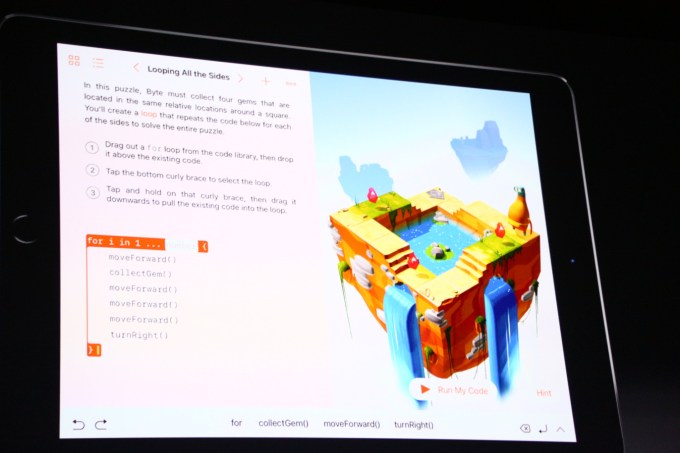
    iOS beta 5 also ships with Swift Playgrounds, the “learn to code” app for kids Apple introduced at WWDC 2016. The app arrives with Learn to Code parts 1 and 2, plus additional challenges users can explore. You can also create your own playgrounds based on the templates, create a blank playground, or open playgrounds in Xcode.
    The app also includes the new Graphing template, in addition to the Answers, Shapes and Blank templates.
    swift-playgrounds2
    Also, according to Apple’s release notes, Voicemail transcription is now available on iPhone 6s, iPhone 6s Plus and iPhone SE (with the Siri language set to English). However, there are still issues with FaceTime involving calls between this beta and macOS betas being broken; problems with “Recently Played” in “For You” in Apple Music not instantly refreshing; problems with Notes quitting unexpectedly; along with other minor bugs.
    In case you’re curious what’s new in the other platforms, macOS Sierra brings Siri to the Mac, the Photos app is updated, Safari has picture-in-picture for video, and more. WatchOS 3 is also a major update in terms of offering a redesigned users interface, with no more Friends screen, and faster launching apps. Apple TV’s tvOS update isn’t as major, but will get a new dark mode and sign-on for TV Everywhere apps. The device can also act as a HomeKit hub.
    The new macOS beta now supports Apple Pay by discovering an Apple Pay-capable phone or watch, and addresses other minor issues. The watchOS 3 beta, meanwhile, introduces a fix for the problem with Siri that when the request involves a deleted app, Siri may not have provided the intended response.

    Netflix launches iOS and Android apps for its internet speed test service

    Posted By: Uni logo - 03:22:00

    Netflix began helping its users test their internet connection for streaming speeds in Maywhen it introduced Fast.com. Now it is bringing that service to mobile with the launch of apps for iOS and Android, as first spotted by 9to5Mac.
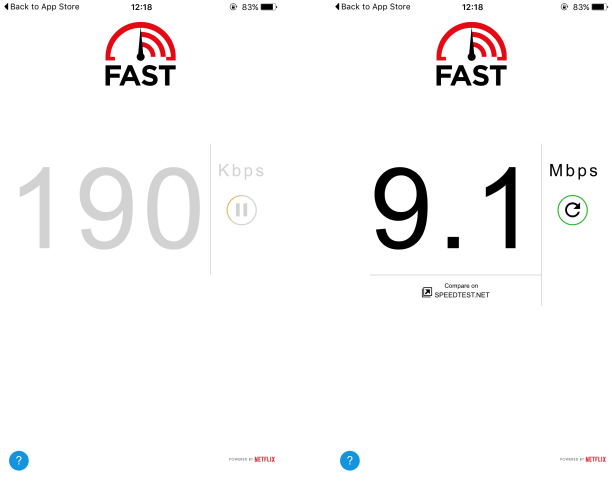
    Just like the Fast.com website for desktops, the “Fast Speed Test” apps give you a reading on the kind of speed you can expect Netflix to run at using your connection. There’s a grey counter clock which changes while recording the speed, and the app offers to show your connection speed on Speedtest. When clicked, that link sends you to a page to download the Speedtest mobile apps.
    Its super basic app with a clean UI and no ads because it is literally only about getting that speed reading.
    As we explained at the launch of Fast.com, the service tests downloads direct from Netflix’s servers and not upload and downlink speeds like others such as Speedtest.com, to give a direct reading on your Netflix experience.
    The other side to the coin is that the readings are good for Netflix and the quality of its service.
    The company is a fastidious collector of data. Right from building algorithms to surface the right suggested content for users, to providing the best related recommendations and analyzing internet connection speeds.
    Netflix runs its own ‘ISP Speed Index’ which is chock-full of data about which ISP are best to use its service, average running speeds, etc. With users increasing streaming via mobile devices, that adds new variable — including mobile carrier services — which these new mobile apps can help it measure and, most importantly for paying Netflix customers, learn from to optimize its service.

    Thursday, 4 August 2016

    Strava adds a real-time safety feature to its fitness tracking app

    Posted By: Uni logo - 03:34:00

    The official promo for Strava’s new beacon feature shows a runner attempting to outpace a giant boulder – something I suspect isn’t too common an occurrence if you’re Indiana Jones or Wile E Coyote. Still, even if you’re not a fictional adventurer or anthropomorphic desert scavenger, accidents can happen when you’re out for a long run, bike ride or other workout.
    Beacon brings safety functionality to the popular fitness social network, offering users real-time location data with a select group of contacts, so friends and family can locate them, should any unforeseen circumstances occur during a workout.

    The feature rolls out today for Strava Premium ($6 a month) users on iOS and Android, letting users add up to three names. Contacts get a text message when the workout begins, featuring a URL that offers live map info, even for those without an account.

    Wednesday, 3 August 2016

    Jack Dorsey gets a much-needed strong second quarter performance from Square

    Posted By: Uni logo - 14:20:00

    Jack Dorsey really needs a hit. After Twitter’s weak second-quarter showing, and both stocks not performing well in the past year, Dorsey — as the lead of both companies — needs to show investors his strategies are working (and that he can run both companies).
    Well, he certainly got one today. Square reported its second-quarter earnings, where it brought in $439 million in revenue, whereas analysts were expecting revenue of $406 million. Square posted a loss of 8 cents per share, compared to analyst expectations of a loss of 11 cents per share. With a clear outperformance on two of the key metrics that the company is graded on, it looks like Dorsey may have bought himself some room to maneuver in Wall Street for Square.
    Across the board, the metrics look good. Revenue was up 41% year-over-year, gross payment volume was up 42% year-over-year, and the company extended $189 million through Square Capital — up 123% from the same quarter a year ago.
    Its Square Capital business is increasingly important for the company as it tries to lock businesses into its payments infrastructure. By helping businesses get off the ground with an easy-to-use interface and ramp-up process, it can ensure that those businesses hang around as they continue to scale up. It also represents another additional tranche of revenue it can rely on to grow beyond its traditional point of sale system — at least, until it can figure out other revenue streams and maybe see some strong growth from Square Cash.
    Still, businesses like Square Capital might be tricky moving forward. We’ve seen for some time that institutional sources of capital are more skittish these days. That source of capital has provided companies like Lending Club with lots of resources to operate their loaning operations — and grow them quickly. But there could be some early signs of change that may signal a more difficult time to gather capital for online lending businesses. That might not necessarily apply to Square, but it does represent a potential hurdle.
    Still, there was no specific mention or breakout of Square Cash in the earnings report. With Venmo becoming a huge business and competition coming from basically every direction — including Facebook — Square needs to figure out its own spin on peer-to-peer transactions
    Square has had a rocky year, with its shares down around 20%. But in extended trading after reporting its second-quarter earnings, shares of Square were up as much as 10%. It was important to show that Square could continue to grow and prove it could come up with a sustainable model working on three fronts: point of sale, Square Capital, and the potential of its peer-to-peer payments system Square Cash.
    And there’s still an elephant in the room: Dorsey. Currently running two companies — Twitter and Square — it’s not clear how long Wall Street’s patience will last with both stocks currently floundering. Shares of Twitter are down around 38% over the past year. Most recently, Twitter’s poor performance sent the stock diving 10% when it reported its second-quarter earnings report.
    Screen Shot 2016-08-03 at 12.52.37 PM

    Tuesday, 2 August 2016

    Niantic explains why it killed third-party Pokémon Go tracking services

    Posted By: Uni logo - 14:15:00

    Pokémon Go creator Niantic has released a statement on its Facebook page explaining some of the recent changes. You may have noticed on Twitter, Facebook and Reddit that some of these changes have been quite controversial. Hence today’s statement.
    First, the ‘3-step’ indicator in the nearby Pokémon screen is gone for good. Yes, it was broken. But Niantic doesn’t have any good alternative for now. The company promises that it’s going find a way to improve this feature and bring it back in some other form.
    And it brings us to the second point. Third-party tracking services, such as Pokévision, PokéHound and PokéNotify received cease-and-desist letters. While I haven’t been using these services, my friend Arthur thinks they are pure evil and should die in a fire. But they existed for a reason — if the ‘3-step’ indicator was broken, players needed some kind of hints about where to find Pokémon. Otherwise it’s just pure luck.
    Sure, Pokévision and others probably went too far. But as a colleague who shall remain nameless wrote, “it was the only thing keeping their game playable while tracking is broken. It’s like suing the locksmith for helping you get into your house when you’ve got a pot on the stove about to burn your house down.”
    Anyway, Niantic has the final say regarding this issue. The company says these services were making the servers unreliable. Pokémon Go doesn’t have an API, so it seems like Pokévision and others created countless of accounts on many servers around the world using Android emulators. With these emulators, they could fake movements around cities and reverse-engineer the game to create a sort of lightweight API and gather Pokémon data.
    Quite a cool trick. But it’s clear that these services were using a ton of server resources. Pokémon Go doesn’t need additional server load as Niantic is still trying hard to make the game scale. And it could also be a nice excuse to kill them anyway.
    Here’s the full statement:
    Trainers,
    As many of you know, we recently made some changes to Pokémon GO.
    – We have removed the ‘3-step’ display in order to improve upon the underlying design. The original feature, although enjoyed by many, was also confusing and did not meet our underlying product goals. We will keep you posted as we strive to improve this feature.
    – We have limited access by third-party services which were interfering with our ability to maintain quality of service for our users and to bring Pokémon GO to users around the world. The large number of users has made the roll-out of Pokémon GO around the world an… interesting… challenge. And we aren’t done yet! Yes, Brazil, we want to bring the game to you (and many other countries where it is not yet available).
    We have read your posts and emails and we hear the frustration from folks in places where we haven’t launched yet, and from those of you who miss these features. We want you to know that we have been working crazy hours to keep the game running as we continue to launch globally. If you haven’t heard us Tweeting much it’s because we’ve been heads down working on the game. But we’ll do our best going forward to keep you posted on what’s going on.

    Instagram launches “Stories,” a Snapchatty feature for imperfect sharing

    Posted By: Uni logo - 13:43:00

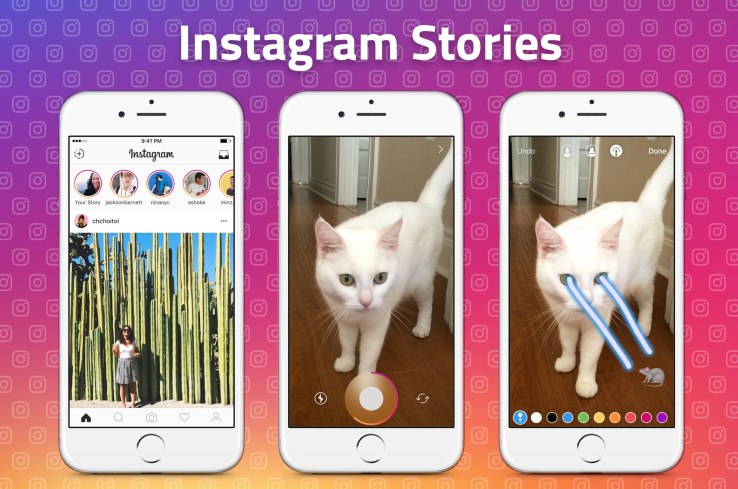
    People only post the highlights of their life on Instagram, so today the app adds its own version of “Stories” to poach goofy, off-the-cuff, everyday content from Snapchat. It works exactly like Snapchat Stories, allowing you to post 24-hour ephemeral photo and video slideshows that disappear. But because Instagram Stories appear at the top of the old feed, your followers will inevitably see them without you needing to build a new audience in a different app.
    Instagram Stories is rolling out globally for iOS and Android over the next few weeks.
    You could call it Snapchat for adults, a way for brands to post more without overwhelming people’s feeds, an alternative to Instagram’s Like-driven success theater or a blatant ripoff.
    Instagram CEO Kevin Systrom wouldn’t disagree with you. When confronted about Instagram Stories being a clone of Snapchat Stories, he surprisingly admitted “They deserve all the credit,” but insisted “This isn’t about who invented something. This is about a format, and how you take it to a network and put your own spin on it.” Read my full interview with Kevin Systrom here.

    The moments in-between

    With 500 million monthly active users, 300 million daily actives and now 250 million users on its Direct messaging feature, Instagram is enormous expansion for what Snapchat pioneered.
    Facebook wants to own more unique, must-see original sharing that was reportedly down 15 percent year over year as of early 2016. But boosting sharing frequency has been hard for Instagram because people only post their most polished selfies, sunsets and meals.
    Systrom admits he hadn’t shared to Instagram at all during the six days before we met because none of the moments seemed special enough. “Instagram is a curated feed, but you only get to see the highlights,” Systrom laments. Instagram’s sweat and blemish-hiding filters encouraged that social norm. And while Instagram recently started sorting its feed, people still worry that posting multiple times in a row will seem like they’re spamming their friends, so they hold back.
    Stories creates a place for content that’s not “good enough” for the Instagram feed, or at least is too silly to fit in amongst the art. Because everything disappears, you don’t have to be ashamed of that awkward face or stupid joke forever the way things posted to your real Instagram profile reflect on you forever.
    Systrom explains that “It basically solves a problem for all these people who want to take a ton of photos of an event or something in their lives, but want to manage what their profile looks like and not bomb feed, obviously, as that’s one of the no-nos on Instagram.”
    Facebook has tried multiple times to copy Snapchat with standalone apps like Poke, Slingshot and Instagram Bolt. No one wanted another app, and they all failed and were pulled from the stores.
    But Instagram may have found a breakthrough for solving this problem. Instead of burying a Snapchat competitor in another app people don’t need, it’s put it front and center of one they use all the time. And instead of trying to be special with weird mechanics like Slingshot’s reply-to-reveal content, it’s cloned Snapchat Stories down to the pixel because it’s already proven to work.

    How Instagram Stories works (déjà vu)

    For a quick guide to how Instagram Stories works, check out our animated instruction manual.
    It’s easiest to think of Instagram Stories in terms of what’s the same and what’s different from Snapchat Stories.

    The same

    • The Stories format laces the last 24 hours of 10-second-max photos and videos you’ve shared into a slideshow you can tap to fast-forward through
    • Everything you post disappears after 1 day
    • You shoot full-screen in the app or upload things from the last 24 hours of your camera roll (recently added to Snapchat with Memories)
    • You adorn your photos with drawings, text, emojis and swipeable color filters
    • You can save your individual Story slides before or after posting them
    • Your followers voluntarily tap in to pull your Story and view it, instead of it being pushed into a single feed
    • People can swipe up to reply to your Stories, which are delivered through Instagram Direct private messages
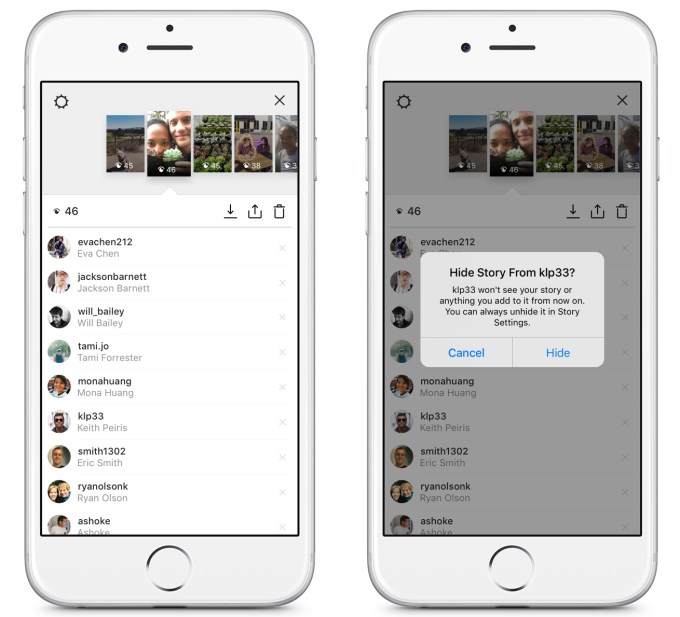
    • You can see who’s viewed your Story
    • Instagram Stories Privacy
    • Different

      • Instagram Stories appear in a row at the top of the main feed instead of on a separate screen like Snapchat, and are sorted by who you interact with most, not purely reverse chronological order like Snapchat
      • Anyone you allow to follow you on Instagram can see your Instagram Stories, though you can also block people, as opposed to building a separate network on Snapchat
      • You don’t have to be following someone to view their Instagram Stories, which can be viewed from their profile as long as they’re public
      • You can swipe right or tap the Stories icon in the top left to open the Stories camera, as opposed to Snapchat defaulting to the camera
      • You can hold the screen to pause a slideshow, or tap the left side to go back a slide, as opposed to Snapchat’s time-limited, constantly progressing Stories
      • You can’t add old content to Instagram Stories unless you re-import or screenshot, while Snapchat lets you share old Memories with a white border and timestamp around them
      • Instagram offers three brush types for drawing: standard, translucent highlighter and color-outlined neon, as opposed to Snapchat’s single brush
      • Instagram offers custom color control for drawing with an easy picker, as well as pre-made palettes like earth-tones or grayscale, while Snapchat custom color control is much more clumsy
      • Instagram currently lacks location filters, native selfie lens filters, stickers, 3D stickers and speed effects, but you can save content from third-party apps like Facebook-owned MSQRD and then share them
      • You can’t see who screenshotted your Instagram Story, while Snapchat warns you
      • You can’t save your whole day’s Story like on Snapchat, but you can post slides from your Story to the permanent Instagram feed
      • Eventually, Instagram Stories could be a goldmine, though Systrom says the company won’t focus on monetization until users love it. “I think that businesses and interest accounts, celebrities, etcetera, especially businesses, will find a tremendous use case,” he tells me. “They post three times and they think to themselves ‘Aww, should we really be posting that fourth photo?’ And this just opens the floodgates on events.”
        Eventually Instagram could sell ads that point users to a brand’s Story, like a clothing label with a Story from their fashion show, a politician from their rally or a brand doing a sponsored content tie-in with a social media star. Instead of directing people to their sluggish profile, they can point them to a dynamic, urgent story.

        No Likes, no judgment

        At their core, the use cases of Instagram Stories and Snapchat Stories are identical: Shoot, decorate and frequently share little clips from your life. Instagram lacks some of Snapchat’s advanced features, but it’s built where many people, especially adults, already have a social graph built.
        It’s that placement of Stories atop the Instagram, a simple design choice, that could make Instagram a hit. People love to vie for attention. If you give them a new window to show off through that’s smack dab at the front of an app their friends use, vanity will kick in and people will fill that space with their face and creations.
      • When Instagram launched six years ago, it was a new network open to experimentation in front of friends. People were trying to learn how to make art from camera phones. But over time, Instagram evolved into a game where everyone seeks to win the most Likes and validation. And so they only share the most exciting, pretty parts of the their life, and everything else is swept under the rug.
        Eventually Instagram became the core permanent profile of the mobile generation, and everything you posted had to be good enough for you to be judged by forever. Teens created fake Instagram profiles called “Finstagrams” only their closest friends could see just so they could post whatever they wanted without grubbing for internet points.
        Now Instagram is offering a different way to share with no Likes, no public comments and a lot less pressure.
        The bright-colored text and sloppy drawing may feel a bit out of place on Instagram at first, which is why Instagram was smart not to simply add the Stories creation tool to the main feed’s default uploader.
      • Some people already loyal to Snapchat might not see the need for Instagram Stories… but the screen real estate will likely be too attractive to pass up. They’ll easily be able to save and reshare their Snaps to Instagram Stories anyways. And anyone who’s dipped their toe into Snapchat and found it fun but couldn’t rebuild a following there may revel in this new playground built inside Instagram.
        “We’re north of 500 million people using the product,” Systrom concludes. “We can either let the system evolve the way it evolves — I think that’s a great consumption business. But we want to make sure to keep the soul of what made us love it at the beginning: Share whatever I want, when I want, with who I want. The daily use case.”

    Sunday, 31 July 2016

    Serious privacy flaws discovered in Glow fertility tracker app

    Posted By: Uni logo - 04:59:00

    There are scores of startups making fertility tracker and family planning apps today, but aConsumer Reports investigation has singled out Glow Inc. for serious security and privacy flaws.
    First, Consumer Reports’ team was able to access very personal information including data and comments about users’ sex lives, history of miscarriages, abortions and more, through a privacy loophole having to do with the way the app allowed couples to link their accounts and share data.
    Additionally, Consumer Reports found that Pregnancy Glow community forums transmitted personal data about its users including their full name, e-mail address, approximate location, birthdate and number of other health details they’d logged within the app.
    The data was easily unearthed and parsed using a free-to-download security testing app, and online calculators, the report said.
    Glow reportedly made immediate moves to fix the security problems with their app and issued a satisfactory update to their app after Consumer Reports notified them of the vulnerabilities.
    And as Glow investor and executive chairman Max Levchin specified after our story initially ran on Saturday:
    However, it’s a bit unsettling the startup hadn’t thoroughly tested its own systems enough to find and fix those flaws first.
    Consumer Reports set up dummy accounts to test the app for privacy and security flaws, and did not access users’ private data.
    Glow CEO Mike Huang was not immediately available for comment.
    It will be interesting to see if the scrutiny aimed at Glow, and the flaws exposed,  inspire a wave of security-oriented updates across fertility tracker apps on iOS and Android.
    Glow’s competition includes a hefty number of websites, mobile apps and even wearables to help couples get or avoid getting pregnant.
    Venture funded competitors include SOSV-backed Kindara, which works in conjunction with a smart thermometer called Wink to measure basal body temperature; Union Square Ventures-backed period and ovulation tracker Clue; and Natural Cycles, which is backed by Bonnier Media Growth.
    Fertility tracking apps have been found, so far, to be “generally inaccurate” in a study by researchers with Weill Cornell Medicine in New York City, published in the July issue of the journal Obstetrics & Gynecology.
    That’s not good news for people relying on them for family planning. And it’s definitely not good news for women who do not want to become pregnant and fail to use other methods of contraception along with the tech.

    It’s okay for Pikachu to watch you — as long as you want it to

    Posted By: Uni logo - 04:49:00

    Millions who downloaded the new Pokémon Go app are living in a brave, new, augmented reality world. For the early adopters (meaning apparently everyone you know) on iOS devices, it meant unknowingly granting Pokémon Go the permission to fully access their Google accounts.
    You’ve got to risk it all to catch ‘em all, right?
    Wrong. Thankfully Niantic, the company that developed Pokémon Go, acknowledged the mistake and issued a fix. Pokémon Go modified its implementation to request only “basic profile data” — user ID and email address — from Google accounts.
    This brings me some peace of mind as my 15-year-old roams the park, my office, the supermarket and the park again in search of furry creatures. Yet, although the company’sprivacy policy is thorough, I am left with the lingering sense of unease I feel with almost every other app. I am okay with their treatment of my son’s data today, but it’s up to the company if they want to change the way they use or share his data tomorrow.
    Developers need to collect data from users to create apps and experiences like Pokémon Go, but we often feel resigned to choose between Pikachu or privacy. A University of Pennsylvania study published last year found that 58 percent of Americans have come to accept that they have little control over what companies can learn about them, even though they would like to be in control.
    It doesn’t have to be this way. Businesses must be intentional, responsible and clear about the data they collect, and provide their customers with real choices. Powerlessness breeds mistrust, and a system based on mistrust benefits no one. On the other hand, earned trust drives adoption and lasting success.
    There are three simple steps companies can take to earn trust:
    • Stay lean. Do you need to know when someone is scheduled for a doctor’s visit? Do you need access to their 27 selfies in front of a national monument? Focus on the data you need and leave the rest alone.
    • Build in security. There is no one-size-fits-all security solution. The volume and type of data to which your company has access will determine the appropriate security measures.
    • Engage your consumers. Help people see the value you’re bringing to them by using their data. Chances are they will be happy to trade in their data for a customized experience.
    This doesn’t mean consumers are off the hook. We shouldn’t just shrug and breeze through privacy notices accepting whatever permission levels are required. We don’t realize just how powerful we can be if we take full ownership of our data. Replace “data” with the word “dollars” and the value exchange becomes a lot more tangible. Indifference and inaction toward data collection become a lot more absurd. Information is currency.
    As the lifeblood of any business, consumers have a unique opportunity to leverage their trust as a way to regain control of their data. Opting out is the most direct path, but not necessarily the right one for you (or the most fun).
    Here are a few other things peo
    • Learn about and use the privacy and security settings on your computer and phone and help others to understand how they work.
    • Take it to social media and spread the word about the companies that do great things, as well as those that do “bad things” around data.
    • Support organizations that advocate for better privacy, and use products built with a focus on privacy.
    Today I am choosing to trust Pokémon Go with my son’s data, because I have read and understood the terms. But I am just one person, and I happen to be a lawyer. In the long term, we need a commitment from both companies and consumers to make conscious choices about data.ple can do to take back control of their data:

    Saturday, 30 July 2016

    Research shows deleted WhatsApp messages aren’t actually deleted

    Posted By: Uni logo - 04:08:00

    Chat logs from WhatsApp linger on your phone even after you’ve deleted them, according to new research published by iOS expert Jonathan Zdziarski.
    Forensic traces of chats linger on the phone even after a user archives or deletes them, Zdziarski found, and could be accessed by someone with physical access to the device or by law enforcement issuing a warrant to Apple for iCloud backups. Although the data is deleted from the app, it is not overwritten in the SQLite library and therefore remains on the phone.
    “I installed the app and started a few different threads,” Zdziarski wrote in a blog post. “I then archived some, cleared, some, and deleted some threads. I made a second backup after running the ‘Clear All Chats’ function in WhatsApp. None of these deletion or archival options made any difference in how deleted records were preserved. In all cases, the deleted SQLite records remained intact in the database.”
    “The only way to get rid of them appears to be to delete the app entirely,” Zdziarski added.
    WhatsApp has been applauded for its security since the company, which is owned by Facebook, completed its rollout of end-to-end encryption in April. WhatsApp uses the well-regarded Signal Protocol for its encryption. But some onlookers were excited to see a dent in WhatsApp’s armor — the CEO of Telegram, Pavel Durov, took the opportunity to critique WhatsApp’s security.
    “Even for 10% of something like this security experts would tear Telegram apart with hundreds of NEVER USE IT tweets,” Durov tweeted. “Funny how conveniently silent all these ‘experts’ are now, after spending hundreds of hours bashing TG [Telegram] and promoting WA [WhatsApp].”
    However, WhatsApp certainly isn’t the only messaging application with this problem: Zdziarski noted that the issue exists with iMessage as well. Other apps like Signal and Wickr leave fewer forensic traces.

    WhatsApp users don’t need to panic — the ways this forensic data could be exported are relatively limited. Still, Zdziarski has some advice for users:
    • Use iTunes to set a long, complex backup password for your phone. Do NOT store this password in the keychain, otherwise it could potentially be recovered using Mac forensics tools. This will cause the phone to encrypt all desktop backups coming out of it, even if it’s talking to a forensics tool.
      • NOTE: If passwords are compelled in your country, you may still be forced to provide your backup password to law enforcement.
    • Consider pair locking your device using Configurator. I’ve written up a howto for this; it will prevent anybody else who steals your passcode, or compels a fingerprint from being able to pair or use forensics tools with your phone. This is irreversible without restoring the phone, so you’ll need to be aware of the risks.
    • Disable iCloud backups, as these do not honor your backup password, and the clear text database can be obtained, with a warrant, by law enforcement.
    • Periodically, delete the application from your device and reinstall it to flush out the database. This appears to be the only way to flush out deleted records and start fresh.
      • NOTE: This will not delete databases from existing iCloud backups from the cloud.

    Friday, 29 July 2016

    Apple hires founder of QNX Software Systems for automotive project

    Posted By: Uni logo - 08:14:00

    Apple is adding an experienced automotive software developer to its ranks and perhaps changing the focus of its secretive automotive division.
    Bloomberg is reporting Apple hired former BlackBerry employee and co-founder of QNX Dan Dodge, who will work in the software team of Apple’s automotive project.
    Dodge brings considerable experience to Apple. The company he co-founded developed the mobile operating system used by BlackBerry smartphone, and more importantly, the in-vehicle information and entertainment systems used in many Volkswagen, Daimler and Ford vehicles.
    Dodge co-founded QNX in 1980, which was later sold to Harman International in 2004 and then to BlackBerry in 2010. At Apple, Dodge will reportedly work on the software team of Project Titan and report to John Wright. Project Titan is reportedly now led by long-time Apple executive Bob Mansfield, who reports directly to Tim Cook.
    Bloomberg is also reporting that Project Titan, Apple’s supposed automotive project, is shifting focus to developing self-driving software and away from manufacturing a complete vehicle, though it’s unclear if the focus was really shifted. Apple has yet to publicly announce Project Titan and the original roadmap and intent was never revealed.
    If true, Apple will be entering a field quickly gaining more players. Many OEMs from Tesla to Mercedes-Benz to Ford are developing their own self-driving platforms. A few startups have also taken on this challenge including Cruise, which GM purchased in March 2016, and noted iPhone hacker George Holtz’s self-driving company, Comma.ai.

    Thursday, 28 July 2016

    Apple sold its billionth iPhone last week

    Posted By: Uni logo - 04:49:00

    It would have been a nice piece of information to share during yesterday’s earnings report, but Tim Cook and Co. were clearly too preoccupied with service revenues and R&D. And hey, no better way to kick off a midweek meeting than a little positive news — particularly if you can carry some of yesterday’s expectation-beating positivity into the following day to help rally the troops.
    iPhone sales may have declined for the quarter, but Apple’s still posting big numbers in the smartphone arena. During an employee meeting in Cupertino this morning, Apple’s CEO announced that the company moved its one-billionth phone last week.
    “We never set out to make the most, but we’ve always set out to make the best products that make a difference,” Cook said, holding number one billion aloft for the crowd, during a not especially understated address. “Thank you to everyone at Apple for helping change the world every day.”
    The news comes a little over two years after Apple was reported to have sold iPhone number 500 million — a milestone it passed without much notice nearly seven years after the launch of the company’s first handset.

    Roomi raises $4 million to help you find a roommate

    Posted By: Uni logo - 04:40:00

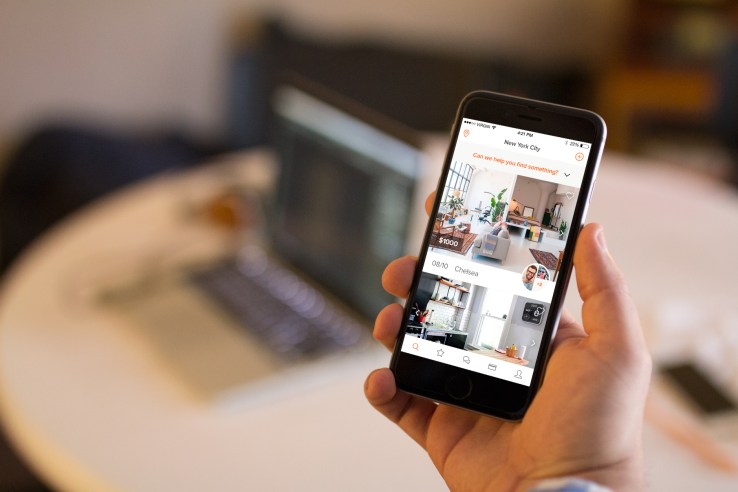
    At first glance, Roomi looks like it’s just another rental listing app. But there’s a twist — all of these homes already have tenants.
    An alternative to Craigslist, Roomi thinks it can find you a better roommate. Are you a gym rat? Do you like to throw parties? The app syncs with Facebook to give you a glimpse of prospective cohabitants.
    Launched last year, Roomi has over 375,000 users across North America. They have now raised an additional $4 million in seed funding led by DCM Ventures to expand internationally. This brings their total funding to $6 million.
    “There’s a whole generation of millennials leading a housing transformation — they live and rent differently than their parents did. They are moving more frequently and renting later into their lives,” David Cheng, investor at DCM Ventures explained why he sees a market opportunity. “We believe that Roomi, as a dedicated platform for rentals and co-living, caters to this generation’s housing needs.”
    CEO Ajay Yadav told TechCrunch that “the goal is to build a platform people can trust.” He said that Roomi is going to be working with services to incorporate stringent background checks, to make sure that someone isn’t unwittingly moving in with someone with a criminal record.
    It’s the roommate-first approach which he hopes will set Roomi apart from Trulia, Zillow and the rest of the many other housing apps. “The person is as important as the place you’re going to be living in,” he said.
    But Roomi’s business is still nascent. When asked where their revenue comes from, Yadav said, “right now we don’t make any money.”

    Wednesday, 4 May 2016

    There’s another app for rating people — if they’re using dating sites

    Posted By: Uni logo - 16:43:00
    Http%3a%2f%2fi.blueprint.mashable.com%2fvu8srvtg4tctfzo8qw3bzusowcw%3d%2fblueprint-api-production.s3.amazonaws.com%2fuploads%2fcard%2fimage%2f80387%2fstroovy_thumb

    In what seems to be the app idea that refuses to die, there is — yet another — app for rating and reviewing people. This one, however, is limited to people who use dating apps and websites.
    A new app called Stroovy aims to help users vet the people they meet on dating sites by reading and writing reviews based on their experience.
    The idea is similar to Lulu, the app that began as a way for women to rate and review men they dated. (Lulu transitioned to a more conventional dating app earlier this year.) But, unlike Lulu's reviews, Stroovy takes reviews from users of all genders. 
    The app's reviews are also not anonymous, at least not completely. A user name and avatar appears alongside each review (the app also requires users sign up with their phone numbers to prevent people from making duplicate accounts.)
    Reviews are also not limited to people who have met or gone on dates with each other — friends, coworkers and family members are also able to leave reviews for people they know. Another interesting touch is that users are unable to browse the app's reviews until they leave a full review (including a photo) for someone they know. And the app uses facial recognition to prevent people from uploading photos that don't have faces in them. 

    Still, the idea will no doubt be controversial to some — remember the huge outcry over Peeple, the "Yelp for people" app — but  the creators of the app say they hope to make online dating a safer experience for people. 
    "The mission of Stroovy is to provide an online community to assist daters in enjoying safer and better dating experiences," the company writes on its website. "There are about 74,000 registered sex offenders active on dating sites, so use Stroovy's online dating community to find out more about who you are meeting on online dating sites."
    It's not clear exactly how they plan to handle potential privacy concerns. or if there's a way for users to opt out, but one of the app's creators said in a thread on Product Hunt that "the majority of reviews are very positive" so far. 
    Stroovy is iOS only for now but an Android app is in the works.

    Tuesday, 3 May 2016

    Microsoft’s Word Flow keyboard app lands on iOS

    Posted By: Uni logo - 12:15:00


    Microsoft has released a next-word predicting keyboard as an iOS app as it seeks to tap into the popularity of Apple’s mobile ecosystem in the hopes of expanding its influence in the mobile productivity space.
    The Word Flow app, which was developed by Microsoft’s in-house experimental projects division, Garage, is now live in the U.S. App Store — although it’s not yet available in Europe.
    Earlier this month the company had offered beta sign-ups for iOS users but it’s now flicked the switch for users in the U.S. The app was originally developed for its own smartphone platform (née Windows Phone), and has also been offered to users of its desktop product, Windows 10.
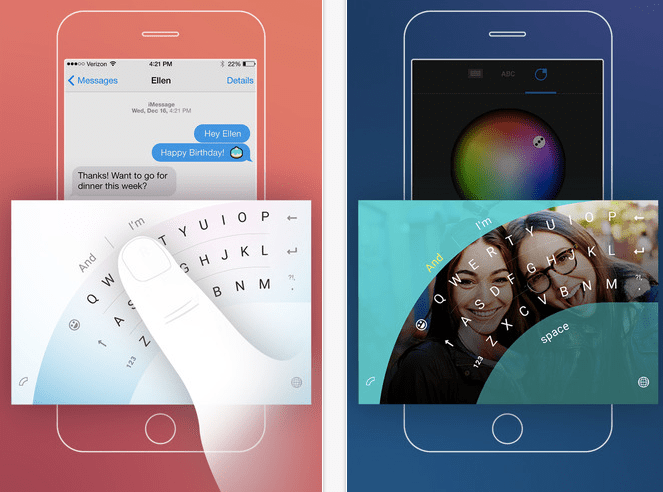
    As well as next word predictions, the Word Flow app offers the promise of faster texting via a swipe to type input — a la other keyboard apps like Swype. A little more novel is a one-handed typing mode that displays the keyboard as an arc in order to allow for easier typing via just a thumb. Users can also customize the look and feel of the Word Flow keyboard
    Keyboard tech was one of the ways Microsoft sought to advance the fortunes of its Windows Phone platform in the early years, as it battled to poach market share from more dominant rivals. One reason to focus its efforts on the keyboard was that Apple initially blocked developers from offering system-wide keyboards on iOS, and was alsoarguably slow to add more advanced features to the native iPhone keyboard leaving a gap for others to exploit.
    However, Cupertino changed its stance on system wide keyboards with 2014’s iOS 8, opening up to outside developers and also loading more capabilities into the native keyboard (such as its own next-word prediction tech). Meanwhile, Microsoft’s hopes of building mobile market share momentum, and making a dent in the Android-iOS duopoly, failed to materialize forcing the company to double-down on building apps to try to make a major mark in mobile.
    To further this strategy, back in February Microsoft shelled out $250 million to acquire London-based keyboard maker SwiftKey, an early mover in the next-word prediction keyboard tech space. It said at the time that it would be integrating SwiftKey’s technology into its existing Word Flow tech — as well as exploring “scenarios for the integration of the core technology across the breadth of our product and services portfolio.”
    Microsoft also said it would continue to offer SwiftKey’s apps, whose functionality clearly overlap with its own Word Flow product — albeit the former can boast rather greater usage. At the time of the acquisition by Redmond, SwiftKey had amassed installs on some 300 million devices across Android, iOS and its SDK products (the vast majority on the Android platform).
    Word Flow is not Microsoft’s only keyboard offering. Its Garage division has produced another keyboard app, called Hub, which was on iOS already. But that keyboard app focuses on multitasking and productivity for Office 365 users by letting them search for and share documents from other Microsoft services such as OneDrive and SharePoint. Which is rather less interesting than more open productivity keyboard plays, such as Barcelona-based keyboard startup ThingThing.
    While messaging apps have demonstrated the ability to scale out a platform on (another’s mobile) platform, with WhatsApp, for example, passing the 1 billion monthly active users mark earlier this year, it’s far less certain that productivity apps like keyboards can hope to achieve such scale.
    Indeed, SwiftKey’s exit to Microsoft suggests there are far harder and more bounded margins on potential growth in the productivity app space. (Which then rather does raise the question why Microsoft has not focused more resources on driving the development and market share of that well-known messaging app Skype that it acquired way back in 2011… ah those Redmond dreams of what could have been!)

    Copyright © 2016 Uni logo™ is a registered trademark.

    Designed by Unilogou. Hosted on Blogger Platform.