• unilogou. Powered by Blogger.

    Showing posts with label VIRTUAL REALITY. Show all posts
    Showing posts with label VIRTUAL REALITY. Show all posts

    Sunday, 7 August 2016

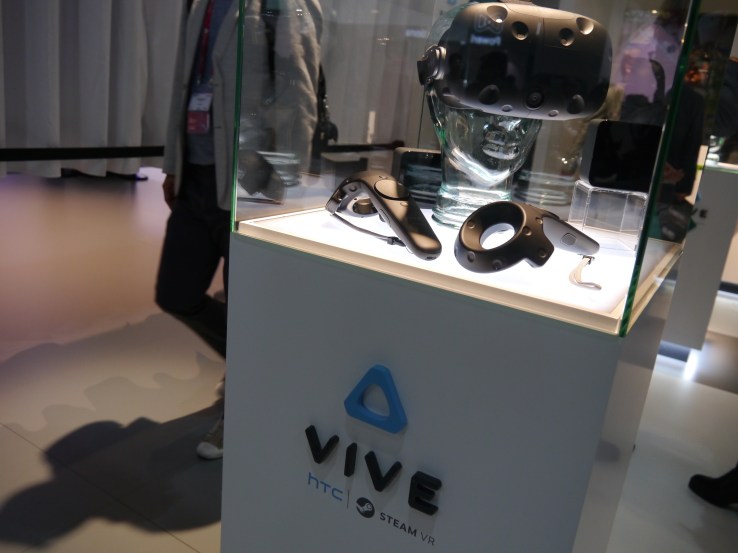
    HTC Vive getting its own customizable app store this fall

    Posted By: Uni logo - 08:08:00


    The HTC Vive VR headset will get its own app store this fall, as the company moves to broaden the experiences available to its users. 
    Viveport will offer virtual reality experiences in areas like education, communcation, entertainment, shopping and more, said Rikard Steiber, SVP of virtual reality at HTC.
    "VR is going to change the world for the better. It will democratize access to experience, anyone can travel anywhere, and learn anything," Steiber told Mashable. "The experiences that were only available to a few are now available to everyone."
    Viveport's launchthis fall will bring many more pieces to HTC's virtual reality ecosystem. Currently, Vive owners access VR games and software through Steam, Vive launch partner Valve's PC game platform. Viveport adds an additional layer, with a PC and mobile app to purchase and preview apps, as well as its own home space that acts as both storefront and content launcher.
    But Steiber promises much more interactivity from your Viveport VR experience, saying the company will allow users to customize their home menu with skins, apps and widgets.
    "My Viveport could be a tropical beach, and yours could be the bridge of a spaceship."
    Launching and using apps, Steiber said, will be "a bit like Minority report," with gesture controls reliant on the Vive's two wand-like controllers. Steiber and his team are also encouraging developers to add as much controller support into their apps, despite the fact the Vive is the only headset with included controls currently on the market. 
    "To get true presence, you need to have interactivity and you need to have room scale," he said. "If you are a developer, I would go for the more immersive experience first, to see how far you can possibly go, then scale for platforms with fewer features."
    Developers will get a chance to on the ground floor of Viveport, as Steiber said the beta would be out soon. He also promised that developers who submitted their apps during the beta period would get their apps featured in Viveport when it launches more broadly to consumers this fall.

    Friday, 5 August 2016

    HTC Vive getting its own customizable app store this fall

    Posted By: Uni logo - 11:55:00


    The HTC Vive VR headset will get its own app store this fall, as the company moves to broaden the experiences available to its users. 

    Viveport will offer virtual reality experiences in areas like education, communcation, entertainment, shopping and more, said Rikard Steiber, SVP of virtual reality at HTC.
    "VR is going to change the world for the better. It will democratize access to experience, anyone can travel anywhere, and learn anything," Steiber told Mashable. "The experiences that were only available to a few are now available to everyone."
    Viveport's launchthis fall will bring many more pieces to HTC's virtual reality ecosystem. Currently, Vive owners access VR games and software through Steam, Vive launch partner Valve's PC game platform. Viveport adds an additional layer, with a PC and mobile app to purchase and preview apps, as well as its own home space that acts as both storefront and content launcher.
    But Steiber promises much more interactivity from your Viveport VR experience, saying the company will allow users to customize their home menu with skins, apps and widgets.
    "My Viveport could be a tropical beach, and yours could be the bridge of a spaceship."
    Launching and using apps, Steiber said, will be "a bit like Minority report," with gesture controls reliant on the Vive's two wand-like controllers. Steiber and his team are also encouraging developers to add as much controller support into their apps, despite the fact the Vive is the only headset with included controls currently on the market. 
    "To get true presence, you need to have interactivity and you need to have room scale," he said. "If you are a developer, I would go for the more immersive experience first, to see how far you can possibly go, then scale for platforms with fewer features."
    Developers will get a chance to on the ground floor of Viveport, as Steiber said the beta would be out soon. He also promised that developers who submitted their apps during the beta period would get their apps featured in Viveport when it launches more broadly to consumers this fall. 

    Thursday, 4 August 2016

    Xiaomi announces its first VR headset — but you can’t buy it yet

    Posted By: Uni logo - 05:42:00

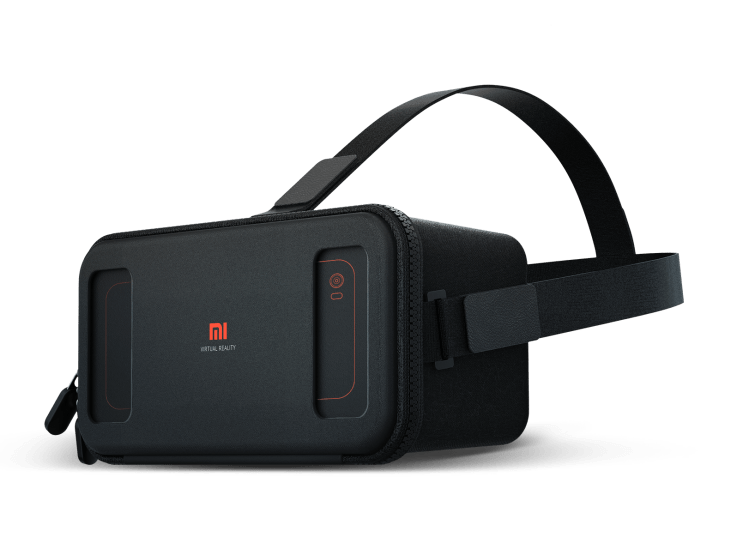
    Xiaomi is broadening its already expansive range of products by venturing into virtual reality for the first time.
    The company today announced the ‘Mi VR Play’, an “entry-level” virtual reality headset that it hopes can open this new exciting medium up to new audiences because not everyone has thousands of dollars needed to set up an Oculus Rift or HTC Vive. Democratizing technology is the thesis behind most of Xiaomi’s competitively-priced products, including the $550/750 notebook announced last week that will rival Apple’s Macbook in China.
    This new device recalls Google’s super cheap and super simple Cardboard VR headset. It is fairly basic in nature, you pop a smartphone into the lycra-built body and then open Xiaomi’s Mi VR app, which contains VR content from selected partners that include Conde Nast Traveler and YouKu, ‘China’s YouTube’. Xiaomi pledged to invest $1 billion in video content, including VR, last year so that library is sure to get bigger over time.
    Here’s how Xiaomi describes the headset:
    Mi VR Play has significantly improved upon the design typically used in similar VR products — it is wrapped in lightweight, durable Lycra for long-lasting comfort. In the future, Mi VR Play will also be available in a selection of bold prints and colours for even more stylish options. The unique two-way zipper helps to ensure compatibility, providing a secure grip on a wide range of 4.7- to 5.7-inch smartphones. At the same time, the dual openings on the front allow for slight positioning adjustments and ventilation.
    Sounds good so far?
    Here’s the catch — you can’t go and buy one, even if you’re in China.
    Xiaomi is making it available to a limited number of beta test users, who signed up on August 1 when Xiaomi put out a call for volunteers. One million users signed up in just eight hours, the company said, but Xiaomi has selected just a fraction of those — likely “tens of thousands”, a representative told TechCrunch.
    For those lucky ones accepted into the test program, the Mi VR Play will cost just RMB 1 ($0.15).
    Xiaomi told us that it has plans to make the headset more widely available in the future, but there’s no schedule for that right now. Along those lines, it isn’t clear how much the headset will cost once it is on sale to all. We suspect it won’t be RMB 1, sadly.

    Tuesday, 2 August 2016

    Yet another red quarter for HTC as revenue drops 44% year-on-year

    Posted By: Uni logo - 14:07:00

    The latest HTC results, for its Q2, confirm another loss-making quarter for the smartphone and VR headset maker, with the Taiwanese company reporting revenue of NT$18.9 billion ($598 million) for the quarter versus the NT$33.0 billion ($1.07 billion) it made in the year ago quarter. That’s a drop of around 44 percent.
    HTC reported a loss of NT$4.2 billion ($133 million) in its second quarter, which ended June 30. The only bright spot here is that it’s less of a revenue plunge than the company made in its Q1 when it was 64 percent down, year on year.
    The company started shipping its Vive headset during the quarter, although it started taking pre-orders earlier in the year. While pre-orders of its new flagship smartphone, the HTC 10, only began at the start of the quarter, with a $699 price-tag for the device in the U.S. — but it evidently failed to deliver enough uplift to pull it out of the red entirely in Q2.
    HTC reported its first loss-making quarter back in October 2013, and ever since the company has been struggling to turn its smartphone fortunes around in the face of increasingly fierce competition and a squeeze on hardware profit margins.
    Since then it has diversified its business via a wearable and fitness tech partnership with Under Armor, and a side-step into VR, in collaboration with games publisher Valve — the latter a space where there are far fewer competitions but also far fewer consumers, given how early and unproven the tech yet is and the paucity of compelling content.
    It’s certainly still early days for VR, but HTC is crediting the Vive VR rig with giving a boost to its brand and contributing to a 27 percent rise in revenues over Q1 this year.
    The company is also touting “worldwide interest” and “sales momentum” for its HTC 10 smartphone, but isn’t breaking out any actual sales figures.
    Nor is it breaking out Vive sales figures — saying only that sales were “strong” during the pre-order period in the latter half of its Q1.
    That would tally with the notion of a pre-order spike from early adopters, while offering no evidence to suggest signs of any more sustained consumer demand for VR, at this nascent stage.
    For that, the VR industry will need time to mature to convince consumers with compelling content. And, ultimately, prove it’s more than just a flash-in-the-pan nerd’s recurring fantasy.
    Commenting on its Q2 in a statement, HTC CEO and chairwoman Cher Wang said: “In the space of one year, we have reimagined the company, reclaimed our top spot for innovation, and demonstrated solid execution across our major product lines. I believe that HTC has regained its innovative zeal and is looking ahead with confidence and ingenuity.”
    Posted By: Uni logo - 12:43:00
    Samsung Gear VR
    Samsung made a number of smart moves with the original Gear VR headset, which it unveiled almost two years ago. 
    First of all, it partnered with the virtual reality hardware leader, the Facebook-owned Oculus VR. Second, it made the Gear VR just $99. And third, Samsung basically gave you one if you bought a Galaxy S7 phone, which happens to go inside the headset. 
    These choices helped Samsung become a leader in the consumer VR space.
    The company is likely to maintain that lead with its upgraded headset. The fourth edition of the VR headset gives the device a cool new look, replacing the hokey white body (with black accents) with a midnight blue chassis. 
    This serves two purposes: You’ll look like less of a dork wearing them (thank you, Samsung) and the black interior cuts down on any unwanted reflections, which could improve the overall VR experience.
    The headset also got a cushion upgrade, so the device feels more comfortable on your face, and comes with longer straps.
    Since the new Gear VR has to partner with Samsung’s sharp, new Galaxy Note 7, it now includes a USB Type-C port. Don’t worry, it will also ship with a Micro USB port adapter, which you’ll want to be careful not to lose (during our demo, the tiny dongle slipped right out of the Samsung rep’s hands and went darting across the floor).
    The new Samsung Gear VR is better looking and offered redesigned navigational controls.

    The new Samsung Gear VR is better looking and offered redesigned navigational controls.
    IMAGE: JON LYNN/MASHABLE
    Samsung also upgraded the optics a bit, going from 96-degree field of view to 101 degrees. They also took some feedback on the touch controls and redesigned the buttons, removing the indented cross pad, making the controls larger and adding a separate button that brings you back to the Oculus Home screen. All these changes should make it easier to control the VR headset with touch alone.
    The headset also has a new USB Type-C port on the bottom that can both deliver power to the phone and be used for data. The latter feature should help it support VR peripherals, whenever they arrive.

    Better in every way

    I got a chance to try out the new Samsung Gear VR headset with the new Galaxy Note 7 inside. As promised, the new cushions and straps make it much more comfortable. You still adjust focus with the dial on top. 
    Samsung let me try an immersive skateboarding video, which I watched while standing atop a real skateboard attached to a gimbal. Samsung did not give us an opportunity to try the new controls.

    The video, though, looked great — naturally, since it was shot with high-quality 360 video rigs — and sound was provided by a standalone headset. 
    I immediately lost myself in the video, looking around at the four or five other longboarders racing down the hill with me and doing my best to balance on the real skateboard as it moved about beneath me.
    At $99.99, the new, hipper-looking Gear VR will likely keep Samsung ahead of the consumer VR pack for now. Come this fall, Google and its army of phone partners will be releasing their own Daydream-ready devices, VR headsets and controllers, which will almost definitely provide some much-needed competition. 

    Sunday, 31 July 2016

    Tech trends that will impact your home

    Posted By: Uni logo - 05:02:00

    Imagine walking through the bathroom door at7am and the shower starts itself at optimal water heat and pressure. The thermostat adjusts when you enter the room. Want a new bathroom tub? What if you could 3D print it? High-tech homes are about to revolutionize the way we live.
    While interior design once relied on color schemes and playful accents, new tech trends are completely revamping how we design, build and live in our spaces. Even more, they’re having a social impact, enabling users to reduce their carbon footprints and increase efficiency as they go about their daily lives.
    3D printing, virtual reality and the Internet of Things (IoT) have just recently began to appear in our houses, but they’re making an incredible impact. So what capabilities do these tech trends have? And what will they look like further in the future?

    3D printing

    3D printers can create car parts and prosthetics. They can even build entire houses. Amsterdam boasts the 3D Print Canal House, a 13-room building and museum built entirely by a giant 3D printer, called the KamerMaker. The KamerMaker 2.0 is currently underway, and prints an area about as tall as a water bottle every second. An Italian engineering company is also working on building a 3D-printed house, and believes similar ones could be built in developing countries where sturdier structures are needed. So while we may not see entire neighborhoods being built by 3D printers just yet, it’s something to look forward to in the future.
    It’s not to say that 3D printing isn’t mainstream yet. It is. Companies likeShapeways have users design and order their own 3D-printed items. Customers may design their items using 3D sketch apps likeGravitySketch, send it to Shapeways and have their items sent directly to them. What’s more, the company lists dozens of ready-made items for the home — from book shelves to wall art — at prices comparable to High Street stores. Most items are less than US$40.
    “You’ll have a say in what materials you will use, what your materials will look like, and how they are made,” said Peter Limburg, Head of Business Development and Sales at Shapeways. “Mass-manufacturing is made to eliminate as much variety as we can. With 3D printing, we are allowing things to be more personal. The joy from our products will be a lot higher.”
    3D printing also means we don’t rely on factories that are oceans away. Shapeways’ factory is located in Long Island, NY, and ships out 200,000 unique items each month. Additionally, 3D-printed items produce less waste — the process uses exactly the amount of material necessary to make a product and no more, reducing an individual’s carbon footprint.
    People involved in the industry have been forward-thinking entrepreneurs. However, as 3D printing moves to the mainstream, larger companies like HP are jumping on the bandwagon. Ricoh and Canon have both announced they will release printers, too. Limburg says these larger companies will help bring down prices and drive innovation, benefitting the entire industry. It’s confirmation, he says, that 3D printing is here to stay.

    VR and AR

    VR and AR will soon play a critical role in helping people make better decisions in regards to interior design and online shopping. The tech tools will help consumers choose big-ticket items, allowing them to see how all the elements will fit into their homes without having to purchase them.
    Furniture companies in particular are using AR apps. Littlewoods and Very have developed AR apps that act like a personalized catalog. Instead of having to visualize how a piece of furniture will look in their home, users can scan their room with their camera and virtually place the furniture in 3D. DIRTT, a company that uses technology to manufacture highly customizable interiors, uses a VR app in their furniture showroom, increasing their in-store experience.
    Alper Guler is the founder of AR Pandora, a company that develops AR and VR apps. He says that people are now starting to try Google Cardboard experiences at home because they are very affordable and available through most mobile phones. However, people will be more likely to try devices such as Oculus Rift and HTC Vive in physical stores and showrooms because those devices require expensive computers to run. The headgear itself cost more than US$500, as opposed to $15 for Google Cardboard. “Retailers will benefit from this by helping their customers visualize better. These technologies will help them sell more, and I think faster,” said Guler.
    AR and VR also helps clients better imagine their newly designed spaces. Without these technologies, designers working online have problems with presenting to their clients, said Guler. “They make the [whole] design with 3D modelling tools, but when it comes to presenting it… they only take a snapshot of their 3D model… and send those images to the client,” he said. However, with AR and VR, people can see their newly designed 3D homes from any angle.
    VR in particular will put clients in their newly designed spaces before they even exist, offering an experience far beyond viewing flat images of their designs. Facebook has even showcased its social VR, which allows people to interact in VR together.
    It may seem far-fetched — reports show it will take 6-8 years for VR to go mainstream — but Facebook’s social VR pushes the boundaries. The whole notion could soon become a reality for clients and interior designers, enabling them to meet and discuss designs in VR from miles away and feel as if they are in the same new room.

    The Internet of Things (IoT)

    IoT encompasses a wide range of in-home capabilities. From thermostats to lightbulbs, ordinary objects have been given serious upgrades with IoT technology. And widespread adoption of this technology will lead to substantial energy savings. According to a study by the Consumer Technology Association, IoT could help avoid up to 100 million tons of CO2 emissions, and reduce energy consumption in each household by 10 percent.
    Voice-activated platforms have been popular among larger tech companies. Google just announced it would launch a voice-activated home device integrated with Google search capabilities. This would be similar to Amazon Echo, a device that sits in your home and acts as, really, a personal assistant. The Amazon device is powered by Alexa — when you speak to her, she’ll do things like turn on lights, play music and set up your Wi-Fi network.
    AdMobilize just built the MATRIX device, a product made to simplify the IoT space. Any connected device can be integrated into the MATRIX — it’s a central hub for all the smart devices in a home. The device downloads apps just as a smartphone would — such as ones that detect when you’ve gotten out of bed in order to turn the shower on, for example — allowing for hundreds of capabilities within the home. The technology is also touchless: users only have to gesture with their hands to turn the lights out. However, it’s not on the market yet — the company is just finishing up fabrication and has been taking pre-orders.
    “It’s going to change the home because it’s going to allow people to interact with technology without having it impair their life,” said Isabella Mongalo, Brand Manager at AdMobilize. “[It’s] creating a really natural way for people to interact with technology and to have a smart home in a way that is really seamless and touchless.”
    The average home may not yet see 3D-printed items or smart devices, but they will soon. More and more AR, VR, 3D printing and IoT will enter our homes — and stay. The devices will alter and improve the way we interact with and customize our homes, until we won’t be able to remember a time before we weren’t able to 3D print a new bathroom tub.

    Saturday, 2 July 2016

    Who needs a 4K display? Surfing the web in VR is where we're all going.

    Posted By: Uni logo - 04:05:00
    Https%3a%2f%2fblueprint-api-production.s3.amazonaws.com%2fuploads%2fcard%2fimage%2f133616%2fgoogle-cardboard-mashable-

    envisioned it would look like in the '90s.
    According to Google's François Beaufort, the Chromium team is working on a "VR shell" to let users browser the web using Google Cardboard or Daydream-ready VR headsets with a smartphone slotted in.
    Chrome for VR is currently an experimental feature and can be activated by going to "chrome://flags/#enable-vr-shell" in the URL bar. 
    As reported by Road to VR, the Chrome in VR isn't fully functional yet even with it enabled. It's slowly rolling out to Chrome developer channels, so be patient if you don't see it yet.
    As Google gears up for its big VR push with Daydream-ready smartphones, headsets and controllers, the company is no doubt preparing software and content to launch with it.
    At its I/O developer conference this year, Google announced a VR version of the Google Play store for users to download and discover new VR content. YouTube, MLB.com and HBO Now were some VR apps unveiled.

    The Daydream Home VR interface.
    IMAGE: GOOGLE
    Developing Chrome for VR is practically a must. While it may not be an out-of-body experience that literally puts you in the Internet, users will, in theory, be able to launch and view 360 video and VR content directly from within the VR browser.
    Last year Road to VR took a look at Samsung's Gear VR internet browser. A VR Chrome browser could provide a similar experience.

    Wednesday, 29 June 2016

    OnePlus ain’t interested in virtual reality or wearables

    Posted By: Uni logo - 02:45:00
    OnePlus, the Chinese smartphone manufacturer, has no plans to invest heavily into smartwatches or virtual reality in the near future.
    Co-founder Carl Pei made it clear that while it has worked on devices for both markets in the past, it does not want to become a competitor. Instead, the focus is back onto the single flagship, the OnePlus 3.
    Like most things, OnePlus doesn’t want to follow the trends of most mobile companies. In an interview with TechRadar, Pei said that wearables are “too risky” and that “jumping into Android Wear would have lost us a lot of money.”
    He is probably right, Android Wear has failed to capture a large amount of sales in the past two years, in part due to Google’s passivity towards the platform. It has lacked advertising space that Apple has gobbled up for its Watch, and lacks the Fitbit’s fitness appeal.

    OnePlus came close on wearables but no cigar

    OnePlus was close to launching a wearable last year, but pulled the plug at the last minute, possibly due to the risk factor.
    It might be worth mentioning that OnePlus is a subsidiary of Oppo, which is a subsidiary of BBK Electronics. BBK sells kids watches in China under different subsidiaries and is the fifth largest manufacturer in the world, which may be another reason why OnePlus is lukewarm on the wearables market.
    Virtual reality is another area where OnePlus has flirted with, but ultimately not invested in. In 2015, sent hundreds of Google Cardboard devices to fans for its OnePlus 2 launch. This year, it offered 30,000 Loop VR headsets for the OnePlus 3 launch.
    PR stunts are not hints at an incoming VR announcement from OnePlus though, as Pei mentions in his interview. He believes that Oculus, Google, and Valve are the three major players in VR and it will take a few years before a winner emerges, who sets the standards for VR.
    Pei does see a future where OnePlus has a VR headset, but it looks like the company is waiting to see what the prefered functionality, features, and controllers are before it invested millions into the market.

    Wednesday, 22 June 2016

    Will NBA spotlight boost SubPac’s full body wearable?

    Posted By: Uni logo - 14:24:00


    Cleveland Cavaliers point guard Kyrie Irving showed off a full-body wearable at the NBA Finals press conference, hours before the final match against the Golden Gate Warriors. And it could give the wearable’s maker, SubPac, the marketplace’s championship crown.
    The wearable in question provides “tactile sound” that allows you to feel music or sound throughout your entire body.
    Irving didn’t mention if he is partnered with SubPac, only saying to press “you’ll be hearing about it soon.” It may be possible he was using the wearable during training, though for what purpose, we don’t know.
    The SubPac that Irving wore is different to the product in the startup’s YouTube video, posted in late 2015. That may be what Irving was referring to when he hinted at news coming soon; a new version with enhancements and a new design.
    If Irving is the poster boy for SubPac, we suspect the new version may have some sports-related functionality, like simulated force while shooting or dribbling in training.

    SubPac currently aimed at music and VR

    The current SubPac is marketed at music and virtual reality, both can utilize biometrics to provide a full body experience. SubPac also has a body wearable for people sitting down, the S2, which could be more useful for video gamers.
    Some video game firms have delved into biometrics in the past, including Half Life and Portal developer Valve. In an interview with The Verge, Valve director Gabe Newell said:
    “We think that, unlike motion input where we kind of struggled to come up with ideas, [there’s potential in] biometrics.We have lots of ideas.”
    With the first Steam VR headset, the HTC Vive VR, launched earlier this year, we may see Valve’s first attempts at biometric feedback in game. Other developers are looking into the effects biometrics can have on gameplay, like changing a level depending on the player’s heart-rate.
    Full body wearables that provide vibration could be valuable in other areas, including training simulations for firefighters, police officers, and soldiers. SubPac has not mentioned any of these areas as potential market, sticking with the music focus for its current wearables.

    Israeli air force works on battlefield IoT technology

    Posted By: Uni logo - 03:02:00
    An Israeli Air Force (IAF) event recently gathered together 400 of the country’s top military minds to brainstorm next generation connected battlefield technology.
    As reported in the Jerusalem Post, the Mahanet event held in Haifa drew together top technologists from across all branches of the Israeli military to collaborate on bleeding edge warfare innovations.
    The specialists worked on a variety of projects, some which will be mothballed while others will become future military capabilities for the Israeli military.
    One project involved an IAF attempt to develop a platform for battlefield assistance that could also incorporate internet of things (IoT) technology.
    “Virtual reality can simulate a battlefield, and generate scenarios where [pilots] are attacked,” said Lt. Guy Cohen, the head of the air force innovation team. “I can use the Internet of things to link up a battalion commander in my sector to someone sitting an [air force] control center.”
    Such breakthroughs could change “the way I attack, or look at the whole area and communicate with gestures,” said Cohen. “We are looking at how we can take these things to our world of command in the IAF.”

    Israeli tech used in aircraft servicing

    Another application of virtual reality that the IAF conference explored was using VR technology in training technicians on how to service the F-35 fifth generation fighter jets, which are expected to enter into active service later in 2016.
    And for those who prefer to launch remote air strikes while laying in a relaxed posture, the techies conceived another project that enabled a pilot to navigate drones while lying in a specially wired bed.
    “If you’re on the battlefield and you can’t afford to be exposed [to enemy fire], we can take sensors and use them to enable soldiers lying down to control drones,” said Cohen.
    The collaborative work also focused on developing innovations that could enable the Israeli military to rapidly transfer data from intelligence officers or ground units to aircraft.
    A previous Mahanet conference hatched a project to land an Israeli robot on the moon, which is now scheduled for a 2017 launch onboard a small spaceship.

    Friday, 17 June 2016

    Get a sneak peek at the PlayStation VR at Best Buy and Gamestop

    Posted By: Uni logo - 03:19:00
    Https%3a%2f%2fblueprint-api-production.s3.amazonaws.com%2fuploads%2fcard%2fimage%2f118669%2fpsvr-2

    Still on the fence when it comes to virtual reality? Sony is looking to entice you into buying its VR headset with an early test drive. 
    PlayStation VR will appear in 30 Best Buy and Gamestop locations starting on Friday and 300 stores across the country by June 24, long before the device goes on sale in the fall. 
    This is an important opportunity for Sony to show its consumers why virtual reality is cool and how the PlayStation VR works with the PS4. Games and experiences available to demo include PlayStation VR WorldsEVE: Valkyrie, Headmaster, Battlezone and the puzzle game SuperHyperCube.
    Sony has a link to find locations near you, and is throwing a multi-city "Road to Greatness" tour, which will bring PlayStation games to different music festivals throughout the summer. 
    PlayStation VR will launch on Oct. 13 for $399. The current batch of pre-orders has sold out, but Sony announced more will be available over the next few months.

    Thursday, 16 June 2016

    Will wearables be commonplace in classrooms?

    Posted By: Uni logo - 01:12:00


    Adoption of wearables in U.S. classrooms will supposedly grow at 46 percent annually till 2020, as more schools start to test virtual and augmented reality, fitness and location trackers.
    Research firm Technavio says that like iPads, wearables will become commonplace in the classroom, providing students with ways to enhance their learning and have a more enriching experience.
    Wrist wearables will take up 44 percent of the total market share by 2020, according to Technavio, with schools providing fitness trackers for physical education lessons and possibly location trackers for first year students, showing them a map to their next lesson.
    Samsung, Apple, Fitbit, and Garmin will supposedly be the leading vendors for wrist wearables in schools, though we doubt many students will be given an Apple Watch or the latest Gear S2.

    Going on a virtual class trip…in the classroom

    While that sounds possible, virtual and augmented reality is most likely to become popular in the near future. The ability to take classes on “virtual trips” with Google’s Cardboard VR or display places like Machu Picchu or the Grand Canyon in 3D on a school desk could increase engagement in lessons and provide interactive learning to younger students.
    It could also lead to more out-of-lesson education, as students test the virtual and augmented reality devices after school or during breaks.
    Technavio sees the VR and AR market as fragmented, but claims that the major players should be able to consolidate their power by 2020. Regional vendors will find it “difficult to compete with them in terms of product quality, technology, and pricing.”
    Microsoft, Facebook, and Google will most likely provide AR or VR headsets free of charge or with a big discount, to drive adoption amongst young people. The worry here is that once these technologies are commercialized, schools may not see the value of these devices, especially devices like the Oculus Rift and HTC Vive VR, which are mainly marketed at gamers.

    Wednesday, 15 June 2016

    Like Follow Follow Binge-watch Hulu in virtual reality thanks to new Oculus Rift support

    Posted By: Uni logo - 22:18:00
    Https%3a%2f%2fblueprint-api-production.s3.amazonaws.com%2fuploads%2fcard%2fimage%2f117687%2focrft98

    Watching Hulu in virtual reality got a lot easier on Wednesday after the company announced its VR app would support the Oculus Rift. 
    After a delayed 2015 launch, Hulu's VR app for the Samsung Gear VR finally arrived in March. Now the app is available for the much more powerful (and expensive) Oculus Rift, strengthening Hulu's commitment to VR.  
    Currently, the main function of the app is to show users 2D content within the confines of a virtual cinema environment, but the app also delivers 30 original VR experiences that users can view without a Hulu subscription.
    In addition to the existing VR video selection, Hulu has also partnered with Syfy channel producers to offer a special immersive VR experience for the network's 12 Monkeys show on Hulu.com. 
    Called the "Temporal Facility," it allows fans to virtually visit the fictional time machine featured on the television show. According to Hulu, this is just the first in a slate of show-specific VR experiences that the company plans to bring to the app.
    As you can see from the demonstration video (above), the 2D viewing room in the app isn't a particularly stunning VR experience. As the company builds its original VR content library, however, it may be enough to get users accustomed to jacking into Hulu using virtual reality headsets instead of their televisions or tablets.

    Sunday, 12 June 2016

    'Fallout 4' getting a full virtual reality version for HTC Vive

    Posted By: Uni logo - 21:14:00
    Https%3a%2f%2fblueprint-api-production.s3.amazonaws.com%2fuploads%2fcard%2fimage%2f114015%2fmaxresdefault

    You'll soon be able to wander the Wastelands surrounding post-nuke Boston, not just with a controller, but with your feet.
    Fallout 4 is making a virtual reality transformation, coming to the HTC Vive next year, Bethesda Softworks announced at its E3 press conference Sunday night.
    Bethesda CMO Pete Hines announced Fallout 4's VR transformation as part of Bethesda's growing virtual reality initiative. Hines referenced how the first glimpses of modern VR appeared at E3 2012, running Doom 3. Since then, he said Bethesda has worked in stealth on other VR projects.
    In 2012, John Carmack, co-creator of Doom, was still with Bethesda studio id Software. In 2013, he joined Oculus as its CTO, and eventually Bethesda sued Oculus and parent company Facebook for improperly possessing trade secrets from years of Bethesda internal VR development.
    This is all a roundabout way of explaining why it makes sense for Fallout 4 to only come to the HTC Vive, a competing platform to the Oculus Rift. 
    Fallout 4's VR edition will come out in 2017. We will have hands-on impressions from it andDoom 4's VR adaptations from E3.

    Sunday, 22 May 2016

    Woman experiences IRL terror as she's overrun by virtual reality zombies

    Posted By: Uni logo - 13:23:00
    Https%3a%2f%2fblueprint-api-production.s3.amazonaws.com%2fuploads%2fcard%2fimage%2f94650%2fd541d97ad75041cd86459e5baa750729

    It's 2016, and virtual reality zombies can make us lose control of our bodies out of fear now.
    A video captured by Twitter user @madeleinedoux features her coworker Carrie Glaser very much not having a fun time in a virtual reality horror game.
    According to @madeleindoux, the game in question is The Brookhaven Experiment — a first-person shooter horror game on the HTC Vive pitting players against a horde of zombies with limited ammunition.
    Apparently, it's a game for fans of the horror genre and anyone looking to be traumatized.
    Glaser isn't alone in her reaction, last month a video featuring a VR gamer having a similarly horrific experience with The Brookhaven Experiment broke two million views on Youtube.
    More than merely a reminder of how we'd all really act in a zombie apocalypse, the video proves the legitimacy of virtual reality gaming experiences.
    If you need us we'll be over here, never playing this game.

    Copyright © 2016 Uni logo™ is a registered trademark.

    Designed by Unilogou. Hosted on Blogger Platform.