• unilogou. Powered by Blogger.

    Showing posts with label RACE. Show all posts
    Showing posts with label RACE. Show all posts

    Wednesday, 24 August 2016

    Race-related conversations remain divided on social media

    Posted By: Uni logo - 23:10:00
    A protester and motorist shout as demonstrators blocked South Florissant Avenue outside the Ferguson Police Department, on Nov. 24, 2015, in Ferguson, Missouri.

    Current events drive plenty of race-related conversation on social media, but many of those conversations are still divided, according to a new Pew Research Center study released Monday.
    Social media has provided a home for much of America's discourse about race in the country. From Black Twitter to prominent hashtags such as #BlackLivesMatter, #Ferguson and #OscarsSoWhite, Twitter especially has provided a way for social media users to boost awareness around issues of race. 
    But, in data gathered from Twitter for a 15-month period beginning in January 2015, and in a survey of 3,769 adult Americans, Pew researchers found that many of those conversations are still segregated along racial lines. 
    We broke down some of the numbers and the most interesting findings, below. 

    Black people are twice as likely to say they see race-related posts on social media

    In this photo taken on Aug. 12, 2015, Tamar Hodges, left, chants "Black Lives Matter" with fellow protestors.

    In this photo taken on Aug. 12, 2015, Tamar Hodges, left, chants "Black Lives Matter" with fellow protestors.
    IMAGE: DON SHRUBSHELL/THE COLUMBIA DAILY TRIBUNE VIA AP
    Around 68 percent of black people who use social media say they see posts about race and relations on their social media feeds, and 28 percent of them say they tweet and post about race as well. 
    Only 35 percent of white social media users say they see race-related posts, and just eight percent tweet or post about race. 

    Black people use social media to talk about race more than others

    Protesters march through downtown Chicago in response to the shooting of teenager Paul O'Neal and other police brutality, on Aug. 7.

    Protesters march through downtown Chicago in response to the shooting of teenager Paul O'Neal and other police brutality, on Aug. 7.
    IMAGE: PHOTO BY MAX HERMAN/NURPHOTO
    While close to a third of black social media users tweet and post about race, around two-thirds of white social media users "say they never post or share things about race," according to the study. 
    Around 20 percent of Hispanic social media users say they post and tweet about race. 

    The South Carolina mass shooting started more race-related conversation than any other event

    Aisha Muhammad embraces Dawn Hill outside Emanuel AME Church on June 29, 2015.

    Aisha Muhammad embraces Dawn Hill outside Emanuel AME Church on June 29, 2015.
    IMAGE: GRACE BEAHM/THE POST AND COURIER VIA AP
    A mass-shooting by a white supremacist at a historically black church in Charleston, South Carolina on June 17, 2015, led to the most race-related tweets in a single day during the 15-month period for which the study gathered data. 
    That day was June 18, the day after the shooting, which makes sense when you consider the shooting happened at night on the east coast. Twitter users sent around 4.3 million race-related tweets on the 18th, and 2.1 million race-related tweets the day before. 

    Most race conversations relate to news 

    Youth activists led a Black Lives Matter protest around downtown Chicago with over 1,000 participants in Chicago on July 11, 2016. (Photo by Max Herman/NurPhoto) *** Please Use Credit from Credit Field ***

    Youth activists led a Black Lives Matter protest around downtown Chicago with over 1,000 participants in Chicago on July 11, 2016. (Photo by Max Herman/NurPhoto) *** Please Use Credit from Credit Field ***
    IMAGE: MAX HERMAN/NURPHOTO/SIPA USA
    Pew found that race-related conversations intersect with plenty of other topics, from users' everyday experiences to pop culture to the day's biggest headlines. 
    But news dominated conversation around race. Pew tracked almost 1 billion race-related tweets during that 15-month period, and 60 percent of them keyed off race-related headlines and current events. 

    #BlackLivesMatter is more common than #AllLivesMatter

    In this July 8 photo, a man holds up a sign during a protest of shootings by police, at the White House.

    In this July 8 photo, a man holds up a sign during a protest of shootings by police, at the White House.
    IMAGE: AP PHOTO/JACQUELYN MARTIN
    #BlackLivesMatter and #AllLivesMatter are often thought of as dueling hashtags, though the data collected by Pew shows that #AllLivesMatter generally begins to take off only after users begin to tweet #BlackLivesMatter. 
    Social media users tweeted #BlackLivesMatter 11.8 million times in that 15-month period, while they tweeted #AllLivesMatter 1.5 million times over the same span.

    Friday, 19 August 2016

    Race-related conversations remain divided on social media

    Posted By: Uni logo - 02:24:00
    A protester and motorist shout as demonstrators blocked South Florissant Avenue outside the Ferguson Police Department, on Nov. 24, 2015, in Ferguson, Missouri.

    Current events drive plenty of race-related conversation on social media, but many of those conversations are still divided, according to a new Pew Research Center study released Monday.
    Social media has provided a home for much of America's discourse about race in the country. From Black Twitter to prominent hashtags such as #BlackLivesMatter, #Ferguson and #OscarsSoWhite, Twitter especially has provided a way for social media users to boost awareness around issues of race. 
    But, in data gathered from Twitter for a 15-month period beginning in January 2015, and in a survey of 3,769 adult Americans, Pew researchers found that many of those conversations are still segregated along racial lines. 
    We broke down some of the numbers and the most interesting findings, below. 

    Black people are twice as likely to say they see race-related posts on social media

    In this photo taken on Aug. 12, 2015, Tamar Hodges, left, chants "Black Lives Matter" with fellow protestors.

    In this photo taken on Aug. 12, 2015, Tamar Hodges, left, chants "Black Lives Matter" with fellow protestors.
    IMAGE: DON SHRUBSHELL/THE COLUMBIA DAILY TRIBUNE VIA AP
    Around 68 percent of black people who use social media say they see posts about race and relations on their social media feeds, and 28 percent of them say they tweet and post about race as well. 
    Only 35 percent of white social media users say they see race-related posts, and just eight percent tweet or post about race. 

    Black people use social media to talk about race more than others

    Protesters march through downtown Chicago in response to the shooting of teenager Paul O'Neal and other police brutality, on Aug. 7.

    Protesters march through downtown Chicago in response to the shooting of teenager Paul O'Neal and other police brutality, on Aug. 7.
    IMAGE: PHOTO BY MAX HERMAN/NURPHOTO
    While close to a third of black social media users tweet and post about race, around two-thirds of white social media users "say they never post or share things about race," according to the study. 
    Around 20 percent of Hispanic social media users say they post and tweet about race. 

    The South Carolina mass shooting started more race-related conversation than any other event

    Aisha Muhammad embraces Dawn Hill outside Emanuel AME Church on June 29, 2015.

    Aisha Muhammad embraces Dawn Hill outside Emanuel AME Church on June 29, 2015.
    IMAGE: GRACE BEAHM/THE POST AND COURIER VIA AP
    A mass-shooting by a white supremacist at a historically black church in Charleston, South Carolina on June 17, 2015, led to the most race-related tweets in a single day during the 15-month period for which the study gathered data. 
    That day was June 18, the day after the shooting, which makes sense when you consider the shooting happened at night on the east coast. Twitter users sent around 4.3 million race-related tweets on the 18th, and 2.1 million race-related tweets the day before. 

    Most race conversations relate to news 

    Youth activists led a Black Lives Matter protest around downtown Chicago with over 1,000 participants in Chicago on July 11, 2016. (Photo by Max Herman/NurPhoto) *** Please Use Credit from Credit Field ***

    Youth activists led a Black Lives Matter protest around downtown Chicago with over 1,000 participants in Chicago on July 11, 2016. (Photo by Max Herman/NurPhoto) *** Please Use Credit from Credit Field ***
    IMAGE: MAX HERMAN/NURPHOTO/SIPA USA
    Pew found that race-related conversations intersect with plenty of other topics, from users' everyday experiences to pop culture to the day's biggest headlines. 
    But news dominated conversation around race. Pew tracked almost 1 billion race-related tweets during that 15-month period, and 60 percent of them keyed off race-related headlines and current events. 

    #BlackLivesMatter is more common than #AllLivesMatter

    In this July 8 photo, a man holds up a sign during a protest of shootings by police, at the White House.

    In this July 8 photo, a man holds up a sign during a protest of shootings by police, at the White House.
    IMAGE: AP PHOTO/JACQUELYN MARTIN
    #BlackLivesMatter and #AllLivesMatter are often thought of as dueling hashtags, though the data collected by Pew shows that #AllLivesMatter generally begins to take off only after users begin to tweet #BlackLivesMatter. 
    Social media users tweeted #BlackLivesMatter 11.8 million times in that 15-month period, while they tweeted #AllLivesMatter 1.5 million times over the same span.  

    Monday, 15 August 2016

    How Snapchat and smartphone 'beauty' filters may be distorting our cultural reality

    Posted By: Uni logo - 06:16:00


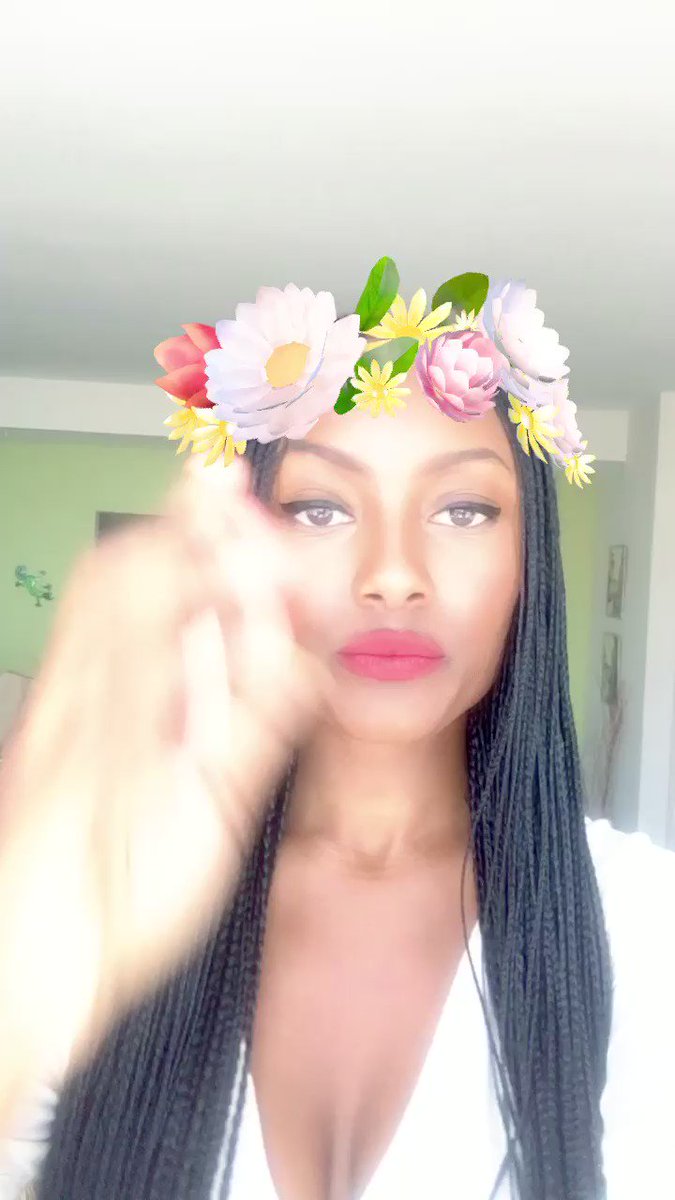
    The controversial Snapchat filter called out as "yellowface" by many earlier this week has thrust the popular app's face morphing filters into the spotlight again, with some wondering if the app may be impacting how we see ourselves and others. 


    Aside from racially insensitive filters, there's also the matter of Snapchat's "beauty" filter and how it may reveal a bias toward a certain kind of look. Specifically, a look that hews more toward western mainstream social norms as opposed to accentuating the true, diverse beauty of the many different kinds of faces seen around the world. 
    Earlier this week, one Snapchat user decided to open up about her use of the beauty filter and how it's affected her view of herself.  
    "Snapchat’s popular 'beauty' filter makes my face slimmer, my eyes bigger AND my nose narrower … And I was starting to prefer my face with a nose job!" wrote Nicole Williams, a blogger on Medium. "Even my Twitter profile has a version of my face using this Snapchat filter. I have been unintentionally communicating a photoshopped version of my own face for months. And I had no idea. But I had started really hating my nose."
    The only photos I liked were ones through Snapchat, using the beauty filter. I started defaulting to Snapchat for every selfie.
    And while Williams' digital transformation was gradual and not initially intentional, she admits, "The only photos I liked were ones through Snapchat, using the beauty filter. I started defaulting to Snapchat for every selfie."
    But the filter-powered makeover doesn't stop at Snapchat. Many users have also been employing the powers ofsmartphone camera filters with automatic "beautifying" effects to change their looks, a practice Williams also pointed out regarding her own image. 
    "It's taken awhile to notice, but my smartphone is making me prettier, according to a Westernised algorithm," writes Williams. "My Samsung S7 comes with editing tools that along with removing red eyes, can slim my face or make my eyes bigger."
    Of course, users have been using the beauty mode option on Samsung smartphones for several years now to enhance their looks for a slightly (and in some cases, drastically) different look. 
    But what Williams points out is how this may be subtly enforcing beauty standards that don't take into account all the different kinds of beauty common to people of different backgrounds. 
    "The really insidious problem with photo filters," says Williams, is that, "they are programmed to Western beauty ideals. They tell Polynesian and African American girls that their noses are too wide. They tell Asian women their eyes are too small. And it tells every woman that their face should be skinnier."
    However, despite these very valid points, a quick look on Instagram, Snapchat and Twitter quickly reveals that a large number of men and women are happily using these filters to change how they're viewed by the world. 
    That fact alone means that western-beauty-focused filters will likely be difficult to walk back now that they're out in the wild. 
    But as Williams' personal story, as well as the recent missteps by Snapchat, indicate, more and more users will likely begin to demand that app makers look beyond their narrow views and work on creating filters that enhance all types of beauty without putting anyone in a cultural box. 

    Copyright © 2016 Uni logo™ is a registered trademark.

    Designed by Unilogou. Hosted on Blogger Platform.