• unilogou. Powered by Blogger.

    Showing posts with label Device. Show all posts
    Showing posts with label Device. Show all posts

    Friday, 29 July 2016

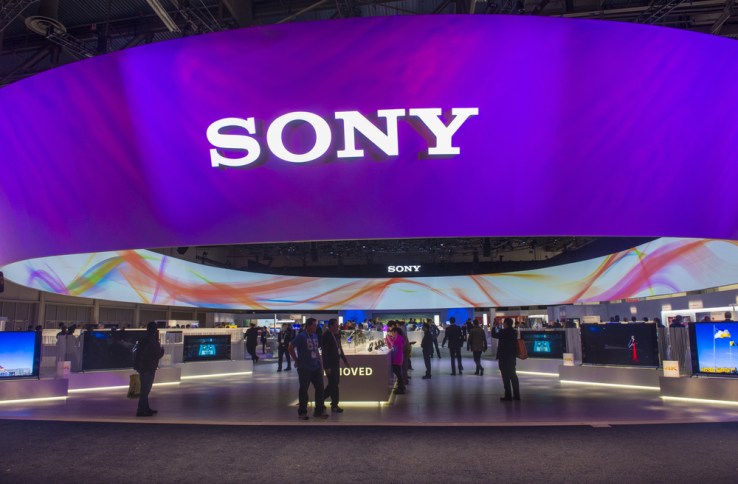
    Sony posts $205M profit as downsized mobile business stops bleeding cash

    Posted By: Uni logo - 07:30:00

    Sony posted a slim ¥21.2 billion ($205 million) profit for its Q1 2016. That’s down on the ¥82.4 billion profit it carded this time last year, but in general the quarter was a mixed bag of positives and negatives following the impact of cost-cutting initiatives.
    We already knew the firm would take somewhat of a hit this quarter after it warned of the impact that the Kumamoto earthquake had on its manufacturing operations nearby. Revenue for the three-month period did reflect that, coming in at ¥1.613 trillion ($15.662 billion), down 11 percent annually.
    Other factors besides the quake, Sony said, included the strong yen — a factor Nintendo cited in its earnings yesterday — “the deterioration in investment performance” of its Sony Life business, and the downsizing of its smartphone business, which brought in 33 percent less revenue than one year previous.
    There’s a positive side to Sony Mobile’s performance however — it is now at breakeven. Slowing growth and increased competition in the smartphone market had weighed on Sony’s previous financials, with the smartphone business alone responsible for a $544 million loss in the last financial year. So it is quite notable that its mobile communications division posted a very slender ¥400 million ($4 million) operating profit for the quarter.
    That, Sony said, was down to tactical withdraws from tougher markets, and shift away from mid-range phones where competition is fiercest, towards higher-end devices with better margins. Restructuring also boosted its home entertainment and sound unit, operating income for which increased 85 percent annually to ¥20.2 billion ($197 million) despite revenue dropping seven percent over the period.
    Amid those changes Sony’s PlayStation business, which surpassed 40 million consoles sold to date in March, stood.
    Sony’s games and network unit — which includes PlayStation — was the stellar performer, accounting for the most revenue across the firm and over 75 percent of total Sony profits. It posted an operating profit of ¥44 billion ($427 million), up 126 percent year-on-year, on revenue of ¥330.4 billion ($3.2 billion) for the quarter, up 14.5 percent.
    That impressive rise, Sony put down to increased PS4 game and console sales, as well as some cost reductions made internally, including lower marketing spend — which makes sense for a console first launch in 2013. Sony is tapping into the rise of VR with PlayStation VR, its $399 take on things which is due to arrive in mid-October. Given that alternatives like Oculus require a suitable PC rig to work, PlayStation VR could make sense for many who don’t want additional cost or hassle.
    As mentioned at the top, many Sony units were impacted by the recent earthquake. Its imaging component business took a 26 percent revenue dip year-on-year, the semiconductor business was down 23 percent, and its component business saw revenue fall 23 percent.
    Sony Pictures carded a ¥10.6 billion ($103 million) loss which Sony blamed on currencies, despite some strong box office hits like Angry Birds, and revenue in its music business was up nine percent year-on-year.

    PlayStation VR play area requirements detailed, seated play recommended

    Posted By: Uni logo - 07:27:00

    PlaySTation VR is set to arrive on October 13, but a new official pamphlet being distributed by the company (via Polygon) sheds some light on what players can expect in terms of space requirements and gameplay style. The document shows that the idea space is about 6′ x 10′ big, with the player seated roughly in the middle, facing the PlayStation Camera at the long end.
    HTC Vive’s room-scale VR, by comparison, requires 6’6″ by 5′ of play space, which is smaller despite PlayStation’s advisory in the pamphlet above that players remain seated whenever possible during in-game experiences. Applications are able to provide experiences that let the player wander in the general play are, but the wording in this document makes it pretty clear that developers building those kinds of experiences should provide clear instructions about what the user can do when standing up.
    Sounds like sensitivity about liability to me, which is understandable given past video game debacles like Nintendo having to provide a protective silicone sleeve for every Wii motion controller it created because of some broken TVs.
    Other info shared in the sales document for PS VR include system requirements, details regarding second-screen viewing von your TV via Social Screen, compatibility with glasses (it has that), and a proviso that the height of your in-game play area will depend on how high you place your PlayStation camera, and what angle it covers.
    PS VR is set to be among the most accessible options for advanced virtual reality, thanks to a relatively low cost of entry. I’ve also heard that it is probably the most generally comfortable option among headsets from a few people, and of course having Sony’s weight behind it should help a lot with game developer interest.

    Wednesday, 18 May 2016

    Xiaomi shows off a 4K Android TV set-top box at I/O

    Posted By: Uni logo - 21:18:00


    Like a number of other bits and bobs announced at Google I/O thus far, there are still some important questions left unanswered about the Mi Box — but here’s what we do know about Xiaomi’s forthcoming set-top box.
    It’s sleek, it’s small and it’s apparently won the Chinese phone maker a couple of design awards already. The Mi Box is powered by Android TV 6.0, is capable of beaming 4K video at 60 FPS and supports Dolby Digital Plus audio playback.
    Xiaomi Mi Box
    It does HDMI 2.0a and features a quad-core ARM processor, Mali 450 GPU and has 2GB of RAM and 8GB of storage, which is expandable via USB. Oh, and there’s a Bluetooth remote, as well. That peripheral supports voice control, so users can search for content, ask contextual questions (actors’ names, etc.) and launch apps using their voice. The controller also doubles as a gaming controller for Android TV-compatible games.
    The company will also be offering a separate Mi Game Controller, which is compatible with the set-top box and other Android devices. Availability details for both products are still forthcoming, though the company noted that the product is “coming soon” in a press release issued today. A Xiaomi spokesperson added that the company is “working closely with Google” on the U.S. launch.

    Saturday, 30 April 2016

    6 reasons to avoid cheap smartphones like Docoss X1

    Posted By: Uni logo - 02:22:00

    Recently, it seems that a few Indian companies have started a trend of enticing prospective buyers with ridiculously cheap smartphones. It began with the Freedom 251, an Android smartphone priced at just Rs. 250. Now another unknown manufacturer, Docoss, has announced the X1, an ultra-cheap smartphone priced at just Rs. 888. The company has even posted official product images and an unboxing video on its social channels, and deliveries are reported to begin in early May.

    Whether these companies have no intentions of making profits or they genuinely want to put smartphones in everyone's hands is an altogether different discussion. Anyway, here are a few reasons why it's wise to stay clear of 'gadgets' like Freedom 251 and Docoss X1.

    They are most likely 'frauds'


    Even though prices have been dipping, it's near impossible to manufacture a smartphone at such a low price. It's more than likely that these ultra-cheap smartphones are just a ploy by fraudsters to rip buyers off. Even if it's an amount as low as Rs. 888, what's the point in wasting your money for a product that's as improbable as it sounds.

    The devices might have poor build quality
    It's true that you won't be getting an all-metal body at such low prices, but even then the build quality of these cheap smartphones is bound to be less than acceptable. To put things in perspective, the Freedom 251 test unit received by us had the name of its original manufacturer (ADCOM) painted on it.

    Thursday, 21 April 2016

    60 Minutes Shows How Network Flaw Makes Any Smartphone Easy Prey

    Posted By: Uni logo - 07:22:00
    60-minutes-phone-hack-rep-lieu-network-security

    An international team of cybersecurity experts hacked into an iPhone loaned to a U.S. congressman who sits on a key technology committee, in a 60 Minutes demonstration of how easy it is for a criminal to spy on callers by exploiting an international mobile phone network vulnerability. The segment aired Sunday.
    The hackers were able to listen in on a call by Rep. Ted Lieu, D-Calif., who sits on the House Oversight and Reform Subcommittee, just by getting the actual phone number he was using, according to the program.
    The team, led by German security researcher Karsten Nohl, easily penetrated the Signalling System No. 7 network, which it then could use for everything from listening in on calls to tracking the caller's movements and intercepting text messages.
    Lieu, who volunteered to participate in the hacking demonstration, characterized the ease with which the researchers were able to access the phone data as "creepy," and said demonstration left him feeling angry.

    Call for Investigation

    "The congressman is exploring policy fixes for the SS7 flaw," said Jack d'Annibale, senior advisor to Lieu.
    In fact, he has called for an investigation by the House Committee on Oversight and Government Reform, he told TechNewsWorld.
    "The applications for this vulnerability are seemingly limitless, from criminals monitoring individual targets to foreign entities conducting economic espionage on American companies to nation states monitoring U.S. government officials," Lieu wrote in a letter sent Monday to Rep. Jason Chaffetz, R-Utah, chairman of the OGR committee.
    "The vulnerability has serious ramifications not only for individual privacy, but also for American innovation, competitiveness and national security," Lieu wrote. "Many innovations in digital security -- such as multifactor authentication using text messages -- may be rendered useless."

    Network Still Vulnerable

    The computer security team that carried out the 60 Minutes demo first uncovered the SS7 vulnerability at a German hacking conference in 2014.
    "These vulnerabilities are quite serious, and they certainly warrant immediate action by nearly every phone company which is part of the SS7 system," said Cooper Quentin, staff technologist at the Electronic Frontier Foundation.
    "It is a near certainty that criminals and spies are exploiting this vulnerability for nefarious purposes," he told TechNewsWorld.
    The U.S. government cannot solve the problem on its own, Quentin added, because the vulnerability is shared by phone companies around the globe, who must work together to fix the problem.

    Network vs. Device

    Discussions about phone security generally center on one of two issues, noted Christopher Budd, global threat communications manager at Trend Micro. Those issues boil down to either the security of the device or the security of the network.
    Some of the issues raised by the 60 Minutes piece relate to the network as opposed to the device.
    "By and large, while these are interesting and even scary sometimes, they're not something that most people should worry about," Budd told TechNewsWorld.
    Carrying out an attack requires a degree of focused resources against a target, he pointed out, and most regular phone customers are not targets.
    Carriers have security teams that typically focus 24x7x365 on the security of their networks, Budd noted. The thing that most people can control is the security of their individual device, which requires running mature security software to keep it up to date.
    "That last in particular is important," he said, "because so many Android devices have been abandoned for updates by the carriers and manufacturers that it's impossible to keep them up to date."
    It's also advisable to keep multiple layers of security on a phone.
    "As a security company, we see an increasingly large number of requests for details about how we protect sensitive customer data from third-party access," said GreatHorn Vice President Chris Fraser.
    "Encryption is part of that narrative," he told TechNewsWorld.
    Cybercriminals can find subtle and creative ways to bypass security controls that are put into place, Fraser pointed out, and the best way to prevent against such an exploit is never to rely on one method of cyberprotection as the failsafe.
    "Relying on encryption, or any single security approach or tool -- whether it's a passcode on a mobile device or an antivirus tool -- is a flawed and seemingly failure bound strategy," he said. "What you need is defense in depth.


    Copyright © 2016 Uni logo™ is a registered trademark.

    Designed by Unilogou. Hosted on Blogger Platform.