Just a couple of days after releasing its new NikeLab version of the Apple Watch, Apple is leveraging the device's reputation as a fitness tool to join in the Earth Day festivities.
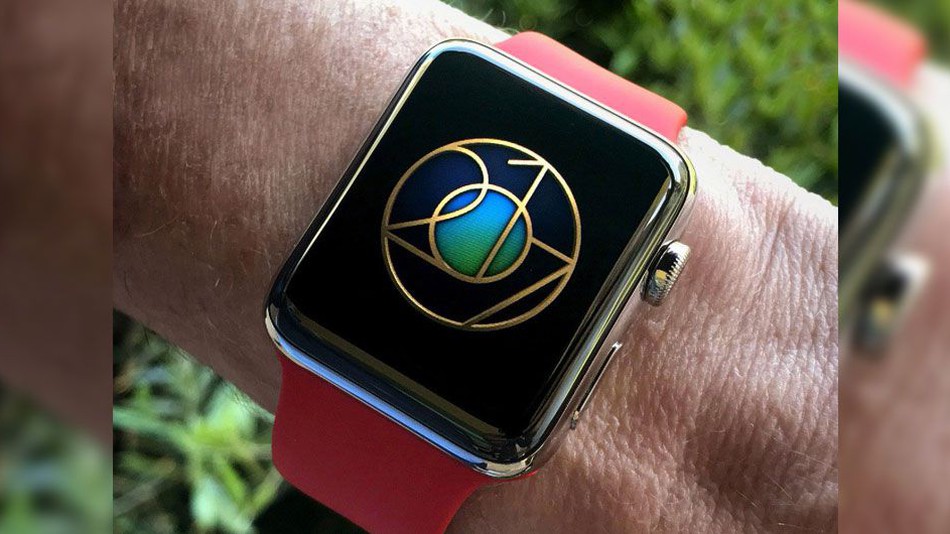
Early Saturday, Apple CEO Tim Cook posted a photo of a new special edition achievement badge on the Apple Watch designed to get people outside and active.
"Get outside, enjoy our planet and complete a 30-minute workout today," said Cook on Twitter.
If you open the Apple Watch-associated Activity app, you'll now see a badge that comes with a message dedicated to Earth Day.
"Get outside and celebrate Earth Day on April 22 and earn this award," reads the app message. "Go for a walk, run, cycle, wheelchair, or swim workout of 30 minutes or more in the Workout app in any third party app that writes these workouts to Health. You will also earn special stickers for Messages."
Awesome.
But while I consider myself a fairly dedicated Apple Watch user, specifically for fitness, I just don't pay much attention to the badges. Yes, the badges are well-designed, and can often come as a nice surprise when you hit an activity milestone, but in reality, it took a while for me to even take the activity rings seriously as a indication of my workout progress. The badges? Barely ever notice them.
Regardless, the badges remain a great marketing tool to pull non-Apple Watch owners into the Apple Watch ecosystem, even if they eventually forget about the badges.
Oh, and the prominent Earth Day reminder is a good look for any company still struggling to clean up its own environmental profile.
WATCH: Why Facebook's AR announcement should excite iPhone fans
Apple has expanded Apple Music student membership program to 25 new countries including Canada, China, India, and Russia. Those who sign up for the membership will be able to avail the company’s music streaming service for about half the standard monthly subscription rate.
Apple announced Apple Music student membership in May this year, though at the time it was available to students in only seven countries — Australia, Denmark, Germany, Ireland, New Zealand, the United Kingdom, and the United States.
The student membership program is now also available in Austria, Belgium, Brazil, Canada, China, Chile, Colombia, Finland, France, Hong Kong, India, Indonesia, Italy, Japan, Mexico, the Netherlands, Norway, Russia, Switzerland, Singapore, South Africa, Spain, Sweden, Thailand, and the United Arab Emirates.
Apple, as always, has partnered with UNiDAYS, a service that focuses on offering big savings to students. Among other things, UNiDays helps companies validate student enrolment and verify if a user is still a student at a university. Some other partners of UNiDays include Spotify, New Look, MissGuided, and Urban Outfitters.
Though student membership program makes Apple Music affordable to students everywhere, things are a little too enticing in India, where an eligible student will be able to avail the service for a monthly charge of about Rs 60 (88 cents). Apple Music was launched in India for Rs 120 ($1.75) a month for an individual user and Rs 180 ($2.62) for a family plan.
The move could help the company drive a lot of new customers to its music streaming service. As of September, Apple Music had 17 million paid subscribers. Apple Music rival, Spotify had 40 million paid subscribers as of September. Spotify also offers discounts to students.
Barely a week after Apple released its fifth developer beta builds of its iOS, tvOS, watchOS and MacOS Sierra platforms, the sixth beta releases have now arrived in short order. Given the quick turnaround time, there isn’t much that’s changed between the previous and current builds, besides some minor bug fixing, it appears.
In addition, Apple also rolled out the iOS 10 public beta 5, which is the version of the operating system available to non-developers who want to try out the new features ahead of the public launch.
As we get closer to the expected September public launch of iOS, the betas have gotten more stable and the new features they introduce in each build have been of lesser importance, generally speaking. Instead, they’re more focused squashing bugs. For instance, early testers are reporting in the comments of a 9to5Mac blog post about the betas that the new iOS beta is fixing the dock glitch which saw the background of the dock move around and become distorted when the iPad was moved.
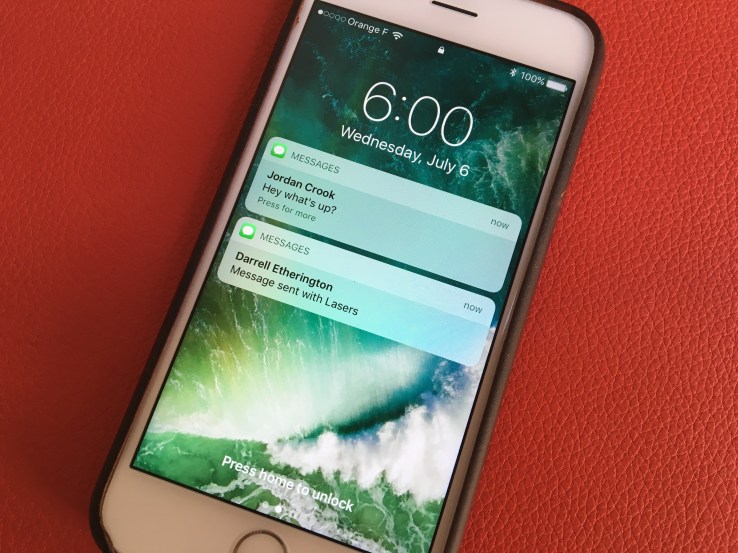
First introduced at this year’s WWDC, iOS 10 will bring a number of new features, including redesigned Music and News apps, an updated lock screen, redesigned Notification Center widgets, a revamped iMessage experience, a new “learn to code” app called Swift Playgrounds, a more powerful version of Siri and more.
MacOS Sierra, meanwhile, will introduce Siri to the desktop and include an updated Photos app and version of Safari, offering picture-in-picture mode, among other things. Apple TV is getting a dark mode and single sign-on for authenticated TV apps. WatchOS is also getting a makeover with a redesigned user interface, removal of the “friends” screen when pushing the side button, and faster launching apps.
According to a recent report from Bloomberg, Apple is planning to unveil new versions of the iPhone at its September 7th event, but it may not be announcing its overhaul MacBook Pros at the same time. However, final releases of iOS tend to arrive just ahead of new iPhones, which means we could see iOS 10 publicly launch as soon as September 14,notes to 9to5Mac.
Apple's iPad Pro currently comes in two sizes: 12.9 and 9.7 inches, with the latter variant sharing the form factor with the Pencil-less iPad Air. But according to a new report by KGI's analyst Ming-Chi Kuo, first noticed by MacRumors, the company might introduce a third, 10.5-inch option next year.
That device is likely to be launched alongside an updated 12.9-inch iPad Pro as well as a "low-cost" 9.7-inch iPad, presumably a successor of the iPad Air 2. There's no word about an update to the iPad mini.
Why another tablet size? According to Kuo, this might be the iPad that'll help Apple win tenders in commercial and education markets. Both devices will reportedly sport Apple's upcoming A10X processor, while the 9.7-inch new iPad will have an A9X processor.
Kuo further claims that Apple is working on a "revolutionary" new iPad with a flexible AMOLED screen that should come out in 2018.
"If Apple can truly tap the potential of a flexible AMOLED panel, we believe the new iPad model will offer new selling points through radical form factor design and user behavior changes, which could benefit shipments," Kuo wrote in his report.
The predictions are bold — the 10.5-inch iPad could cluster Apple's messy iPad line up even further, and a two-years-from-here iPad with a flexible screen (though that could just mean curvy) sounds like sci-fi at this point. Kuo, however, accurately predicted a fair amount of facts about Apple products; his recent prediction, that of an OLED bar-equipped MacBook Pro, has not materialized yet, but it has been widely confirmed by other reports.
The traditional, analog watch industry has been struggling to figure out how to deal with the rise of the smartwatch, led by the Apple Watch.
Now one German company has presented what it thinks is one possible answer: a watch band that holds both your Apple Watch and an analog watch.
Called the Dual Strap System, Sinn's watch band uses four shortened straps to put one of its own classic timepieces on one side of your wrist and the Apple Watch on the other side.
Is this an absolutely silly idea? Of course it is. Will some Apple Watch users buy it? Based on the reception past wild Apple Watch band accessories have received, yes, probably.
Offered in both 38mm and 42mm sizes, it can also be transformed into a single watch band that just holds your analog Sinn watch.
IMAGE: SINN
An argument could be made that someone would use this strap to enjoy the refined look of analog timepieces without losing touch with the world of wearable notifications. But to most people, this will probably just look like you're someone who can't make up their damn mind.
According to a report from ABlogToWatch, the band costs $120 when purchased with a Sinn watch and $210 when sold separately. A bargain, if you don't really like or need money.
Get ready for a massive MacBook Pro update. Apple is planning to unveil new 13-inch and 15-inch MacBook Pro laptops with retina displays soon. According to a new report fromBloomberg’s Mark Gurman, Apple is building a completely new pro laptop with many new features, such as a Touch ID sensor and an OLED mini screen above the keyboard.
If you’ve been following MacBook Pro rumors, you know these rumors aren’t new. But Gurman is confirming what well-informed analyst Ming-Chi Kuo from KGI Securities and9to5mac have already been saying: yes, the new MacBook Pro is going to be a big release.
Let’s start with the shape of the device. The new MacBook Pro should be thinner and lighter, but not wedge-shaped like the MacBook Air or 12-inch retina MacBook. The bezels around the display should be smaller, and the overall frame of the device should be smaller.
The fact that the new MacBook Pro won’t look like a MacBook Air is a good sign for those who rely a lot on the multitude of ports on the existing MacBook Pro — there will be more than one port. Apple could switch to USB Type-C ports to replace USB ports, the MagSafe port and even Thunderbolt ports as USB-C ports can support the Thunderbolt protocol. Maybe Apple will drop the HDMI port and SD card slot to save up on space, maybe not.
Under the hood, Apple will most probably use the Intel Skylake processors, giving a performance boost and improving energy consumption. You can expect better Wi-Fi and Bluetooth chips as well.
But the most significant addition will be a narrow OLED display right above the keyboard. It should replace the physical function keys with a touchscreen. This could be the most surprising element of this MacBook Pro as nobody knows exactly how Apple will use this strip. You could control basic laptop functions from this screen, such as volume and media buttons. But Apple could also take advantage of this screen to display shortcuts and information depending on the app you’re using.
Apple also plans to integrate a Touch ID sensor in your Mac. This would let you unlock your laptop without having to type your password. More importantly, the Touch ID sensor would ship with a secure enclave, making your Mac more secure than before. It would let app developers use Touch ID for other things — password managers could take advantage of Touch ID for example. And finally, it would make Apple Pay for macOS Sierra more secure.
Recently, many have pointed out that the MacBook Pro is embarrassingly outdated. The last major update was in June 2012, bringing a retina display and a thinner design to the MacBook Pro lineup.
But people tend to forget that the unibody MacBook Pro was introduced in 2008, also four years before the retina update. Apple doesn’t change its laptops very often, relying on internal component upgrades every now and then.
And yet, Skylake processors should have come sooner to the MacBook Pro. Gurman is saying that Apple won’t introduce the new MacBook Pro at the iPhone launch event that will likely happen on September 7. I could see Apple introducing the new laptop in October. It’s about time.
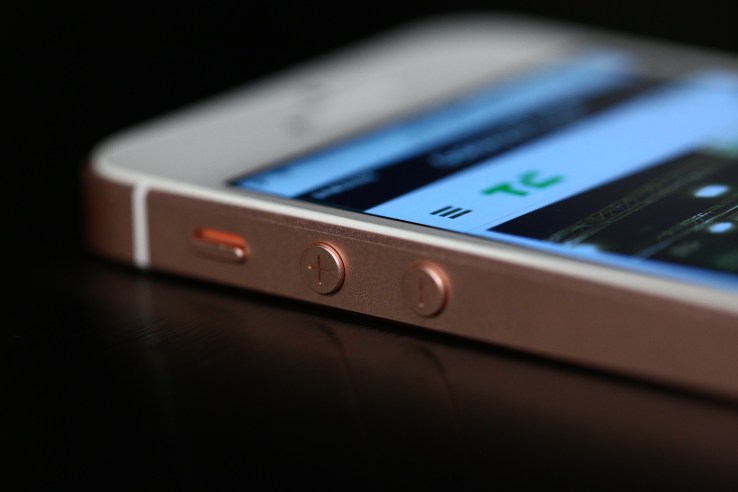
Apple ripped up its playbook when it launched a smaller phone priced at $399 in March, but its iPhone SE strategy looks to be going as planned. The new four-inch iPhone gave Apple a welcome sales bump in key markets between April and June, according a new report.
The second quarter of the year tends to be a relatively slow period for the U.S. firm’s phone sales, but data from Kantar suggests that Apple saw an increase in the U.S. and Europe.
Apple’s new phones are unveiled in September each year — the next iPhone will reportedly be unveiled September 7 — so naturally anyone tempted to buy a new device months before may also be tempted to wait. That’s often reflected in quieter periods during Q2 and Q3, but that didn’t happen this time around, and the iPhone SE looks to be the main reason.
Indeed, Apple’s overall iPhone sales for the quarter dropped 15 percent year-on-year to 40.4 million units, but it looks like the four-inch iPhone SE prevented a steeper decline.
The story was different in some of the most critical smartphone markets.
In the U.S., Kantar reported that the iPhone SE accounted for 5.1 percent of smartphone sales. That helped Apple increase its marketshare to 31.8 percent in the quarter, up 1.3 percent on the previous year. For context, the iPhone 6s and iPhone 6s Plus came in top at 15.1 percent, followed by Samsung’s Galaxy S7 and Galaxy S7 Edge on 14.1 percent, according to Kantar’s figures.
The iPhone SE’s impact was all the more marked in the U.K., where it was the top selling smartphone with 9.2 percent marketshare, just ahead of the iPhone 6s on 9.1 percent. That helped Apple grow its share of sales in the country by 3.1 percent to 37.2 percent in Q2 2016.
Across Europe, iOS marketshare grew 0.7 percent year-on-year, with particular progress in France (21 percent) and in Germany, where 14.2 percent of all smartphone sales represented growth for Apple for the first time in nine months.
The iPhone SE factor didn’t conjure up the same impressive figures in China, where Kantar said the device took just 2.5 percent of sales. The analyst firm said that “supply constraints” had impacted potential sales — additionally, there are fiercely competitive devices at cheaper prices, while it isn’t clear if Apple’s brand cachet resonates as strongly with Chinese consumers when selling non-flagship phones. Proof of the competition? During Q2 2016, local players Huawei and Xiaomi overtook Apple on sales in urban China thanks to sub-$250 devices.
Kantar doesn’t track figures for India, which has become a key focus market for Apple, so it isn’t clear just what kind of impact the iPhone SE had there.
I previously questioned whether the $399 price was really low enough to make a major splash in India, and I believe that applies to emerging market regions likes Southeast Asia, too. It is sure to complement Apple’s existing products, but unlikely to outshine its top-range devices.
Finally, it is worth noting that while the iPhone SE delivered increased marketshare for Apple, there is a financial cost. Apple’s overall gross margin for its most recent quarter dropped to below 38 percent on account of the iPhone SE.
Apple, of course, has the highest margins in the business, so it can afford to offset that a little to grow into new demographics and consumer groups that its more expensive products can’t reach. The question is whether the impressive start for the iPhone SE can be sustained, and whether success might lead to other “more affordable” Apple phones in the future.
Good news, Apple developers – Apple today has released its 5th version of the iOS 10 beta build along with new betas for watchOS 3, macOS, and tvOS. With this release, we’re getting closer to the final, public build of iOS – it’s likely that there will only be one or two more betas before its release expected in September.
While the first few betas were buggy, as expected, Apple has been polishing up the code and fixing the broken bits with every subsequent beta release. In iOS beta 5, the company has addressed a number of issues with regard to iOS’s interaction with Apple TV, in-app purchases in the App Store, Bluetooth, iMessage, the Phone and Wallet apps, as well as accessories. Notably, the device will no longer panic when using the iPhone 6s Smart Battery Case, for instance.
There are a few changes with this iOS build, however, as early testers have already discovered. The AI and facial recognition data in the Photo app has been reset, causing a new scanning process to take place, reports iPhoneHacks. In addition, the music Control Center has been tweaked, the Today view now includes the data and day, widgets have gotten darker backgrounds, and there’s a new lock sound, their report says.
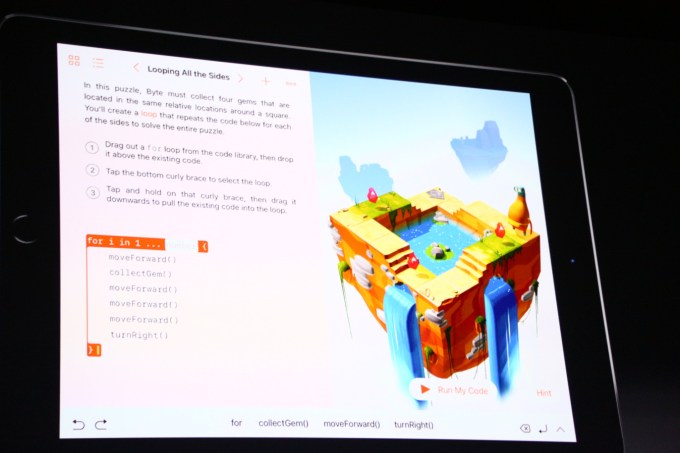
iOS beta 5 also ships with Swift Playgrounds, the “learn to code” app for kids Apple introduced at WWDC 2016. The app arrives with Learn to Code parts 1 and 2, plus additional challenges users can explore. You can also create your own playgrounds based on the templates, create a blank playground, or open playgrounds in Xcode.
The app also includes the new Graphing template, in addition to the Answers, Shapes and Blank templates.
Also, according to Apple’s release notes, Voicemail transcription is now available on iPhone 6s, iPhone 6s Plus and iPhone SE (with the Siri language set to English). However, there are still issues with FaceTime involving calls between this beta and macOS betas being broken; problems with “Recently Played” in “For You” in Apple Music not instantly refreshing; problems with Notes quitting unexpectedly; along with other minor bugs.
In case you’re curious what’s new in the other platforms, macOS Sierra brings Siri to the Mac, the Photos app is updated, Safari has picture-in-picture for video, and more. WatchOS 3 is also a major update in terms of offering a redesigned users interface, with no more Friends screen, and faster launching apps. Apple TV’s tvOS update isn’t as major, but will get a new dark mode and sign-on for TV Everywhere apps. The device can also act as a HomeKit hub.
The new macOS beta now supports Apple Pay by discovering an Apple Pay-capable phone or watch, and addresses other minor issues. The watchOS 3 beta, meanwhile, introduces a fix for the problem with Siri that when the request involves a deleted app, Siri may not have provided the intended response.
Apple is no longer just a tech company with a commitment to powering itself completely from renewable energy. It is now officially licensed to sell clean electricity too, in an rare move that could save the company hundreds of millions of dollars in energy costs and corporate taxes.
The California tech giant last week won federal approval to start selling electricity, on top of its iPhones, iPads, MacBooks, watches and headphones. Rather than buying solar and wind electricity from another operator, like most technology firms do, Apple can also sell the juice from its own clean power plants.
The iPhone maker is part of a growing group of companies pledging to run most or all of their operations on renewable energy. Microsoft, Facebook and Amazon, for example, have also invested in wind farms and solar plants to help power their data centers and warehouses — a move that cuts both greenhouse gas emissions and energy and tax bills.
While apps, files, emails, Pokémons and other digital trappings seem to exist only in the cloud, the facilities needed to store and process that data are extremely energy-intensive.
The Apple Store in New York City's Upper West Side.
IMAGE: KENA BETANCUR/GETTY IMAGES
Data centers use anywhere from 10 to 50 times the energy per floor space of a typical commercial office building, according to the U.S. Department of Energy. In the U.S., these spaces account for roughly 2 percent of the nation's total energy consumption.
Internet-focused companies are facing pressure from environmental groups and their shareholders to power data centers not with coal or natural gas but with emissions-free alternatives. The activist group Greenpeace, for instance, ranks these companies as dirty or green in its annual “Click Clean” report.
In response to such scrutiny and their growing energy footprints, more companies in tech and other sectors are investing in renewables.
IMAGE: GREENPEACE
Last year, large corporations signed contracts to buy a record 3,200 megawatts of clean energy capacity. That equals about half of all the “power purchase agreements” signed in 2015, in an industry usually dominated by utilities.
“It's a dramatic change from even five years ago,” Jenny Heeter, senior energy analyst at the National Renewable Energy Laboratory (NREL) in Golden, Colorado, told Mashable.
The tech sector's focus on renewables has been a big boost for the broader U.S. transition to cleaner energy sources.
In 2014, the IT industry bought about 8.3 million megawatt-hours of renewable energy, about four times the electricity appetite of New York State, according to federal energy data.
By 2020, the tech sector could buy between 18.5 million and 37 million megawatt-hours of renewables, NREL estimated. That's up to three times all the electricity used in California.
“We have seen more and more companies making these 100-percent renewables goals and looking for ways to buy renewables,” Heeter said. “It’s definitely becoming a large market.”
Greening Apple
Apple’s latest effort to sell clean electricity — not just buy it — is relatively unique in the tech industry. Among its peers, only Google’s parent Alphabet has federal approval to sell wholesale power, which it won in 2010.
The strategy has three key benefits for the tech giants: It bolsters their green credentials and cuts their environmental footprint; it gives them independence from the broader U.S. electric grid; and it eases a portion of their total tax burdens.
“It is a big step, and not all companies want to be in the energy business,” Heeter said.
“We don’t expect that would be a common strategy for all IT companies,” she added.
On Aug. 4, the U.S. Federal Energy Regulatory Commission (FERC) authorized Apple’s subsidiary Apple Energy LLC to sell wholesale energy, power capacity and other services needed to provide reliable electricity.
The FERC filing "supports our plan for 100 percent renewable energy," Apple told Mashable.
Apple said it sought federal approval so it could sell wholesale power from its California Flats Project with First Solar, a major U.S. solar company, and the utility Pacific Gas & Electric.
Apple CEO Tim Cook in February 2015 announced an $850 million deal to buy 130 megawatts of solar power capacity over 25 years from the project in Monterey County.
That should power all of Apple’s California stores, offices, headquarters and a data center. But it's still a tiny slice — 0.01 percent — of America's total power capacity of nearly 1.2 million megawatts, according to U.S. Energy Information Administration estimates.
California Flats will eventually encompass 2,900 acres of land and more than double in size, to 280 megawatts of solar capacity. Apple will then own all of the project's output.
With the project, Apple will pay less per unit of electricity than it pays now to buy from a utility company.
The move should save the company "hundreds of millions of dollars" in avoided energy costs, Lisa Jackson, Apple's vice president of environmental initiatives and former head of the U.S. Environmental Protection Agency, said at Wall Street Journal's ECO:nomics conference in March 2015.
Apple consumed 966 million kilowatt-hours of electricity in 2015 across all its U.S. and global facilities, the company estimated in its 2016 Environmental Responsibility Report.
The company said it also planned to use its power-selling abilities for other future projects.
The MacBook producer already owns a handful of large solar projects in the U.S., including a 20-megawatt facility in Nevada and a 50-megawatt solar plant under construction in Arizona.
Additionally, Cook has pledged to make the company’s new “spaceship” headquarters in Silicon Valley into the “greenest building on the planet.”
The building, still under construction, will run exclusively on renewables when it’s finished in late 2016, Cook said.
Apple says the company is 93 percent reliant on renewable energy supplies worldwide, marking progress toward its goal of being a 100 percent renewable energy company.
Still, the company faces plenty of obstacles in its quest for environmental stewardship, including the heavy energy usage of its overseas manufacturing facilities and the lack of recycled materials in its products.
The dilemma isn't unique to Apple. Many major tech companies have set clean energy goals and released their consumption data, yet some of these numbers may not be completely accurate, according to several studies.
For example, in its 2015 "Click Clean" report, Greenpeace graded Amazon Web Services an F for transparency.
The Utility Approach
For corporate behemoths like Apple and Google, each with market caps of more than $500 billion, there can be financial benefits to owning clean energy projects outright, rather than just signing long-term power contracts.
Companies with a sufficiently large tax liability can tap into a pair of federal incentives designed to encourage more investment in clean energy.
The Investment Tax Credit gives tax breaks to owners of residential and commercial solar projects that is worth 30 percent of project costs. The Production Tax Credit gives wind farm developers 2.3 cents for every kilowatt-hour of electricity that the turbines produce.
The tax breaks not only help make clean electricity cheaper; they also chip away at huge corporate tax bills.
For companies that own solar and wind farms, however, they may not need to use 100 percent of the electricity their projects produce. And if they have excess supplies, then it makes sense for their subsidiaries to sell the extra electrons into the wholesale market and generate revenue, NREL's Heeter explained.
“It gives them some extra flexibility … and the ability to make sure that any excess electricity is sold into the market, instead of not being used,” she said.
Google said its subsidiary, Google Energy LLC, buys and sells power in the wholesale markets in areas where it can’t directly supply its data centers with renewable energy.
The Ivanpah Solar Electric Generating System, owned by Google, NRG Energy and BrightSource Energy, sits in the Mojave Desert in California.
IMAGE: ETHAN MILLER/GETTY IMAGES
But other companies aren’t likely to take the leap toward selling energy, either because it doesn’t make financial sense or they don’t want the extra hassle.
The strategy requires a substantial investment in time and resources. Google and Apple, for instance, both created separate subsidiaries to run their energy operations. Applying for regulatory approval is also a long, expensive process laden with paperwork.
“It’s not an easy process, and many companies see it as not really their core business,” Heeter said. So although major IT firms are investing heavily in renewables, most are unlikely to see federal regulatory approval.
Purchasing Power
The more common approach for companies is to sign long-term power purchase agreements with another developer, which Google and Apple also do.
The deals are generally considered less risky and cumbersome than owning a power plant outright.
“You’re just buying the output. Then it’s up to somebody else to manage how those renewables get put on the grid,” Heeter said.
Microsoft, for example, has signed two 20-year power purchase agreements: one to buy 175 megawatts of wind energy from a project in Illinois, and the other to buy 110 megawatts from a North Texas wind farm.
With those agreements, and by buying wind, solar and hydropower straight from the grid, Microsoft has been able to power 44 percent of its data centers with renewable energy, the company said.
“But this means we have the opportunity to do even more,” a Microsoft spokesperson said.
The Redmond, Washington-based software giant recently announced a new goal to power 50 percent of its data centers with clean power by the end of 2018.
When asked if Microsoft would create a Microsoft Energy, a spokesperson said: "We’re committed to playing a role in accelerating the transition to a clean energy infrastructure, whether that is through the purchase of a project, or backing projects through long-term purchase commitments."
Facebook said it powered 35 percent of its data centers with renewable energy in 2015 and also aims to reach 50 percent by 2018.
Facebook's data center in Prineville, Oregon.
IMAGE: FACEBOOK
Two of Facebook’s data centers in Iowa and in Sweden are powered by renewable energy. Data centers currently under construction in Ireland and Fort Worth, Texas will be entirely powered by wind energy.
Facebook declined to comment on whether the Menlo Park-based company has plans to create a subsidiary for energy selling like Apple and Google.
As for Amazon — which is drawing more and more of its profits from powering the internet through Amazon Web Services — the e-commerce giant set a goal to power 40 percent of its facilities with renewables by the end of this year.
The company oversees three wind farms — in Indiana, North Carolina and Ohio — and one solar farm in Virginia.
Other tech giants have taken new steps into renewable energy and have committed to a 100 percent goal. This year, Salesforce signed two power purchase agreements with wind farms in Texas and West Virginia.
“As a cloud company, it is our responsibility to seek out clean energy sources to power our data centers,” said Patrick Flynn, director of sustainability at Salesforce.
Apple is not exactly thrilled by the Australian banking industry's attempts to undermine its rollout of Apple Pay.
In July, four major financial institutions applied to the Australian Competition and Consumer Commission (ACCC) to negotiate collectively with Apple regarding mobile payments.
ADVERTISEMENT
For the banks — Bendigo and Adelaide Bank, the Commonwealth Bank of Australia, National Australia Bank, and Westpac — the fight centred on the fact that Apple does not allow outside banking apps to use iPhone hardware in favour of its own Apple Pay service.
"Apple's refusal to provide third-party apps with any access to the [near-field communication] functionality of its devices sets it apart from other hardware manufacturers," it said in the application. It's the NFC antenna that allows a smartphone to communicate with a payment terminal.
Now the technology company has hit back at what it calls the banks' "innuendo" and "misstatements," arguing their demands would create a security threat. Its submission, signed by the local head of Apple Pay, Marj Demmer, urges the ACCC to reject the banks' application.
Apple claims opening up its NFC functionality to the banks would be risky.
"Our hardware, software and services are built in a deeply integrated manner so we can provide the highest possible security," it writes.
Apple Pay keeps payments secure using a system of tokenisation. Instead of sharing your credit card information during a transaction, the app instead creates a unique token as a stand-in, which it shares with the point of sale.
Users also submit a payment using their fingerprint via Apple's Touch ID system. The fingerprint and the device's unique account number are stored on the iPhone separate from Apple's operating system, Apple Pay servers and iCloud.
Apple has been approached by Mashable for further details about the nature of the security threat.
Calling the banks a "cartel," the company also suggests granting the banks' application would produce anticompetitive results for the Australian consumer.
As Apple notes, the banks in the application together account for 66 percent of Australian credit card balances and 70 percent of household deposits.
"The request by the application banks would slow innovation and reduce choices by protecting members of the cartel from competition with each other," it says.
"Allowing the banks to form a cartel to collectively dictate terms to new business models and services would set a troubling precedent and delay the introduction of new, potentially disruptive technologies."
In the submission, Apple shares that negotiations began with Australian banks in late 2014. The contactless payments service launched in November with only American Express on board, followed by its only major banking partner, ANZ, in April.
Although the banks are not attempting to negotiate collectively over banking fees, it's been reported the banks also clashed with Apple regarding how banking fees would be shared.








 Popular
 Tags
Tags Videos