• unilogou. Powered by Blogger.

    Showing posts with label SMARTPHONES. Show all posts
    Showing posts with label SMARTPHONES. Show all posts

    Wednesday, 17 August 2016

    Smartphone use eating into IoT’s $3 trillion future

    Posted By: Uni logo - 00:56:00
    Though the market for the Internet of Things (IoT) is projected to reach a staggering $3 trillion globally by 2025, that forecast has dimmed partly due to broader smartphone capability.
    Fortune mentioned an IoT report by Machina Research that lowered its forecast for part of the IoT market.
    Previously it projected the devices-and-services segment of the IoT market as reaching $1.6 trillion by 2024, but has revised that number down to $1.3 trillion. The report sees an additional $1.7 trillion is expected to come from associated services like consultancy, hosting and application development.
    “One reason our forecasts are coming down a little is because the smartphone is taking on a bigger role that we foresaw,” said Machina analyst Margaret Ranken.

    Smartphone functions taking place of other tech

    “For example, in a connected car, we now see fewer connected devices for things like navigation, because people are using smartphones instead,” she said. “In connected health, we had imagined some dedicated devices that have been knocked out of our forecast [such as] connected medicine dispensers—there’s a potential market for reminding people to take their medicine on time, but also now a lot of apps will do that more cheaply.”
    As well as smartphone use, another factor that is dragging on IoT’s future is the slow pace at which the cellular industry is moving at setting standards for devices to connect to existing mobile networks. The standards for IoT were just completed in June.
    Amid this uncertain terrain, Sigfox and the LoRa Alliance are constructing entirely new networks geared specifically for IoT. Meanwhile telcos are looking to an IoT-driven 5G future that some experts warn will bleed their revenues for years to come.
    In other areas, Machina sees IoT connections rising from 6 billion in 2015 to 27 billion in 2025, with cellular networks making up 2.2 billion of those. Cellular IoT connections in cars will comprise 45% of that number.

    Monday, 1 August 2016

    Smart technology bringing smart revenues

    Posted By: Uni logo - 12:10:00


    The Consumer Technology Association (CTA) has reported that sales of tech products, such as drones, wearables and smart home appliances will increase 1.3 percent above last year’s industry revenues.
    The popularity of smart technology and the increased awareness about the Internet of Things should end up pushing the consumer technology industry within the U.S. to $286.6 billion in revenues by the end of this year.
    “We have only just scratched the surface of what IoT will become. IoT is a loose paradigm of physical objects becoming digitized, sensorized and connected,” states Shawn DuBravac, Chief Economist for the CTA. “But what generally happens, is that once these objects are connected, they fall into other categories. Connected door locks become part of the smart home. Connected sports equipment becomes part of connected fitness. It’s the everyday things that will undergo the most pronounced changes. IoT is emerging everywhere around the consumer.”
    CTA projects unit shipments will reach 183 million in 2016, while revenues will reach $55 billion.
    According to the report, smartphones will see their first small decline in unit sales and revenue, due to the vast improvements made to smartphones in recent years.

    Will the smartphone be the lynchpin technology?

    “The future of smartphones is dynamic. Smartphones are expected to grow by 5 percent on a unit sales basis for 2016 before dropping 2 percent year-over-year in 2017,” explains DuBravac. “This will mark the first of year-over-year smartphone unit decline in the U.S. Low, single-digit unit declines are expected through 2020, although any new breakthroughs in smartphone design or performance could reverse that trend, even if temporarily.”
    This future dip is no cause for concern though, because it means that there are plenty of growth opportunities ahead as shoppers look for more devices that will help them in their daily lives.
    “The smartphone will remain an important complement and component of this future,” says DuBravac.
    It is devices that are geared towards health and fitness that are playing a large role in the growth of wearables, according to DuBravac.
    Fitness activity trackers are on track to reach 28 million units in 2016, which is an increase of 60 percent. Smartwatches are getting more attention by vendors as their features offer more and more abilities such as heart monitoring and UV monitoring.
    Wearables have become a large market within the tech industry, and they appear to have a bright future.

    Sunday, 31 July 2016

    Smart technology bringing smart revenues

    Posted By: Uni logo - 03:31:00


    The Consumer Technology Association (CTA) has reported that sales of tech products, such as drones, wearables and smart home appliances will increase 1.3 percent above last year’s industry revenues.
    The popularity of smart technology and the increased awareness about the Internet of Things should end up pushing the consumer technology industry within the U.S. to $286.6 billion in revenues by the end of this year.
    “We have only just scratched the surface of what IoT will become. IoT is a loose paradigm of physical objects becoming digitized, sensorized and connected,” states Shawn DuBravac, Chief Economist for the CTA. “But what generally happens, is that once these objects are connected, they fall into other categories. Connected door locks become part of the smart home. Connected sports equipment becomes part of connected fitness. It’s the everyday things that will undergo the most pronounced changes. IoT is emerging everywhere around the consumer.”
    CTA projects unit shipments will reach 183 million in 2016, while revenues will reach $55 billion.
    According to the report, smartphones will see their first small decline in unit sales and revenue, due to the vast improvements made to smartphones in recent years.

    Will the smartphone be the lynchpin technology?

    “The future of smartphones is dynamic. Smartphones are expected to grow by 5 percent on a unit sales basis for 2016 before dropping 2 percent year-over-year in 2017,” explains DuBravac. “This will mark the first of year-over-year smartphone unit decline in the U.S. Low, single-digit unit declines are expected through 2020, although any new breakthroughs in smartphone design or performance could reverse that trend, even if temporarily.”
    This future dip is no cause for concern though, because it means that there are plenty of growth opportunities ahead as shoppers look for more devices that will help them in their daily lives.
    “The smartphone will remain an important complement and component of this future,” says DuBravac.
    It is devices that are geared towards health and fitness that are playing a large role in the growth of wearables, according to DuBravac.
    Fitness activity trackers are on track to reach 28 million units in 2016, which is an increase of 60 percent. Smartwatches are getting more attention by vendors as their features offer more and more abilities such as heart monitoring and UV monitoring.
    Wearables have become a large market within the tech industry, and they appear to have a bright future.

    Friday, 29 July 2016

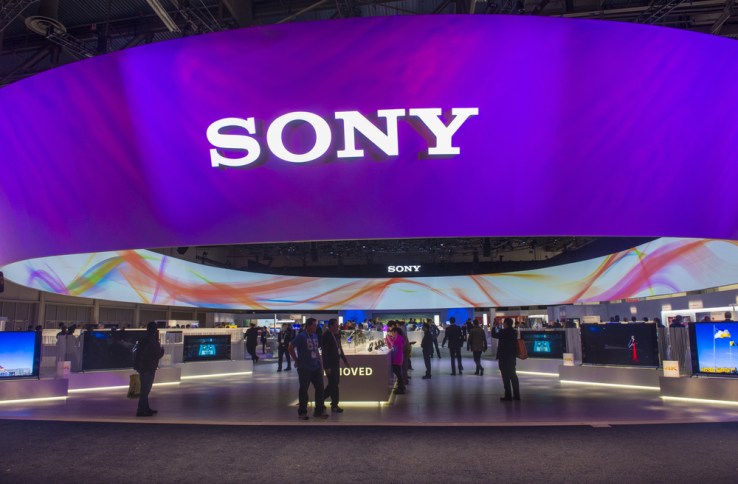
    Sony posts $205M profit as downsized mobile business stops bleeding cash

    Posted By: Uni logo - 07:30:00

    Sony posted a slim ¥21.2 billion ($205 million) profit for its Q1 2016. That’s down on the ¥82.4 billion profit it carded this time last year, but in general the quarter was a mixed bag of positives and negatives following the impact of cost-cutting initiatives.
    We already knew the firm would take somewhat of a hit this quarter after it warned of the impact that the Kumamoto earthquake had on its manufacturing operations nearby. Revenue for the three-month period did reflect that, coming in at ¥1.613 trillion ($15.662 billion), down 11 percent annually.
    Other factors besides the quake, Sony said, included the strong yen — a factor Nintendo cited in its earnings yesterday — “the deterioration in investment performance” of its Sony Life business, and the downsizing of its smartphone business, which brought in 33 percent less revenue than one year previous.
    There’s a positive side to Sony Mobile’s performance however — it is now at breakeven. Slowing growth and increased competition in the smartphone market had weighed on Sony’s previous financials, with the smartphone business alone responsible for a $544 million loss in the last financial year. So it is quite notable that its mobile communications division posted a very slender ¥400 million ($4 million) operating profit for the quarter.
    That, Sony said, was down to tactical withdraws from tougher markets, and shift away from mid-range phones where competition is fiercest, towards higher-end devices with better margins. Restructuring also boosted its home entertainment and sound unit, operating income for which increased 85 percent annually to ¥20.2 billion ($197 million) despite revenue dropping seven percent over the period.
    Amid those changes Sony’s PlayStation business, which surpassed 40 million consoles sold to date in March, stood.
    Sony’s games and network unit — which includes PlayStation — was the stellar performer, accounting for the most revenue across the firm and over 75 percent of total Sony profits. It posted an operating profit of ¥44 billion ($427 million), up 126 percent year-on-year, on revenue of ¥330.4 billion ($3.2 billion) for the quarter, up 14.5 percent.
    That impressive rise, Sony put down to increased PS4 game and console sales, as well as some cost reductions made internally, including lower marketing spend — which makes sense for a console first launch in 2013. Sony is tapping into the rise of VR with PlayStation VR, its $399 take on things which is due to arrive in mid-October. Given that alternatives like Oculus require a suitable PC rig to work, PlayStation VR could make sense for many who don’t want additional cost or hassle.
    As mentioned at the top, many Sony units were impacted by the recent earthquake. Its imaging component business took a 26 percent revenue dip year-on-year, the semiconductor business was down 23 percent, and its component business saw revenue fall 23 percent.
    Sony Pictures carded a ¥10.6 billion ($103 million) loss which Sony blamed on currencies, despite some strong box office hits like Angry Birds, and revenue in its music business was up nine percent year-on-year.

    Wednesday, 22 June 2016

    Samsung buys Joyent to kick off $1.2 billion investment in U.S.

    Posted By: Uni logo - 14:21:00

    Samsung is pumping up its cloud-based capabilities with the acquisition of San Francisco-based Joyent for an undisclosed amount.
    Information Week reports that Joyent’s private and public cloud computing services will support the South Korean electronics giant’s Internet of Things (IoT), mobile and cloud-based lines of business.
    “Samsung evaluated a wide range of potential companies in the public and private cloud infrastructure space with a focus on leading-edge scalable technology and talent,” said Samsung Electronics CTO of Mobile Communications Injong Rhee in a press statement. “In Joyent, we saw an experienced management team with deep domain expertise and a robust cloud technology validated by some of the largest Fortune 500 customers,”
    “As one of the world’s largest consumers of public cloud data and storage, Samsung will immediately benefit from having direct access to Joyent’s technology, leadership and talent,” the media release added.
    Samsung was already one of the largest clients of Joyent, which developed open-source cloud management software Triton and object storage service Manta.
    “For our existing public cloud and private data center customers, adding scale, financial muscle, and Samsung as both a partner for innovation and as a large anchor tenant customer for Triton and Manta, will pay big dividends,” said Scott Hammond, Joyent CEO. “Our Triton business is doubling every quarter and our Manta solution is the foundation for many of our customers’ most strategic applications.”

    Samsung heads already in cloud?

    Yesterday, the South Korean tech powerhouse unveiled plans to invest $1.2 billion in the U.S. market, specifically around IoT.
    “We think there’s still a lot to do in this area,” said Young Sohn, president and chief strategy officer of Samsung Electronics, of the announcement.
    Samsung dove into the business of IoT services in April with the introduction of Artik Cloud. However, that project relied on Amazon Web Services infrastructure to run. Now with Joyent as part of its company, Samsung gets in-house expertise and technology to manage and provide its own cloud-based infrastructure.
    And as Samsung is a global leader in electronic hardware, it is expected to continue producing connected devices that will increasingly rely on these type of cloud-based services.
    Samsung’s acquisition of Joyent also creates synergies with its 2014 buyout of SmartThings, a seller of IoT devices and services.

    Copyright © 2016 Uni logo™ is a registered trademark.

    Designed by Unilogou. Hosted on Blogger Platform.