September 7 is going to be a busy day. Sony sent out invites for a press event in New York. The company will likely unveil the successor to the PlayStation 4. On the same day, Apple could also hold its usual iPhone launch event for the rumored iPhone 7.
The event is called “PlayStation Meeting,” and the company plans to “share details about the PlayStation business.”
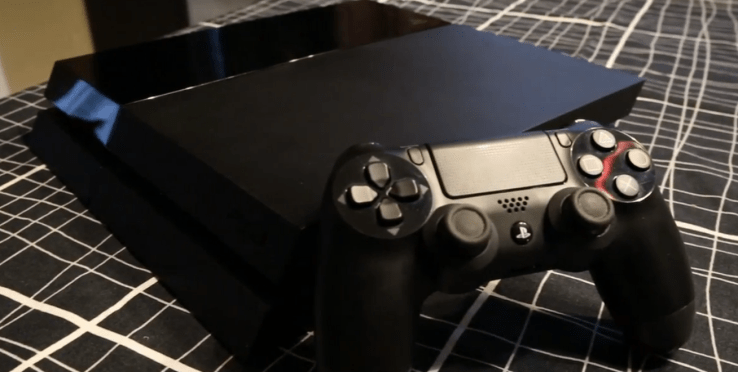
Given that Sony already acknowledged that the PlayStation 4 ‘Neo’ was real and wouldn’t be announced at E3 in June, everything indicates that Sony is ready to announce the PS4 ‘Neo’ just in time for a launch before the holiday season.
Rumors of a more powerful PlayStation 4 codenamed ‘Neo’ started emerging in March on Kotaku. The new console is supposed to be much more powerful than the existing PlayStation 4 in order to support more demanding games, and especially for the PlayStation VR headset.
Virtual reality is quite demanding, and that’s why many people are buying new graphics cards for their computers. The PlaySation 4 was released three years ago and could be a bottleneck for good looking virtual reality games. If you want a smooth experience, you need to run a game at a consistent frame rate above 60 frames per second — otherwise you’ll get nauseous. And because the screen in your VR headset is so close to your face, you want a good resolution as well. The existing PS4 will support the PlayStation VR, but the PS4 ‘Neo’ is the console you want for virtual reality.
In addition to virtual reality, the PS4 ‘Neo’ could be a good companion for your brand new 4K TV. The new console should support 4K movies, TV shows and even games. Sony doesn’t want to fragment its user base, so don’t expect PS4 ‘Neo’ exclusive games — all games should still work on the good old PS4.
Microsoft will unveil a competitor to the PS4 ‘Neo’ next year. The Xbox One ‘Scorpio’ could be even more powerful than the ‘Neo’, but will also launch a year after Sony’s new console. We will have a team on the ground in New York to cover Sony’s PlayStation event.
It's 2019 and the Xbox Three has just been released.
You excitedly pack up your beloved Xbox Two and take it to your favorite local electronics store. Two hours later — after a hard drive transfer and a signed payment plan — you get home and fire up Halo 6 to see just how sharp it looks on the newly beefed up Three.
This scenario is obviously fiction, but getting a new gaming console for your home could look very similar in just a few years from now. That's our takeaway from the recent rumors coming out of Microsoft and Sony.
Consoles are typically relevant for around five years — sometimes longer — before something newer and shinier comes along to replace them. The older machines stick around, but game developers shift their attention to the more powerful hardware.
That's set to change if these rumors are accurate. Microsoft and Sony both are said to be introducing upgraded Xbox One and PlayStation 4 machines that support all the same games as the consoles released in 2013, but with enough added graphics and processing power to make everything run smoother and look better.
In addition, some of these reports indicate that the mid-generation upgrades are part of a larger shift for Microsoft and Sony, toward more regular console releases. Only instead of new machines replacing the old ones — the way things have always been — they'd just boost the performance for existing games.
If that sounds familiar, it's probably because most of us have a similar relationship with our smartphone providers. Each year, new phones and tablets surface to offer marginal performance increases. Some people flock to get the hot, new thing right away, others hold off and upgrade after two or three years.
Buying the latest iPhone or Galaxy outright costs hundreds and hundreds of dollars — in many cases it's north of $600, which is more than even a new console would cost. But wireless carriers chop up that cost into monthly installments, usually paid off over two years, so there isn't as much sticker shock.
After a certain period (typically 12 months), the customer can either continue paying off the cost of the phone in monthly installments or trade it in for a newer model. Of course, that restarts the installment plan, which continues, year after year, ad infinitum. The traded-in phones are repurposed, either as refurbished models or as spare parts.
Now, imagine a world where there are new Microsoft and Sony consoles released every one or two years.
Can you see yourself spending $600 on a machine that plays all the same games that your $600 machine from two years ago does? Sure, they look sharper and load faster, but most people aren't going to spend that kind of money on such a regular basis.
Right now, we're on the precipice of a new paradigm for console releases. But it's still got to make financial sense for the platform holders. If they're looking at fewer sales on a per-generation basis, how can they keep up a flow of income?
That's where, I think, a little bit of the mobile ideology around upgrades and installment plans will come into play. Microsoft and Sony can potentially "lease" out their hardware, in same way that the Verizons and AT&Ts of the world do. You pay a monthly fee over a period of time, until you either pay it off or return it and upgrade to the next one.
There's even a precedent for this in the video game industry.
IMAGE: MARTYN LANDI/PA WIRE
Way back in 2012 — one year before the PS4 and Xbox One launched — Microsoft came up with a console subscription plan. For $99, plus another $15 per month over a two-year (minimum) period, you'd get an Xbox 360, a Kinect and an Xbox Live Gold subscription.
It wasn't a huge success for a number of reasons. First: the Xbox 360's days were numbered by 2012. By then, most were counting the days until the new consoles launched. Not many were willing to commit to two years with a console that might be yesterday's news in one.
What's more, it wasn't a very good deal. Buying that whole package up front at the time would have cost around $390. A full two-year contract, on the other hand, would have totaled out at $460.
Smartphone upgrade plans make sense for consumers because they save you money, in a sense. A one-year upgrade plan commits you to paying the monthly rate for 18 months, or upgrading after 12. The remaining six months are wiped away because you return the phone, which still has value.
That's going to be the key for getting subsidized hardware contracts to make sense. Gamers that upgrade to a new console — one that supports all the same software — have no further need for their older hardware. So why not let them swap old for new, and let the value of the older hardware offset what you spend to upgrade?
Personally, I think Microsoft's subsidized Xbox 360s were meant to be a test case. It was a noteworthy idea that made no reasonable sense at such a late moment in the console cycle... except as a proof-of-concept.
There are lots of questions to be answered in the run-up to E3. The Neo and/or Scorpio might not be announced this year; hell, they might not even be real (though they probably are). I toss out this idea of subsidized upgrades because — based on past events plus what we know, or think we know, right now — it's the only thing that makes sense.
It’s been roughly two and a half years since the Xbox One replaced the Xbox 360, and Microsoft is finally ready to pull the plug on its venerable console. Sales of the older platform are thought to have been steadily declining for months, though Microsoft has declined to break out the exact sales figures. Even so, this is the end of an era. The Xbox 360 (not the first Xbox) was Microsoft’s true breakout console, and the device that put the company on the map as a serious threat to Sony’s dominance during the PS2 and PS3 years.
At the start of the last console generation, Sony’s Ken Kutaragi made dismissive statements betraying just how impregnable the Japanese company thought it was. When asked about the price on the then-upcoming PS3, Kutaragi stated it was Sony’s goal to make “consumers to think to themselves ‘I will work more hours to buy one.’ We want people to feel that they want it, irrespective of anything else.” At E3 in 2006, Kutaragi claimed the Xbox 360 wasn’t even a blip on Sony’s radar, arguing “The next generation doesn’t start until we say it does.”
The PS3 and Xbox 360 ended up in more-or-less the same place last generation in terms of total unit sales, but in the beginning Microsoft’s console ate Sony’s lunch. While the company’s gaming ambitions began with the original Xbox, the Xbox 360 strengthened and deepened its franchise pool with major hits from Halo, Mass Effect, and Gears of War. The console had an infamous hardware failure problem early in its life cycle (the so-called Red Ring of Death, or RROD), but it recovered from that debacle. The Xbox 360’s general focus and presentation were strong enough that the Xbox One’s initial launch plans and feature set were the subject of considerable ire from fans.
One common argument during the initial Xbox One launch was that Microsoft had forgotten the lessons Sony had learned from the PlayStation 3’s early struggles. In 2005, Microsoft had focused on delivering a top-notch, well-balanced gaming platform at an attractive price, while Sony’s decision to use an extremely powerful but difficult to program processor and expensive Blu-ray player had driven the PS3’s price much higher than its Xbox 360 competitor. In 2013, Microsoft was the company with the all-in-one box, mandatory bundled additional capabilities (Kinect), and higher price tag — and sales of the PS4 suffered as a result.
Heck, one of the reasons gamers are curious about Microsoft’s potential upgrade plans is because it gives the company a chance to finally fix the weaker performance that has dogged the Xbox One ever since it launched.
Xbox 360s still on-sale will be fully supported through their warranty periods and Microsoft has no near-term plans to shut down game servers or Xbox Live. For now, the peripherals, devices, and games attached to the Xbox 360 will function normally.
Playing PS4 games on your Windows PC or Mac might be the headline feature of the latest PS4 system software update from Sony, but there's more to version 3.50 codenamed Musashi than the company has let on.
There are some unannounced features including support for hard drives up to 4TB, USB music playback, and managing storage on PlayStation Plus. These are just some of the features eagle-eyed PS4 users on Reddit have uncovered. Here's a list of what else you can expect when you update your PS4:
User Scheduled/Created Events.
Play Together button - easily invite people in your party to the same game.
Friend online notifications can be turned on or off on a person to person basis.
Appear offline.
Remote play on PC/Mac.
Dailymotion Live Support for streaming.
Teens (13 to 17 years old) can now create their own accounts with limited access to play offline games, rather than having to use a sub account.
Easier to search for communities by text, language, time zone.
You can now share other people's activities so your friend's can see it too.
Tweets to messaging - you can see short replies to messages without jumping to a different screen.
You can tag other players when sharing video and screenshots (if you have your Facebook/Twitter permissions enabled, the tags will carry over to the sharing on those sites).
You can check the status of PSN.
Improvements to PlayStation Plus (improvements to managing online storage and ability to see friends who play the same games as you).
You can disable the screenshot on-screen notification (in Settings under Notifications) allowing you to take multiple screenshots in a row without the screenshot taken popup.
The sound indicating the screenshot was taken still functions as normal.
Life From PlayStation Improvements: - There's a search field on the game list now. Previously you had to use the "global" search, that'd return matches for everything (pre-recorded, videos, screenshots) and not just live streams. - You can pin up to three games that will stay on the top of the list. You can set a party member limit now. From 2-8 people.
Download the Gadgets 360 app for Android and iOS to stay up to date with the latest tech news, product reviews, and exclusive deals on the popular mobiles.


 Popular
 Tags
Tags Videos