• unilogou. Powered by Blogger.

    Showing posts with label APPS. Show all posts
    Showing posts with label APPS. Show all posts

    Wednesday, 17 August 2016

    “Mr. Robot” is now a mobile game that’s played through a fake messaging app

    Posted By: Uni logo - 14:35:00

    The hit cybersecurity-focused TV show “Mr. Robot,” a psychological thriller popular among the tech crowd for its relatively accurate portrayal of hacking, is now a mobile game. Released by Telltale Games in association with NBCUniversal, and developed by Night School Studio in collaboration with Universal Cable Productions, the game is played through the fictional E-Corp messaging app, allowing players to communicate in real time with characters in the show.
    The game continues the show’s technically correct naming scheme, too. While episodes of the show are often titled with names referencing video files, like .avi or .flv, for example, the iOS game is called Mr. Robot: 1.51exfiltrati0n.ipa – the .ipa referring to the iOS application archive file format. On Google Play, the file is named Mr. Robot:1.51exfiltrati0n.apk, referencing the Android app file format instead. (Gotta love these little details.)
    The game itself takes place during the first season of the TV show, according to the app’s description. The premise is that you find a smartphone on the ground outside the Fun Society Arcade at Coney Island. As fans of the show know, this is the meeting place for the hacking group, fsociety. As it turns out, the phone you’ve found belongs to Darlene, one of the show’s main characters, and a black hat hacker poised to commit a large-scale cybercrime.
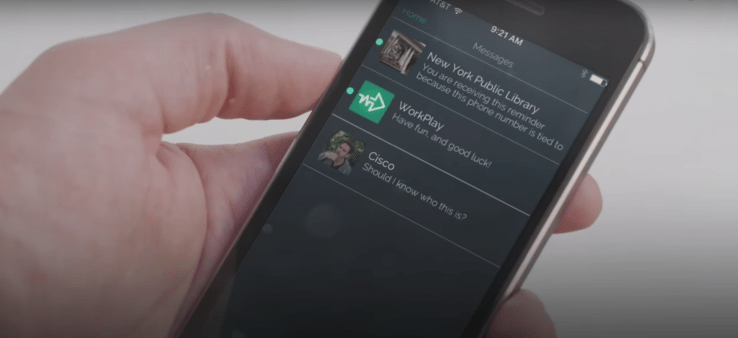
    You’ll “play” the game by texting different employees of E-Corp, the global tech company being targeted by the hacking group, as well as interact with characters in the show, like Elliot, Darlene, and Cisco.

    Wednesday, 10 August 2016

    Netflix launches iOS and Android apps for its internet speed test service

    Posted By: Uni logo - 03:22:00

    Netflix began helping its users test their internet connection for streaming speeds in Maywhen it introduced Fast.com. Now it is bringing that service to mobile with the launch of apps for iOS and Android, as first spotted by 9to5Mac.
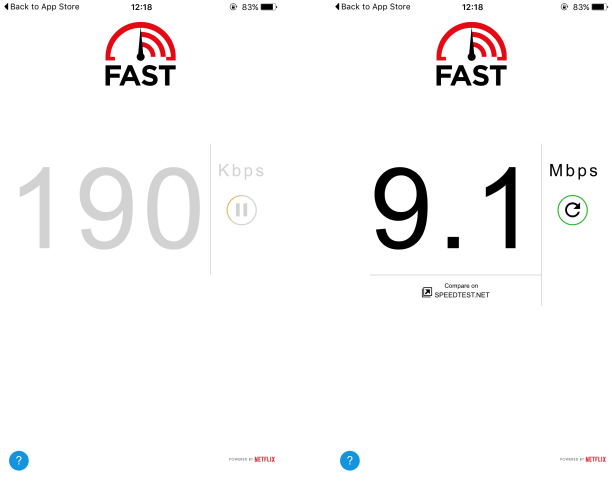
    Just like the Fast.com website for desktops, the “Fast Speed Test” apps give you a reading on the kind of speed you can expect Netflix to run at using your connection. There’s a grey counter clock which changes while recording the speed, and the app offers to show your connection speed on Speedtest. When clicked, that link sends you to a page to download the Speedtest mobile apps.
    Its super basic app with a clean UI and no ads because it is literally only about getting that speed reading.
    As we explained at the launch of Fast.com, the service tests downloads direct from Netflix’s servers and not upload and downlink speeds like others such as Speedtest.com, to give a direct reading on your Netflix experience.
    The other side to the coin is that the readings are good for Netflix and the quality of its service.
    The company is a fastidious collector of data. Right from building algorithms to surface the right suggested content for users, to providing the best related recommendations and analyzing internet connection speeds.
    Netflix runs its own ‘ISP Speed Index’ which is chock-full of data about which ISP are best to use its service, average running speeds, etc. With users increasing streaming via mobile devices, that adds new variable — including mobile carrier services — which these new mobile apps can help it measure and, most importantly for paying Netflix customers, learn from to optimize its service.

    Monday, 8 August 2016

    Africa Roundup: Kenya’s Safaricom takes on Uber, Orange expands Pan-African profile

    Posted By: Uni logo - 03:44:00

    Uber drivers in Nairobi went on strike to protestthe company’s July fare cuts. The move comes amidst greater competition in Kenya’s ride-hail market since local telecoms company Safaricom entered with its own Little Cab app.
    Partnering with Kenya’s Craft Silicon, Safaricom launched the new service to aggressively take on Uber—immediately offering cheaper pricing and better driver terms, as covered in this recent TechCrunch feature.
    In addition to lower fares, Little Cab debuted with a range of unique services, starting with free Wi-Fi in its taxis accessed through an interface that offers other Safaricom products. Little Cab also has a “female friendly” option called Lady Bug, where women can request female drivers, and a corporate option for companies to consolidate all their taxi services digitally through one account.
    Expect a tit for tat exchange around price and product offerings between Uber, Little Cab, and Kenya’s other viable ride-booking services. The first move was Uber’s 35 percent price reduction (post Little Cab launch), which prompted some Uber drivers to strike. Uber Kenya will likely find a resolution. AsTechCrunch previously reported, Uber Africa has demonstrated notable flexibility in adapting to local markets.
    What happens in Kenya’s ride-hail market could have ripples across Africa’s fairly nascent online transit services market. One of the continent’s most recognized (and capitalized) telecom firms, Safaricom, has put up a homegrown app against Uber, the world’s highest valued startup. Mobile companies and online transit startups in other African countries will surely watch for pointers on how this plays out.
    Meanwhile, Orange has continued to up its Pan-African profile.
    Throughout 2016, the French mobile giant has increased its product presence, investments, and acquisitions across the continent. At Orange’s July 28 London strategy meeting Middle East and Africa CEO Bruno Mettling reaffirmed the company’s commitment to “playing a major role in the digital transformation of the region.”
    Mettling announced the launch this September of the Orange 51 4G smartphone in partnership with Google. Positioned as an affordable Android device, this is an upgrade to the Orange Rise 31, which launched in 9 Sub-Saharan Africa countries in February 2016. The Rise 51 device will first be available in Senegal and Cote d’Ivoire before rolling out to other markets later this year, confirmed Orange spokesperson Vanessa Clarke. Such product initiatives drive one of the continent’s most significant IT market trends: the conversion of Africa’s large and growing mobile masses (currently about 500 million) to smart devices.
    Orange’s Rise 31 and 51 smartphones also augment the company’s Africa fintech services.Orange Money, a money transfer and payments service with a mobile option, operates in 12 African countries.
    Similar to Safaricom (see M-Kopa), Orange will also use its mobile network to enter the energy sector. It plans to pilot low income solar power kits in rural areas in Ivory Coast, Senegal, and Cameroon in 2016.
    On the Africa investment front, Orange’s most notable 2016 move so far was taking an $85 million stake in Jumia Group in a round (including Goldman, AXA et al.) that catapulted the e-commerce startup to unicorn status. Orange expanded its Africa presence from 16 to 19 countries with 2016 acquisitions of mobile operators in Sierra Leone, Liberia, and Burkina Faso. And investment arm Orange Digital Ventures (with input from its Silicon Valley office) joined the recent $8.5 million Series A equity round in PayJoy, a California based smartphone financing startup with an Africa and emerging markets focus.
    All in all, this is a fairly big commitment by Orange and could represent phase II of Africa’s mobile telecoms markets. Phase I, which minted some of the continent’s first IT billionaires (i.e., Mo Ibrahim, Strive Masiyiwa, Mike Adenuga), was pretty rudimentary to getting those never previously connected using mobile in any way, mainly cheap cellphones and pay by minute SIM cards purchased through curbside vendors.
    Phase II of African mobile will be marked by more global players, better connectivity, broader and more advanced product networks, subscription based packages, more fintech and e-commerce options, and a shift to affordable smart devices.
    Looking at Orange and other local and global movers in Africa’s mobile telecom markets, it’s striking how absent the big American names are. There’s been little news of U.S. mobile operators making any plays on the continent.
    A Google search for Africa and American carriers such as T-Mobile, Verizon, or Sprint leads mostly to notes about their subscriber roaming options. We’ll see how much longer U.S. wireless companies can bypass one of the world’s fastest growing mobile markets.
    More African Stories @TechCrunch
    African Tech Around the Net 
    • Africa Making New Apps for Old Phones to Tap Google Blind Spot—@Bloomberg
    • Africa’s Top 10 Tech Pioneers—@The Guardian
    • Entries Open for Appsafrica Innovation Awards—@Appsfrica
    • Demo Africa Releases 2016 Final 30  Startups List—@AllAfrica
    • Orange Rise 51

    Sunday, 7 August 2016

    Artisto app is like Prisma for video, turning videos into instant art

    Posted By: Uni logo - 00:11:00


    You've probably already seen the magic of Prisma, an app that transforms your photos into artsy images designed to mimic human-created art styles.

    Now an app called Aristo has taken that dynamicto the next logical area, video.
    The app only allows you to take 10 seconds of video, but once that footage is recorded you have access to an array of filters that turn the video into something entirely different. 
    From a simple style like Blue Dream to more elaborate aesthetics like In The Fire (a flame effect) and Neural Art (a surrealist look), the app has already won over an enthusiastic and growing user base. 
    Released by the Russian internet company Mail.ru, Artisto has apparently beaten Prisma to the video space just weeks after Prisma promised a video version of its popular still image app. 
    Nevertheless, the product is buggy and the effects aren't as smooth and detailed as Prisma's still imagery, so Prisma may still have a chance to win this round if it releases a video version soon. 
    The Artisto app is free and available on both iOS and Android.

    Thursday, 4 August 2016

    Facebook built but won’t launch a “Facebook Stories” Snapchat clone

    Posted By: Uni logo - 13:38:00

    Facebook built its own version of Snapchat Stories called Quick Updates, but will not release it. Though Instagram Stories launched this week, Facebook isn’t going to follow suit.
    Quick Updates created a special place to share within the Facebook app but outside of the News Feed. Accessible from a button at the top of the feed, Quick Updates would have let people share 24-hour disappearing photos and videos with overlaid text. These posts wouldn’t appear in the feed or in people’s profiles.
    Quick Updates featured its own design style, opposed to Instagram Stories which much more closely copies Snapchat Stories. When asked about cloning Snapchat, Instagram CEO Kevin Systrom even said “They deserve all the credit.”
    fb-quick-updates
    TechCrunch received screenshots of a test of Quick Updates two weeks ago, but the test quickly disappeared after we published about it. Facebook told me at the time that “Quick Updates” was an experiment shown to some people, and that Facebook would not move forward with it.
    But the release of Instagram Stories begged the question of whether Facebook won’t modify the feature or release something similar, perhaps called “Facebook Stories”.
    I asked Facebook, and a spokesperson told me “Quick updates was something we were going to test. It’s an idea we’re not pursuing anymore.” When pressed on the issue, the Facebook spokesperson provided this official statement:
    “We often conduct small tests of new feature concepts, and this particular experience was an old test feature that was shown to some people.  We don’t have any plans to launch it more broadly.”
    So at least hardcore social media users won’t have to post non-stop daily updates to three networks, just two.
    Facebook Stories
    That said, on Facebook’s successful earnings call last week, Mark Zuckerberg vowed that “We see a world that is video first, with video at the heart of all of our apps and service.”
    Yet Facebook hasn’t significantly updated its video uploader in nearly three years, despite me calling for them to modernize since 2013. You still can’t overlay filters, text, drawings, or stickers on videos. You can’t combine multiple clips into a single video, add soundtracks, create transitions, or use features found in other apps like Snapchat, YouTube, Vine, andeven Instagram.
    Facebook did recently acquire MSQRD, an app for applying animated selfie filters similar to Snapchat’s lenses. But there’s been no official integration of MSQRD into Facebook or Instagram Stories, though Instagram says that’s coming.
    Facebook’s video sharing tool is embarrassingly archaic and is sorely due for an upgrade. Instagram Stories just makes that even more clear.

    Google to surface critic reviews and best-of list inclusions for bars and restaurants

    Posted By: Uni logo - 13:32:00

    Google announced an interesting little tweak to its search results today that will highlight reviews from reputable critics and best-of list inclusions for bars and restaurants when you search in the Google app.
    Say you are looking for a fancy place to eat in New York. Google already gives you plenty of information about any given restaurant, including when it’s the busiest and what other eaters thought about it.
    Now, however, instead of having to rely on amateurs, you will also see reviews from Michelin, Zagat, and other reputable publishers (I guess Zagat’s reviews are also crowdsourced, though its reviewers tend to be somewhat self-selected).
    2016-08-04_1126
    In addition, you’ll also see if a certain place is on a best-of list. Google is getting this data from the likes of Serious Eats, Eater and others.
    For now, this new feature is only available in the Google app for Android and iOS. It would be nice to also see this information on the desktop, too, but it’s likely only a matter of time before it’ll be available there.
    While there is plenty of value in using crowdsourced reviews, it’s also hard to beat the likes of Pete Wells and the Michelin Guide when it comes to deciding where to spent your hard-earned money on a that $400 prix fixe dinner.

    Latest Olympics media rules nix GIFs, Vines, and streaming apps

    Posted By: Uni logo - 13:29:00
    rio_sparkle
    The Olympics Committee has always been restrictive in who can use what footage and when, but a couple new rules introduced for the 2016 games take things even further. The official social media guidelines now prohibit streaming apps, Vines, and even the lowly GIF.
    Part of the new restriction appears in the official broadcast rules (PDF), under “Internet and Mobile Platforms.”
    …the use of Olympic Material transformed into graphic animated formats such as animated GIFs (i.e. GIFV), GFY, WebM, or short video formats such as Vines and others, is expressly prohibited.
    “Olympic Material” is defined as pretty much any images of the games, whatever the source.
    Then, in the FAQ for the social and digital media guidelines (PDF):
    Broadcasting images via live-streaming applications (e.g. Periscope, Meerkat) is prohibited inside Olympic venues.
    The versions of these documents updated for the 2014 games in Sochi don’t have any comparable language, or at least nothing this specific. A possible exception is the“Photographer’s Undertaking,” which states:
    The dissemination of moving images or sound  captured  in  an  Olympic venue, through any media, including display on the Internet, Mobile Platform and other interactive media or electronic medium, is strictly prohibited.
    But that document isn’t dated, so it’s hard to say when the IOC might have made that language more inclusive.
    In general the rule boils down to: Video taken in the Village or at a venue is to be taken by accredited media and used within the broadcast rules, or else kept for personal purposes only. That outlawed streaming in effect, but the new rules make it more clear. GIFs weren’t mentioned, let alone GIFVs, GFYs, or any other new custom looping image format.
    Of course, any attempt to crack down on the inevitable meme-making that accompanies such a major media event is doomed to hilarious failure.
    Hell, even the pros are likely to get tut-tutted by the IOC for not following every rule to the letter. Just try making sure your broadcast, front page, segment, vlog, or whatever meets all the restrictions set out here.

    Apple Music on Android drops its "beta" status

    Posted By: Uni logo - 12:38:00


    Apple Music
     for Android has graduated out of "beta" status after its introduction in November 2015.
    Version 1.0.0 of the app is now available to download from the Google Play Store for Android devices running 4.3 and higher.
    There aren't many new noteworthy updates to Android's Android Music app. The change log in the big 1.0 version includes: "This update includes equalizer settings and a variety of performance, playback, and stability improvements."
    Apple Music for Android didn't launch to great fanfare, especially for non-Apple fans. The app was hit with 1-star reviews just because. But it looks like most Android fans using Apple Music and writing reviews are enjoying it. The app currently has a 3.3-star (out of 5) rating.
    One reason to like the Apple Music Android app is that it actually uses a more Android-like design language. Compare that to how Google designs its apps for iOS, which uses its Material Design guidelines and doesn't work like an iOS app, with icons and fonts that just clash.
    Apple's decision to go with a native app shows the company was serious about getting all the details right and respectfully courting Android users.
    Launched a little over a year ago, Apple music has grown to number 15 million subscribers. In comparison, Spotify has over 100 million subscribers.
    Let the streaming music wars continue.

    inploi is another jobs app that wants to kill off the service industry CV

    Posted By: Uni logo - 05:16:00

    Walking around the neighborhood handing out CVs in the hopes of scoring shifts in a local cafe or restaurant has never been an efficient job search process. But workers in the service industry still do it. London based startup inploi is hoping to change that — it’s gunning to replace the paper CV with a mobile profile and location-based jobs platform.
    The founders say they came up with the idea after trying to find hospitality work themselves during their university holidays — a process they found to be time-consuming and frustrating. “We realised that employers were also spending too much time and money, hiring the people they need.”
    inploi, which launched in beta late last month, is actually one of several European startups chasing high turnover service industry jobs with a new recruitment modus operandi via a smartphone chat app — with the likes of Accel-backed JobTodayBarcelona-based CornerJob and Atomico-backed jobandtalent all spying similar opportunities here: looking to leverage the speed, familiarity and convenience of mobile messaging to kill off the paper CV.
    But inploi, which is backed by £200,000 in pre-seed financing at this point (raised in January from a group of friends, family, angels, a Chicago-based family office, and a Johannesburg based investment fund), reckons it’s positioning is a little different vs the better resourced regional competition. It argues rivals are taking existing structures — such as the job board model or the staffing agency model — and optimizing them for mobile. Whereas it claims it’s aiming for a more radical rethinking of how recruitment is done in this sector.
    “‘Agency’ model startups still act as intermediaries, charging significant markups on the labour that they broker. Optimised jobs boards (like JobToday for instance) still uses the volume of candidates that they can send an employer as a selling point — we think that this misses the point. inploi is working to drive the candidate-to-hire ratio down by reimagining the process entirely, saving everybody time, and money,” co-founder Matthew de la Hey tells TechCrunch.
    “On one level we are building a recruitment driven ‘LinkedIn’ for the service economy, rather than a mobile optimised jobs board. On a more macro level we want to change the way that staffing works at this end of the economy entirely, providing workers with credible ‘working passports’ with which they can get more and better work.”
    Job seekers using the inploi app create a profile with their experience and skills (users can also create a short intro video for their profile if they wish), as well as specifying their hourly rate and location, in order to be matched with relevant job opportunities — applying in-app if they wish to do so.
    de la Hey concedes the matching element is “fairly binary” at this nascent stage, but the intention is to hone it over time based on data generated by usage of the platform — such as response rates and reviews.
    The platform covers both gig economy one-offs and full-time positions. So as well as matching job seekers with permanent roles, the aim is also to be a marketplace for one-off staffing needs, such as for festivals or corporate events, starting at one shift to up to five days’ work. In that instance inploi handles the entire transaction in the app, with payment powered by Stripe.
    A key facet of the inpoli platform is ratings, with de la Hey noting that both staff and employers are expected to be rated. (For gig work, ratings are provided at the point of payment after the work has been completed; for full-time roles employers are prompted to rate hired workers “after a period of time” and vice versa.)


    “The review system is mutual,” he notes, talking up inploi’s wider “mission” to try to equalize the relationship between employers and workers which he argues is “too often skewed towards the former”. “The reviews employers receive from workers are private. Workers are rated across five areas — punctuality, presentation, co-operation, communication, and quality of work, in addition to short written feedback. These are public.
    “However in order to avoid possible ‘downward spiral’ situations we will only make an employees reviews public once the employer reviewing them has received five or more 4/5 Star reviews from workers, rendering them a ‘trusted employer’.”
    “Employers who consistently receive bad reviews from workers will be removed from the inploi community,” he adds.
    inploi also offers a dashboard view for its enterprise users, providing them with what it dubs “key HR data” on things like staff hire costs, applicant volumes, labour turnover rates and market wage positions. “To our knowledge this is unique. In time as the data we have becomes more comprehensive our matching algorithm will become smarter and develop into a key piece of our technology,” adds de la Hey.
    inploi launched its mobile recruitment platform on iOS a couple of weeks ago (an Android app is slated as coming soon), focusing initially on London and the UK, and on the hospitality industry specifically. Although de la Hey says he also sees future potential to expand into other sectors with similar characteristics down the line, such as retail, domestic work, security staff, construction and railway workers.
    At this point, inploi has 65 employers signed up to offer jobs through the app, ranging from single site establishments to multi-site chains — including Bill’s, the Corbin & King Group, YouMeSushi, Daylesford and Deliveroo.
    While the potential reach of signed up employers is around 700 sites across the U.K. less than 50 jobs are listed at present, and inploi has less than 500 job seekers. So it’s certainly very early days for the startup, albeit no one dominant mobile app network has emerged yet for this segment so there’s plenty to play for.
    And while inploi is U.K.-specific right now, with an “immediate focus on EMEA, the team’s wider goal is to build a global marketplace — with de la Hey noting possible future expansion opportunities in the Middle East, Eastern Europe and Sub-Saharan Africa.
    In terms of business model, while the platform is free for job seekers to use, inpoli charges employers seeking to fill permanent positions on a freemium tiered basis — so it’s free for small employers with limited hiring needs but larger employers with more activity are charged if they wish to interact with candidates applying for jobs they have posted, including using the in-app chat feature. In order to do this employers have to connect with applicants and it charges for the number of connections on a volume driven sliding scale, says de la Hey.
    For gig work, via its QuickShift marketplace, inploi adds a service fee onto the total amount paid by the employer at the point of paying the finished job.
    Strava adds a real-time safety feature to its fitness tracking app

    Posted By: Uni logo - 03:34:00

    The official promo for Strava’s new beacon feature shows a runner attempting to outpace a giant boulder – something I suspect isn’t too common an occurrence if you’re Indiana Jones or Wile E Coyote. Still, even if you’re not a fictional adventurer or anthropomorphic desert scavenger, accidents can happen when you’re out for a long run, bike ride or other workout.
    Beacon brings safety functionality to the popular fitness social network, offering users real-time location data with a select group of contacts, so friends and family can locate them, should any unforeseen circumstances occur during a workout.

    The feature rolls out today for Strava Premium ($6 a month) users on iOS and Android, letting users add up to three names. Contacts get a text message when the workout begins, featuring a URL that offers live map info, even for those without an account.

    Wednesday, 3 August 2016

    Jack Dorsey gets a much-needed strong second quarter performance from Square

    Posted By: Uni logo - 14:20:00

    Jack Dorsey really needs a hit. After Twitter’s weak second-quarter showing, and both stocks not performing well in the past year, Dorsey — as the lead of both companies — needs to show investors his strategies are working (and that he can run both companies).
    Well, he certainly got one today. Square reported its second-quarter earnings, where it brought in $439 million in revenue, whereas analysts were expecting revenue of $406 million. Square posted a loss of 8 cents per share, compared to analyst expectations of a loss of 11 cents per share. With a clear outperformance on two of the key metrics that the company is graded on, it looks like Dorsey may have bought himself some room to maneuver in Wall Street for Square.
    Across the board, the metrics look good. Revenue was up 41% year-over-year, gross payment volume was up 42% year-over-year, and the company extended $189 million through Square Capital — up 123% from the same quarter a year ago.
    Its Square Capital business is increasingly important for the company as it tries to lock businesses into its payments infrastructure. By helping businesses get off the ground with an easy-to-use interface and ramp-up process, it can ensure that those businesses hang around as they continue to scale up. It also represents another additional tranche of revenue it can rely on to grow beyond its traditional point of sale system — at least, until it can figure out other revenue streams and maybe see some strong growth from Square Cash.
    Still, businesses like Square Capital might be tricky moving forward. We’ve seen for some time that institutional sources of capital are more skittish these days. That source of capital has provided companies like Lending Club with lots of resources to operate their loaning operations — and grow them quickly. But there could be some early signs of change that may signal a more difficult time to gather capital for online lending businesses. That might not necessarily apply to Square, but it does represent a potential hurdle.
    Still, there was no specific mention or breakout of Square Cash in the earnings report. With Venmo becoming a huge business and competition coming from basically every direction — including Facebook — Square needs to figure out its own spin on peer-to-peer transactions
    Square has had a rocky year, with its shares down around 20%. But in extended trading after reporting its second-quarter earnings, shares of Square were up as much as 10%. It was important to show that Square could continue to grow and prove it could come up with a sustainable model working on three fronts: point of sale, Square Capital, and the potential of its peer-to-peer payments system Square Cash.
    And there’s still an elephant in the room: Dorsey. Currently running two companies — Twitter and Square — it’s not clear how long Wall Street’s patience will last with both stocks currently floundering. Shares of Twitter are down around 38% over the past year. Most recently, Twitter’s poor performance sent the stock diving 10% when it reported its second-quarter earnings report.
    Screen Shot 2016-08-03 at 12.52.37 PM

    Inside Facebook’s new “Area 404” hardware lab

    Posted By: Uni logo - 13:54:00

    This is where Facebook will prototype its solar drones, Internet-beaming lasers, VR headsets, and next-gen servers.
    The problem with moving faster than most companies is that Facebook was plagued by delays whenever it had to outsource prototyping and testing of its gadgets and gizmos. With so much hardware on its 10-year roadmap, and quarter after quarter of profits stacking up, it made sense to build a dedicated laboratory within its Menlo Park headquarters.
    roadmap_final
    So yesterday, Facebook gave a group of journalists the first look inside Area 404.
    Packed with giant, expensive, dangerous machines like a computer-controlled 9-axis drill, Area 404 houses one of the few rooms at Facebook Mark Zuckerberg isn’t allowed in. It’s too unsafe despite all the precautions, certifications, and training Facebook offers its hardware engineers.
    IMG_8043
    Luckily Facebook rigorously adheres to a 5S safety system — sort, set in order, shine, standardize and sustain. Every single tool is laid in a labeled square of tape.  Spencer Burns, one of the lab’s CNC Model Maker, explains that Facebook can’t move fast if it can’t find its tools.
    13911044_264029583981700_1832665714_n
    Jay Parikh, Facebook’s Head of Engineering and Infrastructure, tells me the 22,000 square foot space is named Area 404 after the “Not Found” error code. Facebook engineers kept needing to prototype new hardware devices, but the resources necessary were unfortunately “not found” at Facebook.
    After enough requests, Facebook burrowed out a bunch of offices in Building 17 of its headquarters, drilled giant support columns down to the bedrock to support the heavy machinery, and turned the space into a gleaming white, futuristic hack center.
    It’s a massive upgrade from where Facebook’s tinkering in the physical world started. “Our first hardware lab was a big as a desk in the old mail room” laughs Parikh. His favorite piece of the new lab? An electron microscope with 10,000X magnification for inspecting teeny, tiny failures in hardware. Construction began 9 months ago under the supervision of Facebook’s Mechanical And Power Manager Mikal Greaves, and now the first teams are moving in.
    Parikh explains that there are two main objectives for Area 404:
    1. To create a collaboration space big enough to get hardware engineers from across the company together in person to work on shared problems
    2. To build a state-of-the-art hardware laboratory with the equipment necessary to prototype and fail test the early designs of Facebook’s forthcoming gadgets
    Both will cut down the time it takes Facebook to get from device conception to working prototype it can then mass produce. The Internet.org Connectivity team that tests apps under weak connections, the Oculus VR squad, Facebook’s mysterious new Building 8 pioneer tech division, and its Infrastructure teams that build servers and data center can now bounce ideas off each other in a shared home. The lab has 50 work benches to accommodate them all.
    Inside the lab we saw everything from 3D design software modeling stations to computer-controlled lathes and mills for forging metal into prototypes to an MRI machine for looking inside a device for errors. Half of the lab is dedicated to electrical engineering experimentation, while half is for prototyping workshops for shaping, cutting, and bending metal as well as manipulating wood, stone, or glass if necessary.
    What will be built here? Data infrastructure like Facebook’s open rack network switchWedge, its Open Vault storage solution, and the sensors for its Telecom Infra Project’sOpenCellular platform. Connectivity Lab inventions like the Terragraph wifi nodes andProject ARIES antenna, as well as parts for the Aquila solar-powered drone that just had its first successful test flight. Plus Oculus will prototype future version of the Rift headset and the Surround 360 camera.
    Area 404 doesn’t do everything. There’s no welding tools here, and it won’t be processing its own circuit boards. When devices are ready for scaled production, the prototypes built at Area 404 will be sent elsewhere to be copied. At that point, there shouldn’t be any extra back-and-forth iterations necessary. All the kinks will have been worked out at HQ.
    Hardware isn’t a new endeavor for Facebook. It has an Oculus hub in Seattle and an airplane hangar in the UK for its Aquila drone. But with Area 404, it can bring its creations in the physical world up to the same pace of creation and iteration that’s driven Facebook’s success in the software world.

    Tuesday, 2 August 2016

    Niantic explains why it killed third-party Pokémon Go tracking services

    Posted By: Uni logo - 14:15:00

    Pokémon Go creator Niantic has released a statement on its Facebook page explaining some of the recent changes. You may have noticed on Twitter, Facebook and Reddit that some of these changes have been quite controversial. Hence today’s statement.
    First, the ‘3-step’ indicator in the nearby Pokémon screen is gone for good. Yes, it was broken. But Niantic doesn’t have any good alternative for now. The company promises that it’s going find a way to improve this feature and bring it back in some other form.
    And it brings us to the second point. Third-party tracking services, such as Pokévision, PokéHound and PokéNotify received cease-and-desist letters. While I haven’t been using these services, my friend Arthur thinks they are pure evil and should die in a fire. But they existed for a reason — if the ‘3-step’ indicator was broken, players needed some kind of hints about where to find Pokémon. Otherwise it’s just pure luck.
    Sure, Pokévision and others probably went too far. But as a colleague who shall remain nameless wrote, “it was the only thing keeping their game playable while tracking is broken. It’s like suing the locksmith for helping you get into your house when you’ve got a pot on the stove about to burn your house down.”
    Anyway, Niantic has the final say regarding this issue. The company says these services were making the servers unreliable. Pokémon Go doesn’t have an API, so it seems like Pokévision and others created countless of accounts on many servers around the world using Android emulators. With these emulators, they could fake movements around cities and reverse-engineer the game to create a sort of lightweight API and gather Pokémon data.
    Quite a cool trick. But it’s clear that these services were using a ton of server resources. Pokémon Go doesn’t need additional server load as Niantic is still trying hard to make the game scale. And it could also be a nice excuse to kill them anyway.
    Here’s the full statement:
    Trainers,
    As many of you know, we recently made some changes to Pokémon GO.
    – We have removed the ‘3-step’ display in order to improve upon the underlying design. The original feature, although enjoyed by many, was also confusing and did not meet our underlying product goals. We will keep you posted as we strive to improve this feature.
    – We have limited access by third-party services which were interfering with our ability to maintain quality of service for our users and to bring Pokémon GO to users around the world. The large number of users has made the roll-out of Pokémon GO around the world an… interesting… challenge. And we aren’t done yet! Yes, Brazil, we want to bring the game to you (and many other countries where it is not yet available).
    We have read your posts and emails and we hear the frustration from folks in places where we haven’t launched yet, and from those of you who miss these features. We want you to know that we have been working crazy hours to keep the game running as we continue to launch globally. If you haven’t heard us Tweeting much it’s because we’ve been heads down working on the game. But we’ll do our best going forward to keep you posted on what’s going on.

    Apptimize pulls in $12.4 million to help companies deploy apps faster

    Posted By: Uni logo - 14:12:00

    Apptimize, a company that helps businesses optimize, test and rapidly iterate their mobile apps, has just raised $12.4 million in a new round of Series B funding. Investor interest was strong due to the client list Apptimize has lined up, which includes notable names like Hotel Tonight, Trulia, Vevo, Hotels.com and The Wall Street Journal. In total, there are around 100 big-name businesses using its platform, among its hundreds of customers.
    The oversubscribed round was led by U.S. Venture Partners, and included participation from Glynn Capital Management, Goldcrest Investments, Western Technology Investments, Ken Ross and Twin Gables. Dafina Toncheva from USVP will join the board as a part of this investment. The round brings Apptimize’s total raise to date to $18.5 million.
    “We were impressed by the long list of sophisticated mobile first businesses that see Apptimize as the path to stronger user engagement and increased monetization of their native apps,” says USVP’s Toncheva, in a statement.
    Screen Shot 2016-08-01 at 10.45.32 AM
    The original idea with Apptimize, a Y Combinator 2013 grad, was to give businesses that rely heavily on their mobile presence a similar set of tools to develop, test and respond to customer data more quickly.
    “I saw that the top apps in the world, like Facebook and Instagram, were operating in a really different way from everyone else. They don’t take weeks to deploy. They do it multiple times per day…They have all this architecture they’ve invested in that lets them iterate and try out new versions instantly,” explains Apptimize co-founder and CEO Nancy Hua.
    She and her co-founder decided to make something for their own apps they had in development, but that then became their company.
    The Apptimize platform today helps businesses improve their native iOS and Android applications with support for things like A/B Testing (trying out different features and functions on different user segments), instant updates, plus advanced feature tracking and measurement tools. The end result is being able to roll out changes in hours instead of weeks.
    Plus, it allows for things like staged rollouts. That’s also something that big companies like Facebook use in order to reduce the strain on servers while also testing on smaller audience groups, gaining feedback, then iterating before rolling out to the entire user base.
    “Our customers have high-performance apps…mobile is a really important part of their business,” adds Hua. “But the problem with apps today is that most apps don’t really perform. You can spend a lot of money to try to get users…but then they just drop off if you aren’t investing in making the product experience really good. Our focus is on the in-app experience.”
    The company has apps on its platform live in more than 100 countries, and monetizes through a freemium offering that charges based on the business’s monthly active user count and feature set. Hua declined to offer revenue details, but claimed that Apptimize has grown faster than its competitors, which tend to focus on marketers and marketing automation instead of product.
    She also says that Apptimize’s enterprise customers see double-digit results in terms of revenue lift within the first couple of months on the platform, and they begin to roll out new iterations of their apps multiple times per week.
    The round will be used to fund further product development and hiring, including sales and marketing leading up to the company’s Mobilize 2016 conference.

    Copyright © 2016 Uni logo™ is a registered trademark.

    Designed by Unilogou. Hosted on Blogger Platform.