• unilogou. Powered by Blogger.

    Showing posts with label Uber. Show all posts
    Showing posts with label Uber. Show all posts

    Tuesday, 23 August 2016

    Get ready for a thermonuclear autonomous ride-hailing war

    Posted By: Uni logo - 23:51:00


    On Thursday, Ford CEO Mark Fields announced the company’s first autonomous car will arrive in 2021. That big news—even if the launch date is timid from the company that invented the first affordable car—but the even bigger story is a ride-hailing app will be the easiest (and cheapest) way to ride in the unnamed autonomous car.
    Ford did not name the ride-hailing app it plans to launch in major cities, but it is clear the company is positioning for its own stake in the ride-hailing industry. Its not hard to see why,estimates from economists and transport experts say car autonomy will reduce car sales and car ownership, which takes a slice out of the automotive industry’s pie.
    Uber, Lyft, and Didi are the three major firms that stand to gain from the reduction in car ownership, but they won’t be alone in the battle to win the ride-hailing market.
    Automotive firms are gearing up for the battle of their lives. General Motors spent $600 million on a 40 person automation startup; Volkswagen, GM, Daimler, BMW, and Ford are all working on ride-hailing apps; Toyota, GM, Ford, Audi, BMW, and others have opened Silicon Valley offices and spent more on R&D than ever before.
    Not to mention Apple and Google, the two most valuable companies in the world, are both working on self-driving and ride-hailing services.

    A new world ride-hailing war?

    Automotive firms are putting on their cooperative face, but come 2020 there will be thermonuclear war for ride-hailing market share. Every automotive firm will have its own ride-hailing app and software will be inserted into the car to make sure Uber, Lyft, or Didi can’t hijack it.
    For Uber and Didi, that might force them to acquire an automotive manufacturer. For others that have less than $5 billion tucked away, it likely means lights out. Lyft could become an independent subsidiary of GM (or another larger company), a similar situation could play outin Europe with Gett and Volkswagen.
    Partnerships may work for a time, but automotive firms have the power. Apart from Uber and Didi—who are building their own autonomous systems—automotive manufacturers will provide the hardware and software, putting them in a clearly advantageous position.
    Volvo and Fiat are providing 100 cars to Uber and Google, respectively. It should be noted these two firms will have limited reach in the self-driving world, compared to major automotive manufacturers. In the future, we may see Uber, Google, or Didi dictate the design and production of the car, to meet standards, while the two firms have independent leadership.

    Room for more?

    The ride-hailing industry should look like the auto industry today, once the dust clears. Ford, GM, VW, and the other major suppliers will have the largest volume of cars on the road, while others attempt to win customers over with unique design, better software and services, or lower rates.
    This only works if automotive manufacturers block ride-hailing services from adding software to their cars. If not, Uber takes control. Most affiliate ride-hailing with Uber, it will be nearly impossible for one of the upstarts (apart of Didi) to match the purchasing power and scalability of Uber.
    Apple may make inroads, as it is able to provide the full package, but it may take the iPhone maker a few years to reach the scale of GM and Ford, who in this scenario are providing cars directly to Uber.
    For the health of the auto industry, the former option; having manufacturers provide the ride-hailing services for their own cars, looks best. Some manufacturers will be unable to compete with Uber’s pricing and speed, but at least in this future customers have the choice of several operators, rather than the entire industry belonging to Uber.

    The future of car ownership

    It is unlikely that Ford, GM, and others will ban ownership out of the gate. Instead, it is likely that changes in cost, city planning, and laws will make ownership more exclusive and less enjoyable.
    Prices will be too high for most families, while ride-hailing becomes much more affordable.City planners will remove parking garages and ban parking on the side of the road for extended periods of time. Driver’s licenses will become near impossible to obtain, unless you have clear sight, a clean record, and perfect understanding of all road signs.
    Some may continue to purchase cars and be distrustful of autonomy, but most will conform once the economical advantages become obvious. Even fans of cars that add customizations will start to see their pastime fade, as the steering wheel, brakes, and other manual controls are removed in favor of tablets and desks.
    Automotive manufacturers and tech firms may attempt to make the transition from ownership to hailing more attractive through customization. When you enter the autonomous car, your Spotify playlist is synced to the car stereo or your YouTube video moves to the large tablet. In the morning, the car plays soothing tunes and dims the lights. If you’re a big NFL fan, perhaps Google will let you watch the livestream for free if you take a ride.
    We may see different business models rise, including a rent model where you can keep a car in close permitter for 24 hours. That may be useful for weekend trips to the countryside, where the ride-hailing services are unavailable. As the systems become more fine-tuned, it may deploy a car to your doorstep in the morning before you even order it.
    All of this is highly speculative, but one thing is for certain, a new warzone is opening in the transport industry and everyone is fortifying their positions.

    Uber swallows self-driving truck startup Otto for $680 million

    Posted By: Uni logo - 23:47:00


    Ride-hailing giant Uber announced on Thursday that is has acquired Otto for approximately $680 million.
    All of Otto’s team, which includes ex-leader of Google’s self-driving project, Anthony Levandowski, will move to Uber. They will work on the company’s self-driving project and report directly to CEO Travis Kalanick.
    Otto’s research facilities in Palo Alto and San Francisco will continue to operate, and will share data with Uber’s Pittsburgh research center.
    The acquisition price, at the time of writing, is calculated at $680 million by Bloomberg. That’s the value of slightly less than one percent equity in Uber, which Otto investors will receive. Uber will also provide 20 percent of the profits from its future trucking business, giving investors a long term reward for the acquisition.
    Otto was not planning to build its own trucks, instead utilizing the current big rigs and installing a self-driving system inside. The startup has built its own sensors, including a LiDAR sensor, which is a useful radar tool for self-driving systems.
    “Together with Uber, we will create the future of commercial transportation: first, self-driving trucks that provide drivers unprecedented levels of safety; and second, a platform that matches truck drivers with the right load wherever they are,” said Otto in a blog postconfirming the acquisition.

    Uber wants control of entire transport industry

    Uber has been investing heavily into new transportation sectors in the past year, including food and commercial delivery. Long haul trucking might seem like a huge step for the private firm—valued at more than $60 billion—but it is just another move to make Uber the de-facto brand for all types of transport.
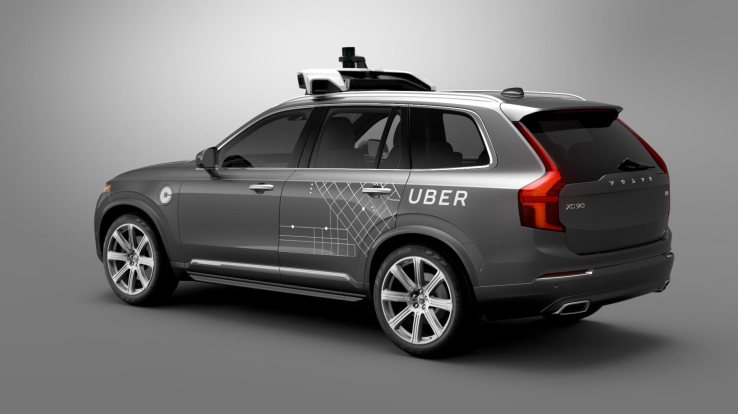
    The acquisition announcement came a few hours after Uber and Volvo announced a $300 million investment into self-driving. Volvo will provide 100 SUVs to the Pittsburgh research center, which will be deployed on the roads by the end of the month.

    Would it make sense for Tesla to buy Lyft?

    Posted By: Uni logo - 23:42:00


    This morning, after hearing about Tesla’s “big announcement” coming this afternoon, I speculated on Twitter that maybe the electric vehicle iconoclast was looking to buy ride-share firm Lyft.
    It would definitely be a “new product” for them. But I was wrong, mea culpa.
    Turns out it’s a new battery pack, a longer range, and a new “ludicrous” mode that will allow Teslas to be the fastest production cars on the road. All noble things, and worthy of announcing, if not necessarily worth building up so much beforehand.
    But…what if?
    Lyft has reportedly spurned a bid from current partner GM a week ago. GM plans to rolls out their new electric Bolt via Lyft as part of this partnership, and Tesla’s Model 3 competes with the Bolt.
    Since that news, rumors have also emerged that Lyft had also reached out to Apple, Google, Amazon and competitors Uber and Didi to discuss a sale.
    Uber founder Travis Kalanick told his investors that Lyft wasn’t worth more than $2 billon, despite having a reported $1.4 billion cash in the bank.
    Lyft slapped him and said they really didn’t want to go to the M&A prom anyway because they’re washing their hair that night. Recode reported that everyone has a price, and even with a valuation estimated at $5 to 6 billion, Lyft’s was reportedly $9 billion.
    Kalanick also said he didn’t want the anti-trust issues that would ensue, but it’s not entirely clear if the two money-losing unicorns mating publicly like this would warrant federal scrutiny.
    “(A merger) could take the pressure off margins for the combined company,” one fund manager who follows next-generation auto tech told ReadWrite. “But then it really just looks like a cab company with an app. We have those already. There’s no real monopoly, in most markets, in their core business today that would damage average buyers’ power.”
    So if Lyft’s looking for an exit, Tesla may be the sign on that door.

    It’s hardware versus software…again

    The intersection of several trends and technologies may soon provide the place for Tesla and Lyft to collide.
    Electric vehicle growth will likely be spurred by autonomous vehicle development, and carmakers from Volvo to Ford to Musk himself are now counting the time until a fully autonomous car hits the road in months, not years.
    Add to that a sharing economy increasingly treating car ownership as a commodity and not status symbol, and it could become a challenging time to sell $135,000 electric cars no matter how awesome. And they are, without a doubt, awesome.
    And it’s an interesting time for the entire “next-generation” auto industry as a whole, as it becomes clear that humans will not be behind the wheel in the future, or even if there will be a wheel in the future.
    While this may seem mind-blowing to most car owners today, it’s just a new chapter in the Silicon Valley story of “Hardware vs. Software.”
    In this corner, Team Hardware. It’s made up of virtually automaker on the planet, including Tesla, as well as car parts makers, agricultural and construction equipment companies, trucking firms, and ship builders. They’re looking for what happens next, and all roadsigns point towards “metal-as-a-service.”
    Whether it’s an entire vehicle or just some of its components, the decades-old relationship with buyers for these huge brands is being unpacked by the new sharing economy audience and broken down into the basket of services that their products actually provide.


    Think of all of the advertising you’ve watched over the years from carmakers. Now, the attachment to the idea of owning a certain type of car, or a certain brand of equipment, starts to look gauzier by the day.
    In the other corner, Team Software. That includes the ride-hailing giants like Uber and Didi, flush with cash but concerned everyone will figure out “oh, it’s just a cab company, kind of.” Add in Google, Baidu, retailers like Amazon, and shippers like FedEx — who’ve always looked at their fleets as dots on a global last-mile logistics planning map.
    Those deliveries don’t happen without wings, wheels or hands. Or possibly, whatever appendages drones will use.
    An integrated delivery ecosystem, whether it delivers a person or package, is their end game. If that means a new dimension in fleet management, so be it.
    Add to that all of the safety concerns, regulatory needs and data infrastructure issues, and it’ll be a wild time take a ride — or even cross a street  — in the coming years.

    Saturday, 20 August 2016

    The fight is on to win the $560 billion self-driving car market

    Posted By: Uni logo - 02:08:00

    The autonomous car market will grow to an eye-watering $560 billion in the coming years, but many firms will end up road-kill in thae race for market share.
    The Detroit Bureau point out a new study by consulting firm AT Kearney estimates the market for autonomous vehicles will grow to $560 billion over the next 20 years.
    Researchers surveyed 150 executives from tech, automotive and communications industries as part of the study. They found that, while the connected car market will eventually be huge, it will take two decades to overcome significant barriers to growth.
    “While industry players have already developed or tested many of the technological building blocks, tough and tricky legal challenges remain, including new laws on accident liability, on where self-driving cars may operate, and on who may have a license,” AT Kearney said.
    “Also, new traffic guidelines have to be developed for autopilot and for fully autonomous driving. The incentives to establish the right legal framework are high, and executives in our study are confident this framework will develop, probably with California as the pioneer,” the report added.

    Are self-driving regulations the real traffic jam?

    This comes against the backdrop of concerns that America could become a disjointed patchwork of incompatible and competing regulations for self-driving cars.
    At this early stage in the technology’s evolution, many players are jockeying for position in an increasingly crowded field.
    But AT Kearney cautions that as the market matures, many players in the self-driving vehicle race will end up crashing and burning along the side of the road.
    “Manufacturers face hard questions as they jockey for position — from thinking about their value propositions, which core capabilities they need, and which players they should partner with, to developing business models that offer the best go-to-market strategies and the best chances to win,” said the report.
    All of the major car manufacturers are already well committed to developing self-driving car technology.As well, many of the leading tech firms are competing as well.
    Taxi market disruptor Uber is busy testing autonomous cars as part of a strategy to eventually integrate them it its ride-sharing fleet. And search giant Google continues to expand its autonomous vehicle testing program in a bid to remain the U.S. leader in the burgeoning technology.

    Friday, 19 August 2016

    Will Uber and Volvo roll out a fully autonomous car next year?

    Posted By: Uni logo - 23:13:00


    Uber has scooped its second automotive partner, announcing on Thursday that Volvo will build a fully autonomous car for the ride-sharing giant’s Pittsburgh fleet.
    The partnership includes a $300 million investment from both parties into the development of the autonomous car.
    Volvo will use the PSA chassis to build the autonomous car, which is used in the XC90, S90, and V90. From there, Uber will import its self-driving system and ride hailing platform, to make it a fully autonomous taxi.
    The most interesting detail is the timeline, Uber says the Volvo cars will appear in the company’s commercial fleet by late August. Customers that enter into the autonomous vehicle will receive a free ride.
    If you are in Pittsburgh, you won’t be able to request a self-driving car, but a lucky few will get the chance to ride in it. We assume that an Uber representative will be inside, to avoid even more regulatory issues.
    Uber could provide Volvo with a strong market in the future, if we move from car ownership to ride-hailing as the main source of transportation. Volvo doesn’t appear too phased by the deal, stating that its own self-driving division is still active.

    Volvo and Uber follow Ford’s big news

    The news comes on the same day Ford CEO Mark Fields set a 2021 target date for the company’s first fully autonomous vehicle. Fields said the car would not have a steering wheel or any pedals.
    If Uber is able to get a driverless car on the road in any capacity by the end of the year, that 2021 date may be too late. Tesla has also hinted at a fully autonomous system coming to the Model S, X, and 3 far before 2020, which may put regular automotive firms to shame.
    Volvo is the second to partner with Uber, following a Hyundai partnership in South Korea. More automotive firms may follow; Fiat CEO Sergio Marchionne said that he would like to partner with Uber and Amazon on self-driving cars, after partnering with Google.

    Thursday, 18 August 2016

    Uber’s first self-driving cars will start picking up passengers this month

    Posted By: Uni logo - 13:32:00

    It’s been a while since news broke in early 2015 that Uber was working on self-driving cars. Earlier this year, the company openly admitted it was testing cars in Pittsburgh, but we haven’t heard much more over the last 18 months.
    With Google, the self-driving car leader, slowly making progress with its autonomous cars, you’d be forgiven for thinking Uber’s efforts are far behind and barely visible in itsfrenemy‘s rearview mirror.
    Well think again!
    It turns out Uber has been making very rapid progress on its plan to replace its one million-plus drivers with computers. Bad news if you’re an Uber driver…
    In an interview with Bloomberg, CEO Travis Kalanick revealed that the company is preparing to add self-driving cars to its fleet of active drivers in Pittsburgh as soon as this month.
    The company will deploy around 100 modified Volvo XC90s outfitted with self-driving equipment. Each vehicle will be staffed by one engineer, who can take the wheel as/when needed, and a co-pilot to observe and take notes. There will also be a “liquid-cooled” computer sitting in the trunk recording trip and map data.
    That will mean that regular Uber punters in the city have a chance of getting an autonomous vehicle for their ride — their trip will be free if so.
    Precious little was known of Uber’s plans for self-driving cars, but the company told Bloomberg that it will outfit cars with autonomous driving kits rather than develop its own vehicles as Google is doing.
    To do that, Uber has quietly snapped up Otto, a promising startup that launched this year to bring self-driving technology to trucks. Otto’s technology can be fitted to existing trucks, and, according to Bloomberg, the technology will be adapted to create a lidar — laser detection — system to power autonomous Uber vehicles.
    The Otto acquisition is hugely notable, not only for the technology but the personnel involved.
    The company was founded by former Googlers Anthony Levandowski, Lior Ron, Don Burnette, and Claire Delaunay. Levandowski led Google’s self-driving car efforts, Ron was an executive on Google Maps and Motorola, while other staff have spent time with Apple, Tesla and other notable automotive firms.
    The deal is set to close as soon as this month, after which Levandowski will lead Uber’s driverless car efforts. In addition, two new R&D centers will open up to speed the technology’s development.
    “We were really excited about building something that could be launched early,” Levandowski told Bloomberg of why he left Google.
    His additional comments — which include calling Kalanick a “brother from another mother” — hint at frustrations with the slow speed of development from Google’s self-driving project. Uber, it seems, is more willing to move forward with self-driving at a faster pace.
    Time will tell how that plays out, but we’ll get our first glimpse soon enough.
    Uber Self Driving Cars

    Monday, 8 August 2016

    Africa Roundup: Kenya’s Safaricom takes on Uber, Orange expands Pan-African profile

    Posted By: Uni logo - 03:44:00

    Uber drivers in Nairobi went on strike to protestthe company’s July fare cuts. The move comes amidst greater competition in Kenya’s ride-hail market since local telecoms company Safaricom entered with its own Little Cab app.
    Partnering with Kenya’s Craft Silicon, Safaricom launched the new service to aggressively take on Uber—immediately offering cheaper pricing and better driver terms, as covered in this recent TechCrunch feature.
    In addition to lower fares, Little Cab debuted with a range of unique services, starting with free Wi-Fi in its taxis accessed through an interface that offers other Safaricom products. Little Cab also has a “female friendly” option called Lady Bug, where women can request female drivers, and a corporate option for companies to consolidate all their taxi services digitally through one account.
    Expect a tit for tat exchange around price and product offerings between Uber, Little Cab, and Kenya’s other viable ride-booking services. The first move was Uber’s 35 percent price reduction (post Little Cab launch), which prompted some Uber drivers to strike. Uber Kenya will likely find a resolution. AsTechCrunch previously reported, Uber Africa has demonstrated notable flexibility in adapting to local markets.
    What happens in Kenya’s ride-hail market could have ripples across Africa’s fairly nascent online transit services market. One of the continent’s most recognized (and capitalized) telecom firms, Safaricom, has put up a homegrown app against Uber, the world’s highest valued startup. Mobile companies and online transit startups in other African countries will surely watch for pointers on how this plays out.
    Meanwhile, Orange has continued to up its Pan-African profile.
    Throughout 2016, the French mobile giant has increased its product presence, investments, and acquisitions across the continent. At Orange’s July 28 London strategy meeting Middle East and Africa CEO Bruno Mettling reaffirmed the company’s commitment to “playing a major role in the digital transformation of the region.”
    Mettling announced the launch this September of the Orange 51 4G smartphone in partnership with Google. Positioned as an affordable Android device, this is an upgrade to the Orange Rise 31, which launched in 9 Sub-Saharan Africa countries in February 2016. The Rise 51 device will first be available in Senegal and Cote d’Ivoire before rolling out to other markets later this year, confirmed Orange spokesperson Vanessa Clarke. Such product initiatives drive one of the continent’s most significant IT market trends: the conversion of Africa’s large and growing mobile masses (currently about 500 million) to smart devices.
    Orange’s Rise 31 and 51 smartphones also augment the company’s Africa fintech services.Orange Money, a money transfer and payments service with a mobile option, operates in 12 African countries.
    Similar to Safaricom (see M-Kopa), Orange will also use its mobile network to enter the energy sector. It plans to pilot low income solar power kits in rural areas in Ivory Coast, Senegal, and Cameroon in 2016.
    On the Africa investment front, Orange’s most notable 2016 move so far was taking an $85 million stake in Jumia Group in a round (including Goldman, AXA et al.) that catapulted the e-commerce startup to unicorn status. Orange expanded its Africa presence from 16 to 19 countries with 2016 acquisitions of mobile operators in Sierra Leone, Liberia, and Burkina Faso. And investment arm Orange Digital Ventures (with input from its Silicon Valley office) joined the recent $8.5 million Series A equity round in PayJoy, a California based smartphone financing startup with an Africa and emerging markets focus.
    All in all, this is a fairly big commitment by Orange and could represent phase II of Africa’s mobile telecoms markets. Phase I, which minted some of the continent’s first IT billionaires (i.e., Mo Ibrahim, Strive Masiyiwa, Mike Adenuga), was pretty rudimentary to getting those never previously connected using mobile in any way, mainly cheap cellphones and pay by minute SIM cards purchased through curbside vendors.
    Phase II of African mobile will be marked by more global players, better connectivity, broader and more advanced product networks, subscription based packages, more fintech and e-commerce options, and a shift to affordable smart devices.
    Looking at Orange and other local and global movers in Africa’s mobile telecom markets, it’s striking how absent the big American names are. There’s been little news of U.S. mobile operators making any plays on the continent.
    A Google search for Africa and American carriers such as T-Mobile, Verizon, or Sprint leads mostly to notes about their subscriber roaming options. We’ll see how much longer U.S. wireless companies can bypass one of the world’s fastest growing mobile markets.
    More African Stories @TechCrunch
    African Tech Around the Net 
    • Africa Making New Apps for Old Phones to Tap Google Blind Spot—@Bloomberg
    • Africa’s Top 10 Tech Pioneers—@The Guardian
    • Entries Open for Appsafrica Innovation Awards—@Appsfrica
    • Demo Africa Releases 2016 Final 30  Startups List—@AllAfrica
    • Orange Rise 51

    Thursday, 4 August 2016

    Delphi joins crowded autonomous taxi run in Singapore

    Posted By: Uni logo - 12:26:00


    Joining self-driving startup nuTonomy’s Singaporean efforts, automotive supplier Delphi announced on Sunday that is has been awarded a contract by Singapore’s Land Transport Authority (LTA) to create an experimental pilot program for an autonomous taxi service.
    The program provides three routes for people to choose, all located in a Queenstown subzone called one-North. Delphi will outfit six Audi SQ5 cars with the autonomous tech to drive people.
    All cars will have a safety driver that can take over control of the car. Delphi expects by 2019 the safety driver will no longer be necessary, and by 2022 it wants the program to be fully operational.
    It will also pick the people that drive in the autonomous vehicles to start, though the company does want the opportunity to drive everyday commuters in the near future.
    Delphi believes the pilot program will provide the company with lots of data on the autonomous vehicle system, and hopefully improve the view people in Singapore have of self-driving cars.
    Even though Singapore is the first, Delphi has reportedly in discussions with other cities in Europe and North America. It makes note of this in the announcement video (below). San Francisco and London are two possible locations, both have lower regulations than most cities for self-driving vehicles.
    Delphi is not the first company to test autonomous vehicles in Singapore, in fact, it is a few months behind MIT spinoff nuTonomy. The startup arrived in Singapore in early 2016, in one-North where Delphi are starting to test cars, but recently signed an agreement with the LTA to expand its autonomous taxi pilot program.
    Surprisingly, Google, Tesla, and Uber have not made large investments into Singapore. That’s despite the country’s rather relaxed regulations on self-driving and tech-focused government,

    Uber rival Grab is raising at $2.3B valuation, reportedly burning $35M a month

    Posted By: Uni logo - 05:40:00

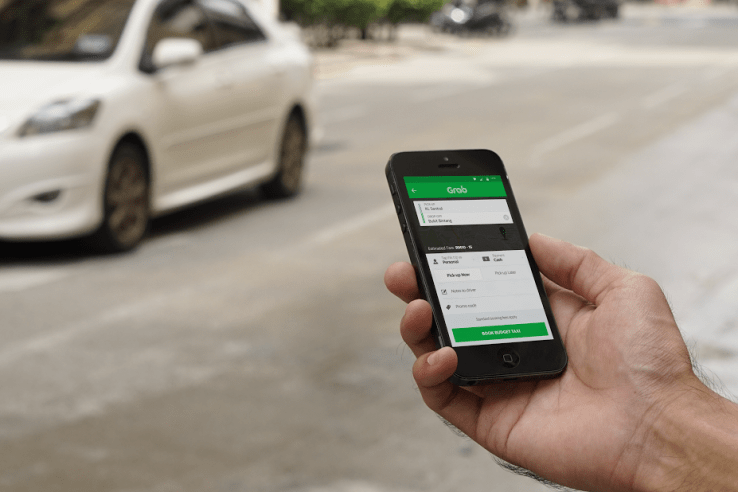
    Grab, the company that rivals Uber in Southeast Asia, is in negotiations to close a new round of funding that could value it as high as $2.3 billion, multiple sources close to talks told TechCrunch. Grab was valued around $1.5 billion-$1.6 billion last August when it raised $350 million.
    The Wall Street Journal and Bloomberg this week reported that existing investors Didi Chuxing and SoftBank may lead a $600 million round of new financing. The sum could reach $1 billion after a second close.
    Grab has been in discussions with potential investors to raise money for a number of months, but the round is not yet closed, sources told TechCrunch. That target valuation of $2.3 billion, however, is subject to some secondary share sales from existing backers, we understand, which, once blended, could lower the figure.
    In the world of ride-hailing apps and fast-funding, Singapore-based Grab — which offers licensed taxis, private cars and motorbike taxis in six countries — hasn’t raised at the frequency of others. Its last financing came one year ago in August 2015 when it closed a $350 million Series E round. That included money from Didi and sovereign wealth fund China Investment Corporation (CIC) among others.
    Unlike Uber, which has seen numerous investors decks and financial presentations leaked over the years, precious little is known about the internals of Grab’s business.
    According to documents from Grab investors dated last year — circulated for potential secondary share sales — which were viewed by TechCrunch, the company was forecasted to burn $111 million in Q3 2015, that’s more than $35 million per month. The same data revealed that Grab had $606 million in cash on its books after it closed its Series E round.
    A Grab spokesperson told TechCrunch that the company has not yet touched its Series E money.
    The projections we viewed estimated that Grab would make $31 million in annual net revenue for 2015 — that’s the total amount of money it keeps from the transactions on its platform. That figure was forecast to grow to $193 million in 2016 and $526 million in 2017.
    Grab has never revealed the number of trips it completes each day across Southeast Asia. The same documents forecast that the company would reach 400,000 daily trips by December with a target of 3.5 million rides per day by the end of 2017.
    Grab declined to comment on the content of the documents.

    An uncertain alliance

    It’s notable that news is now leaking out that both Didi and Softbank are reportedly investing in this round, considering the wider state of play in Asia at the moment with both companies.
    SoftBank has pulled back on its overseas deals since Masayoshi Son decide to remain head of the company longer than planned, a move that saw his once heir apparent Nikesh Arora depart. In addition to cutting back on investments in India-based startups, SoftBank sold off a portion of its stake in Alibaba and its holdings in games firms GungHo and SuperCellA big move to buy ARM was viewed by analysts as a shift in strategy to invest in proven companies.
    For Didi, a further investment in Grab comes as doubts have been cast over its alliance with Grab, Lyft and Ola — the so-called Anti-Uber Alliance — following a deal to buy Uber China announced this week.
    As part of that acquisition, Didi is investing a reported $1 billion into Uber’s global business, while Uber CEO Travis Kalanick and Didi Chairman Cheng Wei will join each other’s boards. That deal appears to conflict with the alliance, since their opposition to Uber is the common factor that underpins their union.
    Lyft — which took a $100 million investment from Didi last year — told the Wall Street Journal this week it will “evaluate” its partnership with Didi “over the next few weeks.”
    Grab took news of the Didi-Uber deal more positively, with CEO Anthony Tan telling staff it is proof that a local rival can beat the U.S. ride-hailing giant.
    “They’ve lost once, and we will make them lose again,” he wrote in a company-wide memo obtained by TechCrunch.
    Tan and Grab’s competition is about to get stiffer, though. We reported last week that Uber is pushing new services aggressively in Southeast Asia, a region that has been a distant priority to its businesses in China and India, and Tan himself told staff that he expects Uber to increase its focus on Grab’s home turf.
    Uber is just one of the problems when it comes to Indonesia, the country Grab recently said is its largest based on rides. Motorbike taxi on-demand startup Go-Jek, which claims a fleet of 200,000 drivers, today closed $550 million in fresh investment at $1.2 billion valuation. Internal documents show the company completed 256,000 rides per day, as of April 2016.
    Grab faces its own challenges, too. Tan has spoken about the difficulty of hiring talent in Southeast Asia, and retaining hires is likewise a test. Numerous former Grab staff told TechCrunch that the company is struggling to motivate and retain its workforce, particularly those in technical positions.
    Specifically, the introduction of a bell curve assessment system — a model in which companies discard their least effective staff — has had a detrimental impact on morale, we were told. While popular in Silicon Valley, that style of management hasn’t been embraced by many startups in Southeast Asia.
    Other sources called Grab’s management ineffective and their policies haphazard, and claimed that the office it opened in Seattle in January is symptomatic of its struggle to attract and retain talent in Southeast Asia.
    Another challenge for the company is that it started out offering rides with licensed which are significantly less lucrative than Uber’s rides for example. For its ‘GrabTaxi’ licensed taxi ride service, Grab charges only a booking fee of $1-2 with the driver keeping the fare in full. Uber takes a variable cut of each ride it facilities, typically as much as 30 percent.
    Grab addressed this gap when it started a private car business — Grab Car — three years ago which uses Uber-style pricing, however it is somewhat cannibalized by the GrabTaxi service. According to data shared by Grab investors, GrabTaxi service accounted for 70 percent of all Grab trips taken in July 2015. The figures will have changed since then although the lower-profit taxi business is likely still dominant.
    Grab said last month that its GrabCar and GrabBike services account for “the vast majority” of trips it processes in Indonesia. The company did not provide a raw figure to support that statement, and it said that it does not break down out its ride per day or revenue figures across the region.

    Delphi joins crowded autonomous taxi run in Singapore

    Posted By: Uni logo - 03:32:00
    Joining self-driving startup nuTonomy’s Singaporean efforts, automotive supplier Delphi announced on Sunday that is has been awarded a contract by Singapore’s Land Transport Authority (LTA) to create an experimental pilot program for an autonomous taxi service.
    The program provides three routes for people to choose, all located in a Queenstown subzone called one-North. Delphi will outfit six Audi SQ5 cars with the autonomous tech to drive people.
    All cars will have a safety driver that can take over control of the car. Delphi expects by 2019 the safety driver will no longer be necessary, and by 2022 it wants the program to be fully operational.
    It will also pick the people that drive in the autonomous vehicles to start, though the company does want the opportunity to drive everyday commuters in the near future.
    Delphi believes the pilot program will provide the company with lots of data on the autonomous vehicle system, and hopefully improve the view people in Singapore have of self-driving cars.
    Even though Singapore is the first, Delphi has reportedly in discussions with other cities in Europe and North America. It makes note of this in the announcement video (below). San Francisco and London are two possible locations, both have lower regulations than most cities for self-driving vehicles.
    Delphi is not the first company to test autonomous vehicles in Singapore, in fact, it is a few months behind MIT spinoff nuTonomy. The startup arrived in Singapore in early 2016, in one-North where Delphi are starting to test cars, but recently signed an agreement with the LTA to expand its autonomous taxi pilot program.
    Surprisingly, Google, Tesla, and Uber have not made large investments into Singapore. That’s despite the country’s rather relaxed regulations on self-driving and tech-focused government.

    Sunday, 31 July 2016

    Apple self-driving effort shifts from hardware to software

    Posted By: Uni logo - 03:33:00
    Inside Apple’s secretive car division, the focus is starting to shift from building an all-electric, autonomous car to developing software and services that would work inside the prospective car, according to people familiar with the iPhone maker’s plans.
    In a Bloomberg report, Mark Gurman states that the company has “increased emphasis on developing self-driving technology” and hired several automotive software developers from BlackBerry.
    Dan Dodge, the founder of QNX—the operating system used by BlackBerry in its smartphones prior to the Priv—is one of the new employees reportedly working on car infotainment services.
    QNX is used primarily in automotives for Volkswagen, Daimler, and Ford nowadays, making the pickup of Dodge all the more intriguing.
    To make it more obvious that Apple is on the hunt for automotive software developers, itrecently opened a research and development center in Kanata, Ontario, home to some of BlackBerry’s R&D facilities.

    Apple not totally giving up on hardware

    Apple is not giving up fully on the goal of hardware, software, and services all under one roof, but the lack of focus has caused talent to leave and upper-management disagreement.
    To that end, Apple veteran Bob Mansfield has been brought in to try and re-focus the team. Mansfield reports directly to CEO Tim Cook, unlike his predecessor Steve Zadesky, showing the growing importance at the company that the autonomous car is a success.
    Apple still has 2020 as the date for completion, but growing competition from Tesla, Uber, and Google, alongside previous dormant automakers starting to enter the market, may force Apple to speed up its development and reveal early previews of its tech.
    Then again, the autonomous market is still very fragmented with Google not providing any commercial strategy and Uber, General Motors, and Ford only just starting to get to grips with what an autonomous future means for transport and ownership.
    Apple may wait for a more cohesive vision on what the future of automotive means before publicly revealing its hand. That way, it won’t be labelled a failure if consumers heavily reject loaning or ridesharing arrangements that Uber, Lyft, and Google attempt to launch.

    Saturday, 30 July 2016

    Weekly Roundup: Verizon buys Yahoo, WikiLeaks publishes DNC emails and Skully crashes

    Posted By: Uni logo - 04:47:00

    Yahoo finally found a buyer, Mobileye and Tesla broke up, and some of the largest tech companies reported quarterly earnings. These are the biggest tech stories of the week. You can now get the Weekly Roundup sent straight to your inbox, delivered Saturday mornings.
    1. Verizon (which owns AOL, which owns TechCrunch) announced it is acquiring Yahoo’s core business for $4.83 billion in cash. This includes Yahoo’s advertising, content, search and mobile activities. It’s crazy to think that in 2000, Yahoo was worth a whopping $125 billion. If you won the last computing platform and are on the cusp of the next one you’re not built for, you might want to sell your company. It’s easier to pivot than make a comeback, after all.
    2. Major tech companies reported earnings this week, and the highlights are as follows.Facebook smashed its Q2 earnings, hitting 1.7 billion users and a record share price. Apple’s stock jumped 7% after the company reported solid earnings. Verizon missed on declining sales of $30.5 billion. Twitter stock dove after a mixed report, and poor user growth continued. GoPro sales beat investor expectations but are still in steep decline. Alphabet beat expectations, boosting its shares by 5%. Amazon shattered expectations with $30.4 billion in revenue.
    3. Once promising AR motorcycle helmet startup Skully is no longer. We discovered that the company’s shutdown will leave several vendors and Skully’s manufacturer Flextronics with unpaid bills and at least 50 full-time employees out of a job. It’s unclear if any of the vendors will be paid.
    4. Oracle made a $9.3 billion acquisition of cloud services company NetSuite. It’s clear now that Oracle is serious about growing cloud computing revenue, but this wasn’t always the case.
    5. WikiLeaks published a searchable database of 19,252 DNC-related emails packed with personal and financial information. Following the leak, Florida congresswoman Debbie Wasserman Schultz announced she will be stepping down from her role as the head of the Democratic National Committee after the end of the event.
    6. Republican Presidential nominee Donald Trump participated in a Reddit AMA, managing to answer 13 questions on topics ranging from NASA to media bias. In a separate facepalm-inducing moment, Trump invited Russia (yes, the entire country of Russia) to hack into Hillary Clinton’s inbox and release “the 30,000 e-mails that are missing.” Yikes.
    7. During their earnings call, MobileEye announced that it will no longer provide Tesla with its self-driving automotive tech beyond EyeQ3, the processor currently used in Tesla vehicles. It is unclear whether Tesla or Mobileye ended the relationship, but Mobileye investors aren’t happy about the split.
    8. Upthere, a new company from Apple and Oracle vets, came out of beta with $77 million in funding. The company believes that cloud storage should be your primary storage and not just a place for keeping backups. It’s now generally available for OS X/MacOS, Android and iOS.
    9. Xiaomi announced its first laptop, and it sure does look familiar. The Mi Notebook Air comes in two sizes — 13.3-inch and 12.5-inch — running Windows with a full-HD display, full-metal body and type-C USB charging and two USB slots. The Macbook Air rival will come as cheap as $540.
    Mi Notebook Air_02
    10. Amazon debuted a dedicated shop for Kickstarter projects. Amazon is now hosting 300 successful Kickstarter products across a variety of categories, now all available for purchase.
    11. Uber cofounder and CEO of Expa Studios Garrett Camp unveiled Expa’s latest project, Haus. Haus is a real estate play that focuses on digitizing the discovery, buying and selling of residential property.

    Copyright © 2016 Uni logo™ is a registered trademark.

    Designed by Unilogou. Hosted on Blogger Platform.